
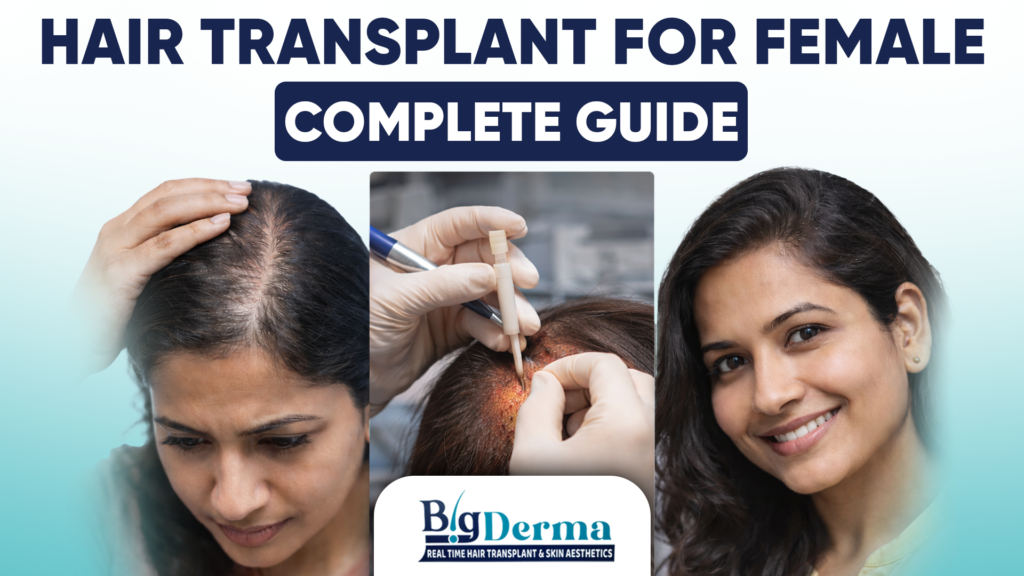
Hair loss in women is often misunderstood, underdiagnosed, and emotionally more distressing than in men. While society openly discusses male baldness, female hair thinning is frequently hidden—leading to stress, low self-esteem, and anxiety. The good news is that hair transplant for women has evolved into a safe, effective, and natural-looking solution when performed with proper diagnosis and expertise.
At Big Derma Clinic, Kolkata, we understand that female hair loss is complex and requires a highly personalized approach. This complete guide explains everything women need to know about hair transplant—from causes and suitability to techniques, recovery, results, and long-term care.
Understanding Hair Loss in Women
Female hair loss is different from male pattern baldness and often presents in subtle but progressive ways.
Common Hair Loss Patterns in Women
- Diffuse thinning across the scalp
- Widening of the central part
- Reduced hair volume
- Thinning at the crown
- Receding hairline (less common than men)
Unlike men, women rarely develop complete bald patches, which makes diagnosis and treatment planning more delicate.
Causes of Hair Loss in Females
Understanding the cause is critical before considering a hair transplant.
Hormonal Imbalance
- PCOS
- Thyroid disorders
- Menopause
- Post-pregnancy hormonal changes
Genetic Factors
Female pattern hair loss can run in families and may worsen with age.
Medical Conditions
- Anemia
- Autoimmune disorders
- Chronic illnesses
Lifestyle & External Factors
- Stress
- Crash dieting
- Poor nutrition
- Heat styling and chemical treatments
At Big Derma Clinic, Kolkata, identifying the root cause ensures the transplant is both safe and successful.
Can Women Get Hair Transplant?
The Clear Answer: Yes
Women can absolutely undergo hair transplant procedures—but not all women are suitable candidates.
Hair transplant works best when:
- Donor hair density is strong
- Hair loss pattern is stable
- Underlying medical causes are controlled
A proper evaluation is essential before proceeding.
What Is a Hair Transplant for Women?
A hair transplant involves moving healthy hair follicles from a donor area to thinning or low-density areas of the scalp.
Female Donor Area Explained
- Usually the back or sides of the scalp
- Hair follicles are genetically resistant to hair loss
- Often not shaved fully in female patients
This allows women to maintain appearance and privacy during treatment.
Goals of Hair Transplant for Females
Female hair transplant focuses on:
- Increasing overall hair density
- Restoring volume rather than bald patches
- Improving part-line thickness
- Creating natural-looking coverage
- Boosting confidence and self-image
Hair Transplant Techniques for Women
Choosing the right technique is critical for female patients.
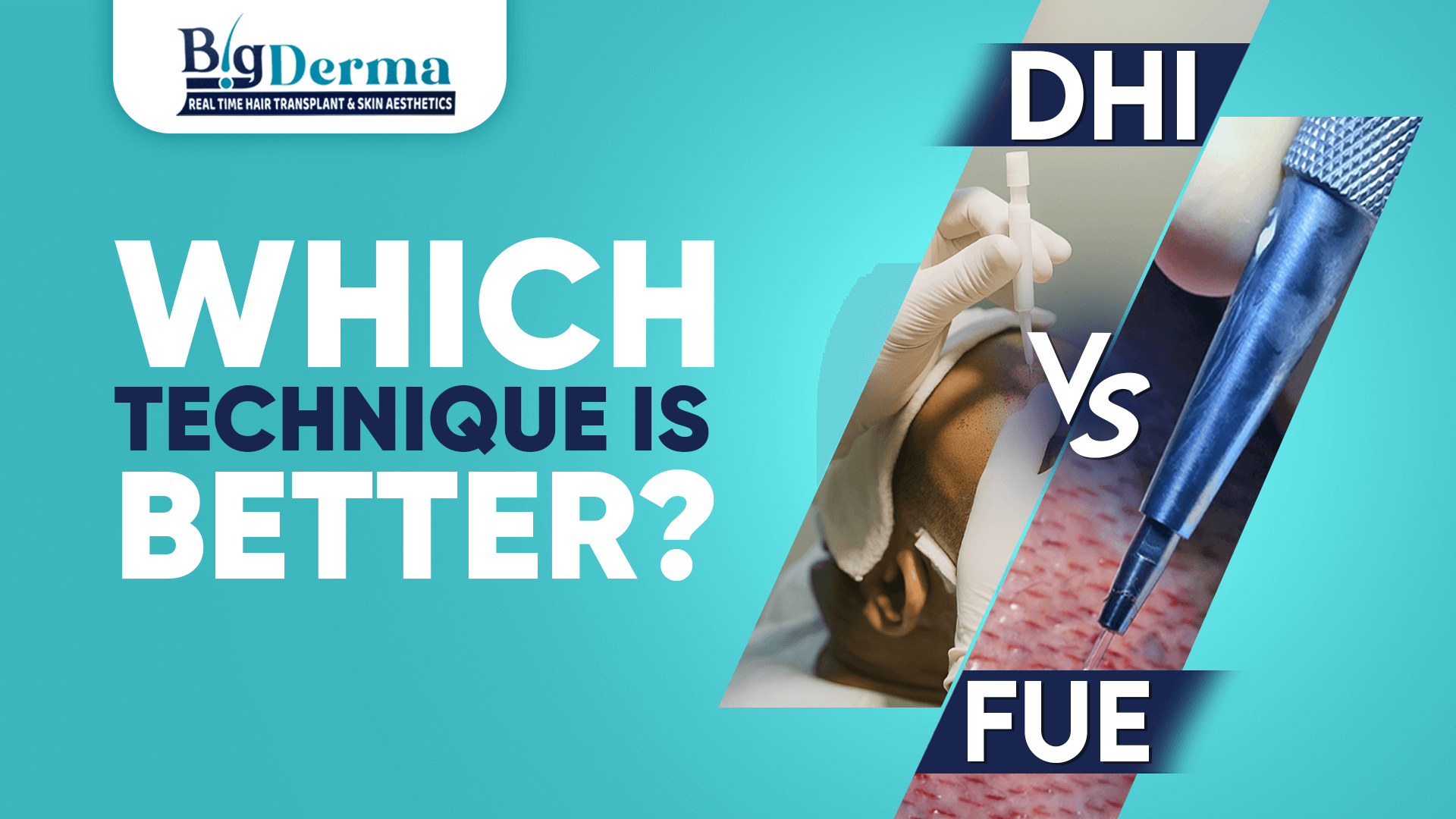
FUE (Follicular Unit Extraction) for Women
FUE is the most commonly preferred method for women.
How FUE Works
- Individual follicles are extracted
- Tiny punch tools are used
- No large incisions
Advantages of FUE for Females
- Minimal scarring
- Faster recovery
- No linear scar
- Suitable for long hairstyles
Limitations
- Limited graft numbers per session
- Requires strong donor density
DHI (Direct Hair Implantation) for Women
DHI is ideal for precision-based female hair restoration.
How DHI Works
- Follicles are extracted individually
- Implanted using a specialized implanter pen
- No pre-made incisions
Advantages of DHI for Females
- Excellent control over hair direction
- Ideal for part-line filling
- Minimal trauma
- Faster healing
Limitations
- Time-intensive
- Best for mild to moderate thinning
FUT (Follicular Unit Transplantation) in Women
FUT is less commonly used but may be suitable in select cases.
When FUT May Be Considered
- Extensive donor requirement
- Thick donor hair
- Ability to hide linear scar
Due to scarring concerns, FUT is used selectively in female patients.
Hair Transplant Procedure for Women: Step-by-Step
Step 1: Detailed Consultation & Diagnosis
At Big Derma Clinic, Kolkata, female hair transplant begins with advanced diagnosis.
What Doctors Evaluate
- Hair loss pattern
- Donor hair density
- Scalp condition
- Hormonal and medical history
- Future hair loss risk
A personalized plan is created—this step determines success.
Step 2: Donor Area Preparation
Unlike men:
- Full shaving is usually avoided
- Hair is trimmed strategically
- Local anesthesia is applied
Comfort and discretion are prioritized.
Step 3: Hair Follicle Extraction
Using FUE or DHI:
- Follicles are extracted gently
- Graft integrity is preserved
- Scalp trauma is minimized
Step 4: Implantation of Hair Follicles
This step requires extreme precision.
Key Focus Areas
- Natural hair direction
- Density matching surrounding hair
- Preserving existing hair
- Creating soft, feminine hairlines
Step 5: Post-Procedure Care
Women receive:
- Customized aftercare instructions
- Gentle washing guidelines
- Follow-up schedule
Recovery After Hair Transplant for Women
Recovery is gradual and well-tolerated.
First Week
- Mild redness or swelling
- Scab formation
- Minimal discomfort
First Month
- Temporary shedding (normal phase)
- Scalp healing continues
3–4 Months
- New hair growth begins
- Hair texture improves
8–12 Months
- Full density and volume visible
Is Hair Transplant Permanent for Women?
Yes, transplanted hair is permanent.
Why Results Last
- Donor hair is genetically resistant
- Transplanted follicles retain donor traits
However, natural hair around transplanted areas may continue thinning if underlying causes are not managed.
Will Women Need Additional Treatments?
Sometimes yes.
Supporting Treatments May Include
- Medical therapy for existing hair
- Nutritional correction
- Hormonal management
Hair transplant restores hair—but maintenance preserves overall density.
Ideal Candidate for Female Hair Transplant
Women who benefit most:
- Have localized thinning
- Possess good donor hair
- Have controlled medical conditions
- Have realistic expectations
Common Concerns Women Have
Will My Head Be Shaved?
Usually no—strategic trimming is used.
Will Results Look Natural?
Yes, when performed by experienced specialists.
Is It Safe for Women?
Yes, it is medically safe when properly evaluated.
Can Hair Transplant Fail?
Failure is rare when diagnosis and technique are correct.
Emotional Benefits of Hair Transplant for Women
Beyond aesthetics:
- Restored self-confidence
- Reduced anxiety
- Improved quality of life
- Freedom from hair-concealing habits
Why Choose Big Derma Clinic, Kolkata?
Female hair restoration requires skill, patience, and understanding.
Our Expertise
- Specialized female hair loss diagnosis
- Advanced FUE & DHI techniques
- Discreet and comfortable treatment
- Personalized long-term planning
- Natural, feminine results
At Big Derma Clinic, we treat hair loss—not just transplant hair.
Conclusion
Hair transplant for women is a powerful and permanent solution when performed with the right diagnosis, technique, and expertise. Female hair loss is complex, but with personalized planning and professional care, natural and long-lasting results are absolutely achievable.
At Big Derma Clinic, Kolkata, we combine medical science with aesthetic precision to help women regain not just hair—but confidence and peace of mind.
FAQs: Hair Transplant for Female
Is hair transplant painful for women?
No, local anesthesia ensures comfort.
Can women wear long hair after transplant?
Yes, once healing is complete.
Does pregnancy affect results?
Hormonal changes may affect natural hair, not transplanted hair.
Is hair transplant suitable for all women?
Not all—proper diagnosis is essential.

 Chat with us