
Hair Transplant - Complete Guide to Hair Restoration
A hair transplant is a minimally invasive surgical procedure used to restore hair growth in areas affected by hair loss, particularly male pattern baldness and selected cases of female pattern hair loss. The procedure involves harvesting healthy hair follicles from a donor area typically the back and sides of the scalp, where hair follicles are generally resistant to the effects of DHT (the hormone associated with pattern hair loss) and transplanting them into bald or thinning areas known as the recipient site.
These transplanted hair follicles retain their characteristics after relocation, allowing them to continue growing naturally in their new location for many years and often for a lifetime. As a result, hair transplantation provides a safe, effective, and natural-looking solution for restoring hair density, improving scalp coverage, and enhancing overall appearance and confidence.
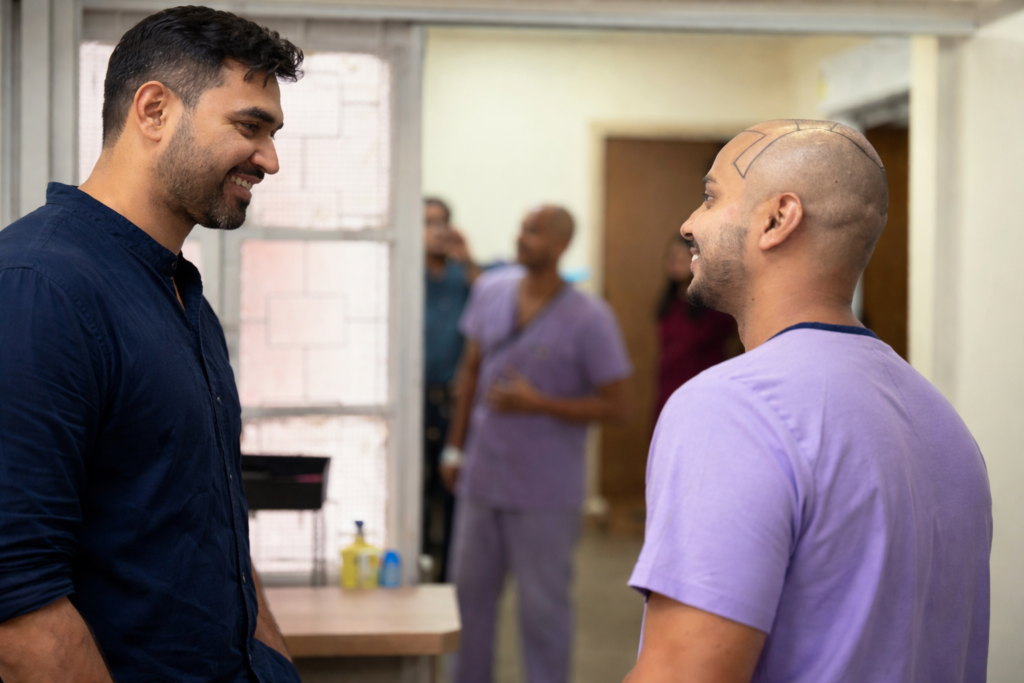
How Does a Hair Transplant wrok?
A hair transplant works by relocating healthy follicular unit grafts from a donor area typically the back and sides of the scalp, where hair follicles are generally less sensitive to DHT to areas affected by hair loss. The procedure relies on the principle of donor dominance, meaning transplanted follicles retain many of the characteristics of their original location after transplantation. Once established in the recipient area, these follicles continue to grow hair naturally and remain relatively resistant to pattern hair loss. The process involves graft extraction, preparation, and implantation, with careful attention to hair angle, direction, and density to achieve natural-looking results. New hair growth usually begins within three to four months, while full results typically develop over 12 to 18 months.
Types of hair transplant technique
Modern hair transplantation offers several advanced techniques for restoring hair in individuals experiencing hair loss. While all methods involve transferring healthy hair follicles from a donor area to a bald or thinning area, they differ in how the follicles are extracted and implanted. Today, the most commonly performed techniques are Follicular Unit Extraction (FUE) and Direct Hair Implantation (DHI), while Follicular Unit Transplantation (FUT) is used less frequently. Specialized procedures such as beard, eyebrow, body hair, and unshaven hair transplants are also available for selected patients.
Follicular Unit Extraction (FUE)
Follicular Unit Extraction (FUE) is the most widely performed hair transplant technique worldwide. In this minimally invasive procedure, individual follicular unit grafts containing one to four hairs are extracted directly from the donor area using a micro-punch instrument. The grafts are then carefully implanted into the recipient area.
The primary advantage of FUE is that it does not require the removal of a strip of scalp, resulting in tiny dot-like scars that are virtually invisible. Recovery is generally faster, postoperative discomfort is minimal, and patients can usually return to normal activities within a short period. Because follicles are extracted individually, the procedure may take longer than FUT, especially when a large number of grafts are required.
A modern variation known as Sapphire FUE uses ultra-sharp sapphire blades instead of traditional steel blades to create recipient sites. This technique may reduce tissue trauma, promote faster healing, and improve graft placement precision.
Direct Hair Implantation (DHI)
Direct Hair Implantation (DHI) is an advanced modification of the FUE technique. After extraction, the grafts are immediately loaded into specialized Choi implanter pens and implanted directly into the scalp without the need for creating recipient channels beforehand.
The main advantage of DHI is its exceptional precision. Surgeons can control the depth, angle, and direction of each graft with greater accuracy, making it particularly effective for designing natural hairlines, increasing density, and treating smaller or cosmetically sensitive areas. Because grafts spend less time outside the body, follicle survival rates may be optimized.
DHI is often preferred for hairline restoration and high-density transplants, although it generally requires a highly skilled surgical team and is usually more expensive than conventional FUE procedures.
Follicular Unit Transplantation (FUT)
Follicular Unit Transplantation (FUT), also known as strip surgery, is one of the earliest modern hair transplant techniques. During the procedure, a thin strip of scalp is surgically removed from the donor area. The strip is then dissected under a microscope into individual follicular unit grafts, which are transplanted into the recipient area.
One of the major advantages of FUT is its ability to provide a large number of grafts in a single session, making it useful for patients with extensive hair loss. However, because the procedure involves removing a strip of scalp, it leaves a linear scar and typically requires a longer recovery period than FUE. As a result, FUT has become less common in modern hair restoration practices.
Robotic Hair Transplant
Robotic hair transplantation uses advanced robotic systems and artificial intelligence to assist with follicle extraction. These systems can improve consistency and precision during large procedures. However, artistic aspects such as hairline design and graft placement still depend heavily on the surgeon’s expertise. Robotic hair transplantation is available only in selected centers and is not yet widely adopted.
Stem Cell–Enhanced Hair Transplant
Stem cell-assisted hair transplantation is an emerging area of hair restoration. Some clinics combine traditional FUE or DHI procedures with regenerative therapies such as PRP, exosomes, or adipose-derived stem cell treatments to potentially improve healing and graft survival. However, true hair cloning and stem cell-generated unlimited hair follicles remain experimental and are not yet commercially available.
Body Hair Transplant (BHT)
Body Hair Transplantation (BHT) is used when scalp donor hair is insufficient. In this procedure, hair follicles are harvested from the beard, chest, back, or other body areas and transplanted to the scalp. Beard hair is often considered the best secondary donor source because its texture is more similar to scalp hair. Although growth characteristics differ from scalp hair, BHT can significantly improve coverage in advanced cases of baldness.
Hairline Transplant
Hairline transplantation focuses specifically on restoring or redesigning the frontal hairline. This procedure requires meticulous attention to graft selection, angle, direction, and density to create a natural and age-appropriate appearance. Single-hair grafts are typically used to achieve a soft and undetectable hairline.
Beard Transplant
A beard transplant involves transferring scalp hair follicles to areas of sparse or patchy facial hair. The procedure can restore the beard, mustache, sideburns, or goatee and is increasingly popular among men seeking fuller facial hair. Results are generally permanent and natural-looking once the transplanted hairs mature.
Eyebrow Transplant
Eyebrow transplant is a highly specialized procedure designed to restore eyebrow density and shape. Individual hair follicles are carefully implanted to match the natural direction, angle, and curvature of eyebrow hair. It is commonly performed for patients who have experienced eyebrow thinning due to over-plucking, aging, trauma, or medical conditions.
Unshaven Hair Transplant
Unshaven hair transplant, also known as U-FUE or Unshaven DHI, allows patients to undergo hair restoration without shaving the entire scalp. Only small sections of the donor area are trimmed, making the procedure particularly attractive for women and professionals who wish to keep the surgery discreet. Although it is more technically demanding and time-consuming, it offers excellent cosmetic advantages during recovery.
Which Hair Transplant Method Is Best?
There is no single hair transplant technique that is best for everyone. The most suitable method depends on the extent of hair loss, donor hair availability, desired density, aesthetic goals, and the surgeon’s experience.
- FUE hair transplant (Follicular Unit Extraction): is the most widely used technique because it is minimally invasive, leaves minimal scarring, and is highly effective for covering larger bald areas.
- DHI hair transplant (Direct Hair Implantation): is an advanced form of FUE that offers greater precision during implantation. It is often preferred for creating natural hairlines, increasing density, and achieving highly refined cosmetic results. Many specialists consider DHI the gold-standard option when maximum density, natural appearance, and minimal tissue trauma are the primary goals.
- Sapphire hair transplant: is an advanced variation of the FUE technique that uses sapphire blades for creating recipient channels. It allows for finer incisions, faster healing, and more precise graft placement, making it a popular choice for achieving natural-looking and dense results.
- FUT (Follicular Unit Transplantation): may still be beneficial for selected patients who require a very large number of grafts in a single session, although it leaves a linear scar and involves a longer recovery period.
In general:
- FUE is ideal for larger coverage and cost-effectiveness.
- DHI offers superior precision, density, and hairline design.
- FUT may be suitable for extensive hair loss requiring maximum graft harvesting.
While DHI is often considered the preferred option for many patients seeking the most natural and dense results, Sapphire FUE remains an excellent choice, particularly for large sessions involving 5,000–6,000+ grafts or when budget is an important consideration.
Ultimately, the best hair transplant method is the one that best matches the patient’s needs and is performed by an experienced hair restoration surgeon.
Hair Transplant by Number of Grafts Required
A 2,000-graft hair transplant is typically suitable for individuals with early to moderate hair loss, such as a receding hairline, mild temple recession, or limited crown thinning. This procedure can transplant approximately 4,000–8,000 hairs, helping to restore the hairline and improve overall density in the frontal scalp.
Most of the grafts are placed in the hairline and temple areas, with some used to strengthen thinning sections of the mid-scalp. The procedure usually takes 6–8 hours and offers a natural-looking improvement while preserving donor hair for any future hair restoration needs
A 3,000-graft hair transplant is a popular option for individuals with moderate hair loss, typically between Norwood stages 3 and 4. It can restore approximately 6,000–12,000 hairs, creating noticeable improvements in hairline definition, frontal density, and mid-scalp coverage. Depending on the pattern of hair loss, some grafts may also be used to enhance the crown area.
The procedure usually takes 6–8 hours and is often considered an ideal first major transplant session. With the right graft placement, 3,000 grafts can deliver a fuller, natural-looking result while preserving donor hair for future needs.
A 4,000-graft hair transplant is often recommended for individuals with moderate to advanced hair loss, particularly those experiencing significant recession in the front and thinning across the crown. This procedure can transplant approximately 8,000–16,000 hairs, providing substantial coverage and a noticeable improvement in overall hair density.
Most grafts are strategically distributed between the hairline, mid-scalp, and crown to create a balanced, natural-looking result. For many patients, 4,000 grafts represent the ideal balance between coverage and density, delivering a fuller appearance while maintaining a natural hair pattern and preserving long-term donor resources.
A 5,000-graft hair transplant is a large-scale restoration procedure designed for individuals with advanced hair loss, typically in the Norwood 5–6 range. By transplanting approximately 10,000–18,000+ hairs, it can significantly improve coverage across the hairline, mid-scalp, and crown, creating a fuller and more balanced appearance.
Often referred to as a “mega session,” this procedure is ideal for patients seeking maximum coverage in a single treatment. With careful graft placement and a strong donor area, 5,000 grafts can dramatically transform extensive baldness while maintaining a natural-looking hairline and density. Final results usually continue to improve over 9–12 months.
Mega Hair Transplant Sessions (6,000+ Grafts)
Mega sessions refer to high-volume hair transplant procedures involving approximately 4,000 to 6,000+ grafts in a single sitting or planned staged sessions. These are mainly used for patients with advanced hair loss (Norwood 6–7), where extensive coverage is required. Mega sessions may combine FUE techniques and, in select cases, beard or body hair extraction to increase donor availability. The goal is to achieve a natural-looking hairline, improved mid-scalp density, and meaningful crown coverage while maintaining donor safety and long-term balance.
Giga Hair Transplant Sessions (5,000–7,000+ Grafts)
Giga sessions refer to ultra-large hair transplant procedures involving 5,000 to 7,000+ grafts, usually completed in one or two consecutive days. These are reserved for severe baldness cases requiring maximum graft utilization and careful surgical planning. In some cases, surgeons may combine FUE and FUT techniques, and also use beard or body donor hair when scalp donor supply is limited. Giga sessions aim to achieve extensive scalp coverage in advanced Norwood 6–7 cases with a carefully planned and natural density pattern.
Hair Transplant Procedure: Step-by-Step Guide
- Hair transplant surgery is a carefully planned procedure performed under local anesthesia, which allows the patient to stay awake and comfortable without feeling pain. Depending on the number of grafts required, the entire process may take several hours to complete. The main goal is to restore natural hair growth by relocating healthy follicles from the donor area (usually the back and sides of the scalp) to the thinning or balding regions.
- The process begins with a detailed consultation and hairline design, where the surgeon analyzes the pattern of hair loss, evaluates donor availability, and designs a natural-looking hairline based on facial structure and expectations. Once the plan is finalized, the donor area is prepared, which may involve trimming or shaving the hair to allow precise access to healthy follicles.
- After preparation, local anesthesia is applied to both the donor and recipient areas to ensure a completely painless experience. The surgeon then proceeds with follicle extraction, where individual hair grafts are carefully removed using the FUE method, or a thin strip of scalp is taken in the FUT method. Each graft contains one to four hair follicles and is handled with extreme care to preserve its quality.
- Once extracted, the grafts are sorted, counted, and preserved in a special solution to maintain their vitality outside the body. Meanwhile, the recipient area is prepared by creating tiny incisions or micro-channels, designed with precise angle and direction to match the natural hair growth pattern and ensure a realistic result.
- Finally, the prepared grafts are implanted into the balding area one by one using fine surgical tools or implantation pens in DHI techniques. Each graft is placed strategically to create balanced density and a natural appearance.
- After the procedure, patients can usually return home the same day. Mild swelling, redness, or tiredness is normal for a few days, and recovery is generally smooth. Over the next several months, the transplanted hair gradually grows, with full results typically visible within 9 to 12 months.
- Overall, a hair transplant is a precise combination of medical skill and artistic design, aimed at restoring natural, permanent, and aesthetically balanced hair growth.
Who Is a Good Candidate for Hair Transplant Surgery?
A good candidate for hair transplant has stable pattern hair loss, a strong donor area, good overall health, and realistic expectations. It is most suitable for androgenetic alopecia, usually after age 25 when hair loss becomes more predictable. Adequate donor density is essential since hair is relocated, not created. Hair characteristics may influence results. Patients with advanced baldness, weak donor supply, or autoimmune conditions may have limited outcomes, so specialist evaluation is necessary.
Hair Transplant Recovery Time and Tips
- Hair transplant recovery is a gradual process, and good aftercare plays a big role in achieving natural results. Most people start feeling normal within 10–14 days, when swelling, redness, and scabs gradually heal. However, the final appearance of the hair takes time and usually develops over 6–12 months.
- In the first few days after surgery, mild swelling, tightness, and redness are completely normal. Small scabs form in both the donor and recipient areas and naturally fall off within 1–2 weeks as healing progresses. Around the 2–3 week mark, the transplanted hairs often shed. This is called shock loss and is a normal part of the process it simply means the follicles are entering a resting phase before new growth starts.
- New hair usually begins to appear around 3–4 months after the procedure. The growth then becomes thicker and more noticeable by 6–9 months, with full density and natural results visible at around 12 months. Hair transplant recovery takes time and patience. Shedding in the early phase is normal, and new permanent hair gradually grows in its place, leading to natural and long-lasting results.
- During recovery, patients should handle the scalp very gently. Avoid scratching, rubbing, or applying pressure. Follow the clinic’s washing instructions carefully using a mild shampoo. Sleeping with the head slightly elevated can help reduce swelling in the early days. It is also important to avoid direct sunlight, heavy exercise, and anything that causes excessive sweating during the initial healing phase.
Risks and Side Effects of Hair Transplant
- Hair transplant surgery is generally safe, especially with modern FUE and DHI techniques, but like any procedure, it can have some side effects and small risks.
- Most people experience temporary effects during healing, such as mild swelling, redness, itching, soreness in the donor or recipient area, small scabs, and sometimes slight numbness or tingling. These usually improve within a few days to a few weeks.
- In rare cases, there can be complications like infection, poor graft growth, or visible scarring if the procedure is not done properly. An unnatural look may also happen if the hairline design or graft placement is not done carefully. Since natural hair loss can continue over time, some patients may need future treatments to maintain even density.
- Overall, hair transplant is a very safe procedure when done by an experienced surgeon, and most side effects are temporary and part of the normal healing process.
Hair Transplant Cost Factors
The price of a hair transplant is not fixed and can vary depending on several important factors. One of the main factors is the location of the clinic. For example, the cost of a hair transplant in Kolkata may differ from cities like Bangalore, Pune, Mumbai, or Delhi. Similarly, costs also vary between countries such as India, Turkey, Thailand, the USA, and the UK because medical standards, living costs, and clinic expenses are not the same everywhere.
Another important factor is the surgeon’s experience and skill. Highly experienced doctors usually charge more, but they also provide better safety, precision, and more natural-looking results.
The technique used also plays a key role in determining the cost. Procedures like FUE, DHI, and Sapphire FUE differ in technology, precision, and time required, which directly affects the overall price.
The number of grafts required is another major factor. A higher graft count means a larger area of baldness needs coverage, which increases the total cost.
Finally, the quality of the clinic including hygiene standards, equipment, infrastructure, and the expertise of the medical team also influences the overall price.
In short, whether it is a hair transplant in Kolkata or any other city or country, the cost depends on multiple factors. So it is always better to focus on quality, safety, and natural results rather than only the price.