
Hair Transplant Repair (Corrective or Revision Hair Restoration Surgery)
Hair transplant repair, also known as corrective hair transplant or revision hair restoration surgery, is a medically recognized procedure used to improve or correct unsatisfactory results from a previous hair transplant. The goal of repair hair transplant surgery is to restore a more natural-looking hairline, improve hair density, correct unnatural growth patterns, and create better balance between the donor and recipient areas.
Modern hair transplantation techniques can produce natural and long-lasting results when performed properly. However, outcomes may vary depending on surgical planning, technique, graft handling, donor management, and the individual healing response. In some cases, patients may experience unnatural or aesthetically unsatisfactory results that later require corrective treatment. The International Society of Hair Restoration Surgery recognizes corrective and revision procedures as an important part of advanced hair restoration surgery, especially in patients with failed or unnatural hair transplant outcomes.
What is Hair Transplant Repair?
- Hair transplant repair is a corrective surgical procedure performed to improve the appearance of a previous hair transplant that did not produce natural or satisfactory results. In medical terms, it is considered part of revision hair restoration surgery.
- The purpose of corrective hair transplant surgery is to restore a natural hair growth pattern, improve hairline design, correct poorly placed grafts, increase hair density, reduce visible scarring, and improve donor and recipient area balance
- Hair transplant repair is generally more complex than a primary hair transplant procedure because surgeons must work around existing grafts, scar tissue, and limited donor hair availability.
- Every revision case requires individualized planning based on scalp condition, donor supply, previous surgical techniques, and the patient’s long-term hair loss pattern.
Why Do Hair Transplants Fail?
- Hair transplant results can become unsatisfactory for several medical and technical reasons. In some cases, the original procedure may have been performed using outdated techniques or poor surgical planning. In other cases, progressive hair loss after transplantation may create an unnatural appearance over time.
- Common causes of failed or unnatural hair transplant results include unnatural or poorly designed hairlines, incorrect graft angle or direction, low or uneven hair density, patchy hair growth, visible scalp after transplantation, and pluggy or doll-like graft appearance. Some patients may also experience overharvesting of the donor area, visible FUT scars, poor graft survival, or continued androgenetic alopecia after transplantation.
- Older hair transplant methods often used larger grafts, which sometimes created an unnatural “pluggy” appearance. Even today, inexperienced surgical techniques, improper graft handling, and poor donor management can lead to bad hair transplant results requiring revision surgery.
- In some patients, the transplanted hair remains stable while the surrounding native hair continues to thin due to progressive androgenetic alopecia. This may leave isolated areas of transplanted hair and create an imbalanced or unnatural appearance over time.
Signs You May Need Hair Transplant Repair
Some patients become dissatisfied with their results months or years after the initial procedure. Corrective hair transplant surgery may be considered when the outcome appears unnatural or does not match the patient’s aesthetic expectations.
Signs that may indicate the need for hair transplant repair include an unnatural hairline, hair growing in the wrong direction, patchy or low-density transplanted areas.
Visible donor thinning, overharvested FUE donor regions, visible FUT scars, asymmetrical hairline design, or persistent dissatisfaction after complete healing.
Not every unsatisfactory transplant requires surgery. In selected cases, non-surgical camouflage approaches such as scalp micropigmentation (SMP) may help improve visual appearance.
Who is a Good Candidate for Hair Transplant Repair?
Hair transplant repair is suitable for individuals who have already undergone hair restoration surgery but are unhappy with the results. However, not all patients are ideal candidates for revision surgery.
A good candidate for corrective hair transplant surgery generally has sufficient donor hair availability, stable scalp condition, realistic expectations, adequate blood circulation, and hair loss patterns suitable for long-term planning
Patients with severe donor depletion, extensive scarring, or unrealistic expectations may have limited revision options.
Because donor hair is finite, careful donor management is one of the most important aspects of revision hair restoration surgery.
Is Hair Transplant Repair Possible?
- Yes, repair hair transplant procedures are widely performed in modern hair restoration surgery. Many unnatural or failed hair transplant results can be improved using advanced corrective techniques.
- However, the success of revision surgery depends on several important factors, including donor hair availability, extent of scalp scarring, condition of previous grafts, scalp circulation, severity of overharvesting, and long-term hair loss progression.
- In some complex cases, multiple corrective procedures may be necessary to achieve gradual improvement. While many patients experience significant aesthetic improvement, complete reversal may not always be possible in cases involving severe donor depletion or extensive scar tissue. For this reason, a detailed evaluation by an experienced hair restoration surgeon is essential before planning treatment.
Techniques Used in Hair Transplant Repair
Corrective hair transplantation may involve a combination of surgical and non-surgical techniques depending on the nature of the previous transplant and the patient’s goals.
Follicular Unit Extraction (FUE)
Follicular Unit Extraction (FUE) is commonly used in hair transplant repair because it allows selective extraction and redistribution of individual follicular units. FUE may be used to improve density, soften unnatural hairlines, redistribute poorly placed grafts, camouflage scars, and improve overharvested donor areas. Modern FUE techniques also allow selective removal of unnatural grafts in some revision cases..
FUT Scar Revision and Correction
Follicular Unit Transplantation (FUT) revision may be performed in patients with visible or widened linear donor scars caused by previous strip surgery. Corrective FUT procedures may involve scar revision surgery, scar excision, graft implantation into scar tissue, and density improvement around the scarred region.
Graft Removal and Redistribution
In cases involving unnatural or “pluggy” grafts, surgeons may selectively remove and reposition grafts to improve natural appearance. This technique is often used for unnatural frontal hairlines, incorrect graft angulation, excessively large grafts, and poor aesthetic distribution. Graft redistribution is considered one of the more technically demanding aspects of revision hair transplant surgery.
Scalp Micropigmentation (SMP)
Scalp Micropigmentation (SMP) is a non-surgical procedure that uses specialized pigment to create the visual illusion of hair density. SMP may help camouflage FUT scars, reduce the appearance of FUE overharvesting, improve low-density areas, and enhance overall cosmetic appearance. It is commonly used as an adjunctive treatment alongside surgical correction rather than as a replacement for surgery.
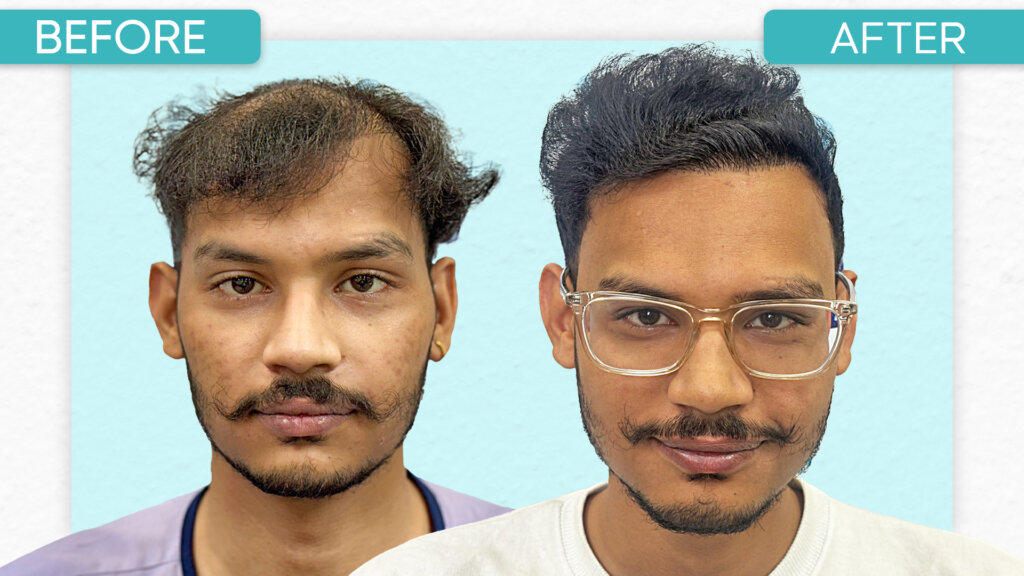
- Recovery after corrective hair transplant surgery is generally similar to recovery after a primary hair transplant, although healing may vary depending on the complexity of the revision procedure and the amount of scar tissue present.
- Common temporary recovery symptoms include redness, swelling, scab formation, mild discomfort, and temporary shedding of transplanted hair. Most patients can return to routine daily activities within several days, although complete healing takes longer.
- Initial healing and scab resolution usually occur within the first 7 to 10 days. Temporary shedding may occur between 2 and 6 weeks, while early regrowth generally begins after 3 to 4 months. Noticeable improvement in density develops gradually over 6 to 9 months, and final results continue maturing over 9 to 12 months depending on the complexity of the repair procedure and individual healing response.
- Corrective hair transplant surgery is often more technically challenging than primary transplantation. Like all surgical procedures, revision surgery has limitations and potential risks.
- These may include limited donor hair supply, variable graft survival, scar tissue affecting blood circulation, incomplete correction, additional scarring, uneven density, and the possible need for multiple procedures.
- In some cases, surgery may not be recommended if donor reserves are severely depleted or if the expected outcome is unlikely to meet realistic aesthetic goals. Careful planning and realistic expectations are essential for successful revision outcomes.
- Hair transplant repair cost at BigDerma varies depending on the complexity of the previous transplant, the extent of correction required, and the overall condition of the donor and recipient areas.
- Several factors influence the cost of corrective hair transplant surgery, including the number of grafts required, severity of donor overharvesting, scar correction requirements, FUE or FUT revision techniques, graft removal and redistribution complexity, and the use of scalp micropigmentation when necessary.
- Revision procedures are often more technically demanding than primary hair transplants because they involve working around existing grafts and scar tissue while preserving remaining donor hair.
- At BigDerma, every patient undergoes a detailed scalp and donor evaluation before treatment planning. The corrective approach is individualized to improve natural appearance, optimize donor management, and achieve balanced long-term results.
Frequently Asked Questions About Hair Transplant Repair
Hair transplant repair is a specialized corrective procedure designed to improve unnatural or unsatisfactory outcomes from previous hair transplant surgeries. Corrective hair restoration surgery focuses on restoring a more natural hairline, improving density, correcting graft placement issues, and creating better aesthetic balance between the donor and recipient areas.
Because every revision case is different, successful treatment depends on careful surgical planning, donor availability, scalp condition, scar tissue, and realistic long-term expectations. A detailed evaluation by an experienced hair restoration surgeon is essential before deciding on any corrective hair transplant procedure.
Frequently Asked Questions About Hair Transplant Repair
Yes, many bad or unnatural hair transplant results can be improved using modern corrective hair restoration techniques. However, the outcome depends on donor hair availability, scar tissue, and the severity of the previous procedure.
Yes. Hair transplant repair is generally more complex because surgeons must work around existing grafts, scar tissue, and limited donor reserves.
In some cases, overharvested donor areas may be improved using graft redistribution, scalp micropigmentation (SMP), or additional donor management techniques. Results depend on the remaining donor density.
Most surgeons recommend waiting until the previous transplant has fully healed and matured before considering revision surgery. The waiting period may vary depending on the procedure and healing response.
Yes. FUT scars may sometimes be improved with scar revision surgery, graft implantation into scar tissue, or scalp micropigmentation to reduce scar visibility.
No. SMP is generally considered a camouflage technique that helps improve the visual appearance of density or scars. It is commonly used alongside surgical correction rather than replacing hair transplant repair surgery.