
REAL TIME HAIR TRANSPLANT IN KOLKATA
Advanced Hair Restoration with Growth Factor, Sapphire Blade & KEEP Implanter Every Graft Matters.
Hair transplantation is not simply about moving hair from one area of the scalp to another. A natural-looking result depends on proper diagnosis, personalised hairline planning, donor-area management, careful graft extraction, graft handling, recipient-site creation, and precise implantation.
At Big Derma Hair & Skin Clinic, Kolkata, our Real Time Hair Transplant workflow brings these stages together into a coordinated surgical process.
THE BIG DERMA REAL TIME WORKFLOW
Growth-Factor Application → Sapphire Recipient-Site Creation → Graft Extraction → Simultaneous Extraction & Implantation → KEEP Implanter Placement
Every treatment plan is customised according to the patient’s scalp condition, donor availability, hair characteristics, and restoration requirements.
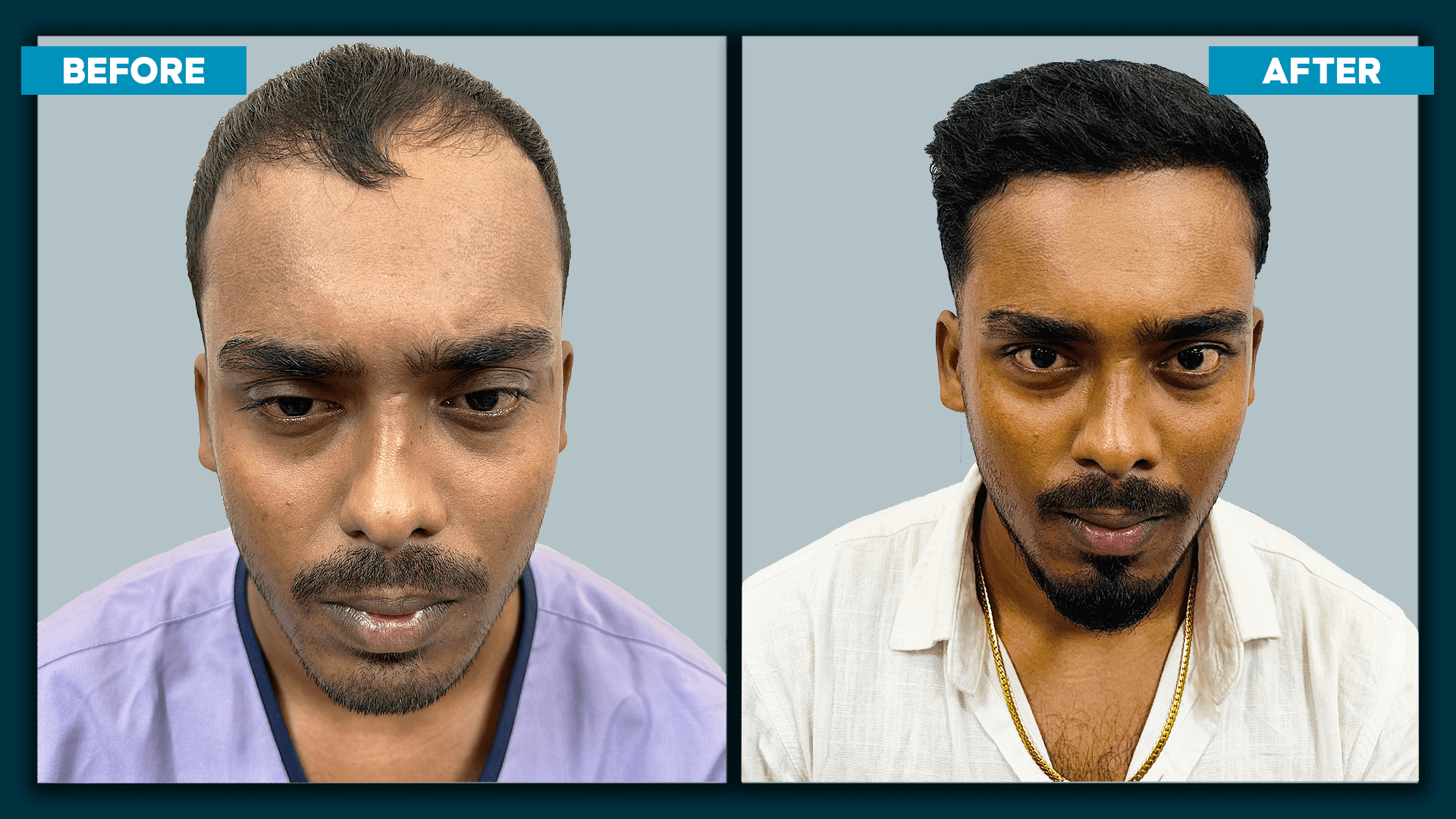
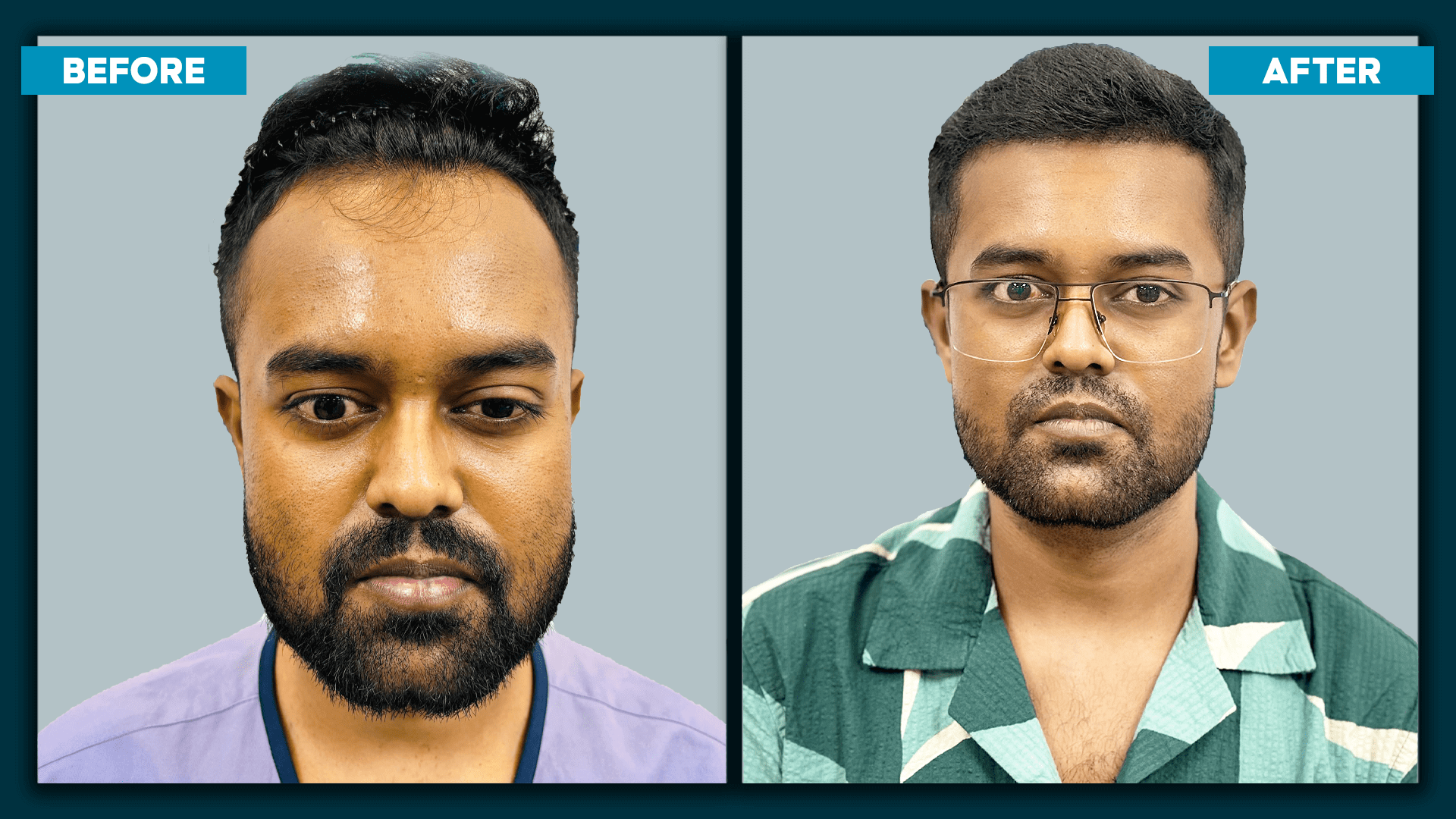
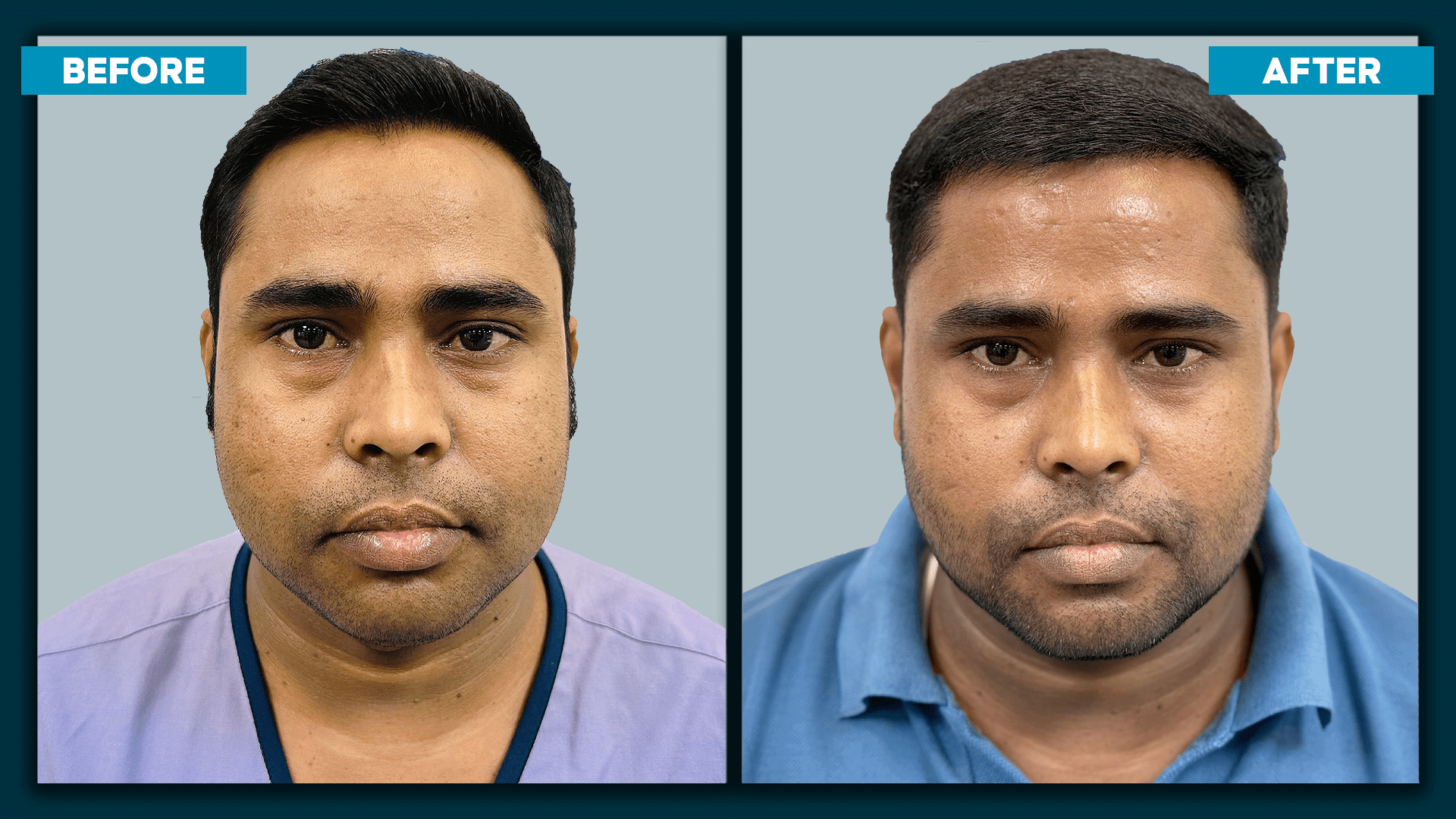
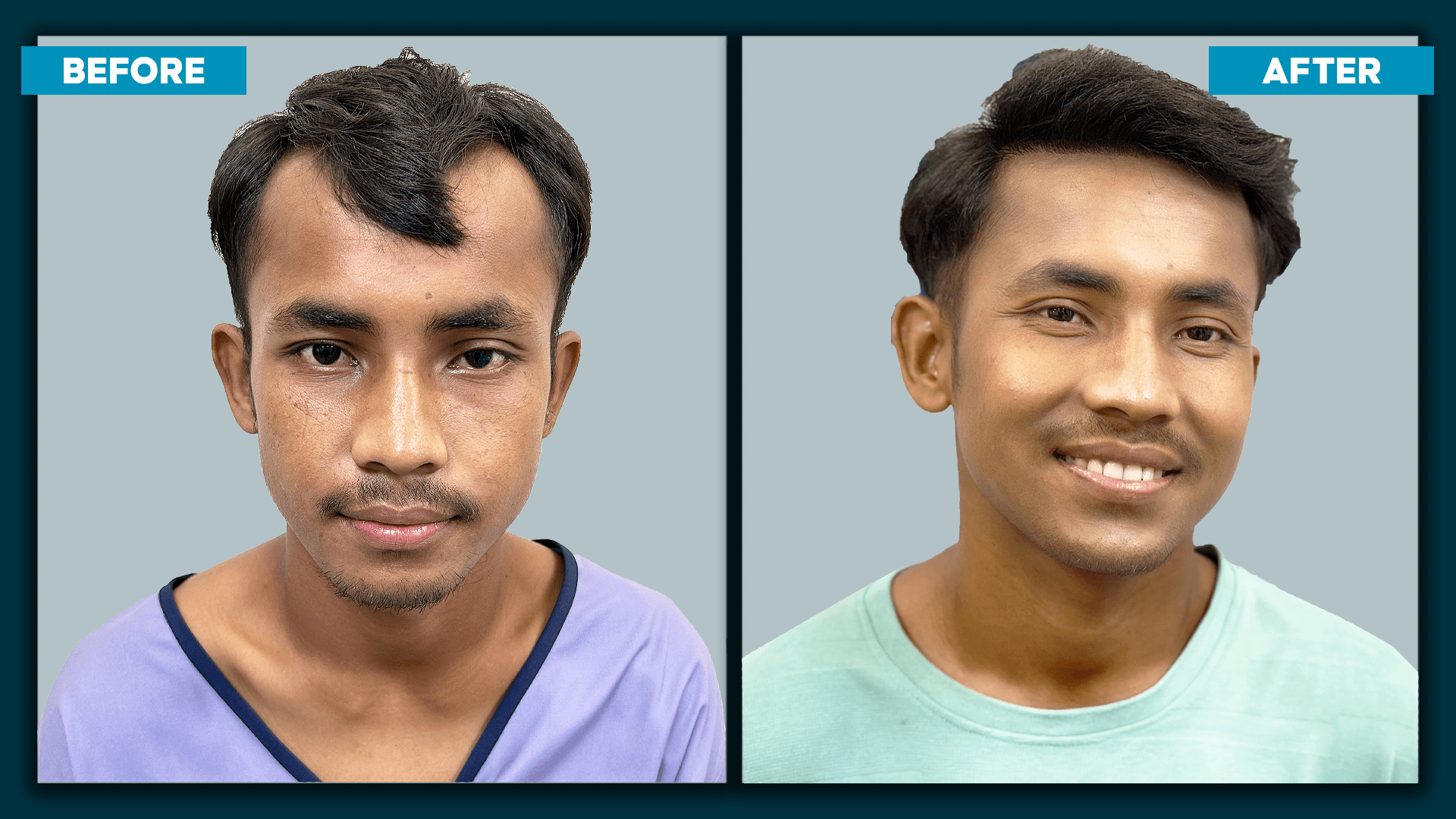
WHAT IS REAL TIME HAIR TRANSPLANT?
Real Time Hair Transplant is the advanced hair-restoration workflow developed and performed at Big Derma around a closely coordinated process of recipient-area preparation, graft extraction, and implantation.
The Core Concept:
PREPARE → EXTRACT → HANDLE → IMPLANT
The procedure is designed so that the surgical team can coordinate graft extraction and implantation in real time, allowing freshly extracted grafts to be transferred promptly for placement.
At Big Derma, this workflow combines:
- Growth-factor application
- Sapphire blade recipient-site creation
- Careful graft extraction
- Simultaneous extraction and implantation
- KEEP implanter-assisted placement
- Personalised hairline and density planning
HOW DOES REAL TIME HAIR TRANSPLANT WORK?
STEP 01 — CONSULTATION & DIAGNOSIS
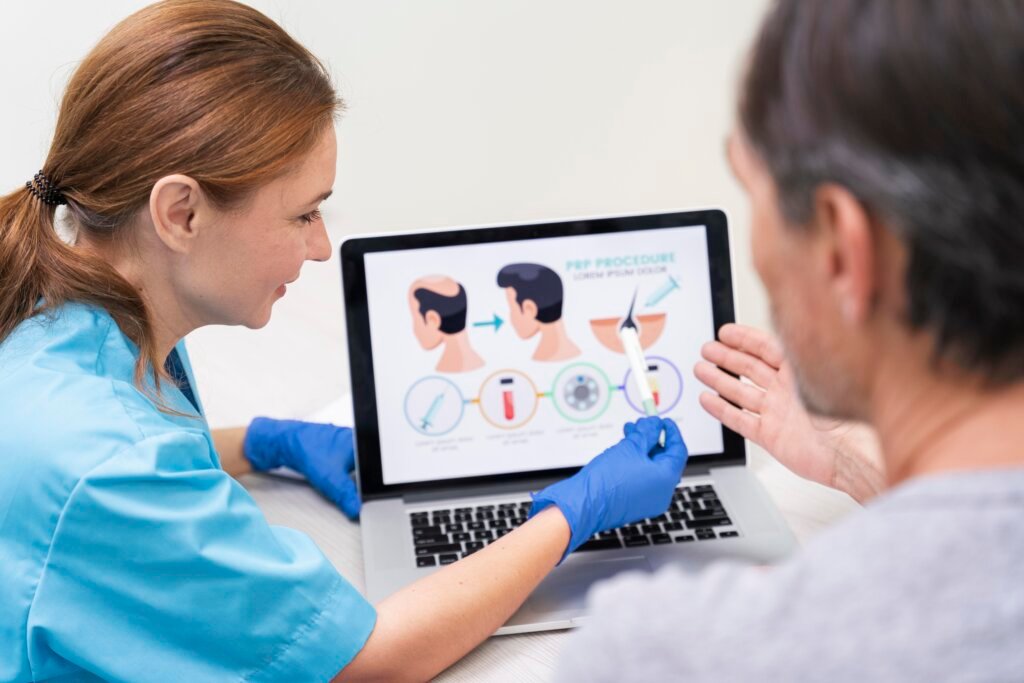
Before recommending transplantation, the doctor evaluates:
- Hair-loss pattern
- Scalp condition
- Donor-area strength
- Hair calibre
- Existing density
- Hairline
- Future hair-loss pattern
- Patient expectations
We don’t believe every person with hair loss needs a transplant. Depending on the diagnosis, the doctor may recommend:
Hair-loss treatment | Medication | PRP | GFC | Hair Transplant | Other clinically appropriate treatment
STEP 02 — HAIRLINE & RECIPIENT-AREA PLANNING
A hairline should never be copied from another patient. It should be designed around your:
- Facial proportions & structure
- Age
- Existing hair & direction
- Hair calibre
- Donor strength
- Hair-loss pattern & future expectations
Our Objective: To create a natural-looking, personalised hairline that integrates with your existing hair. The recipient area is then divided into appropriate zones according to the required coverage and density.
STEP 03 — GROWTH-FACTOR APPLICATION
As part of the Big Derma Real Time Hair Transplant protocol, a growth-factor preparation may be applied to the recipient area where clinically appropriate.
Why is this step included?
- The recipient area is prepared as part of the overall surgical protocol before recipient-site creation and graft implantation.
- Growth-factor treatment is considered an adjunctive component and does not replace careful surgical technique, graft handling, or postoperative care.
- The exact preparation and application protocol may vary according to the patient’s clinical requirements.
STEP 04 — SAPPHIRE BLADE RECIPIENT-SITE CREATION
This is one of the most important stages of the procedure. The surgeon creates recipient sites using a sapphire blade according to the planned hairline and density map.
Each area requires careful calibration of:
- ANGLE: The angle at which the transplanted hair emerges.
- DIRECTION: The direction in which the graft follows the surrounding hair.
- DEPTH: The depth of the recipient site.
- SPACING: The distance between individual grafts.
- DENSITY: The number and distribution of grafts within each zone.
Natural hair is not perfectly vertical. The surgeon considers the natural growth pattern of the patient’s existing hair when designing recipient sites.
WHY SAPPHIRE BLADE?
Sapphire blades are used for recipient-site creation to help the surgeon create controlled sites according to the surgical plan.
The objective is to support:
- Precise site creation
- Controlled direction
- Appropriate angulation
- Appropriate depth
- Density planning
- Natural hairline transition
However, the sapphire blade alone does not determine the final result. The outcome also depends on diagnosis, planning, surgical expertise, graft quality, donor management, graft handling, implantation, and postoperative care.
STEP 05 — GRAFT EXTRACTION
After recipient-site preparation, individual follicular grafts are carefully extracted from the planned donor area. The donor area is assessed before surgery to determine how much hair can be safely harvested while maintaining an appropriate appearance.
Grafts can contain:
- Single hairs: Often useful for the frontal hairline and softer transition.
- Two-hair grafts: Useful for building density behind the frontal transition
- Multi-hair grafts: May be used in appropriate areas to contribute to overall density.
The surgeon determines where different graft types should be placed according to the patient’s individual requirements.
STEP 06 — SIMULTANEOUS EXTRACTION & IMPLANTATION
THE HEART OF THE REAL TIME WORKFLOW
This is the defining feature of the Big Derma Real Time Hair Transplant process. The surgical team coordinates:
EXTRACTION → CAREFUL GRAFT HANDLING → PROMPT TRANSFER → IMPLANTATION
Rather than treating extraction and implantation as completely disconnected stages, the workflow allows the surgical team to coordinate these processes in real time.
Why is this important?
- Follicular grafts are living tissue.
- Careful handling, appropriate hydration, and minimising unnecessary manipulation are important considerations during transplantation.
- A coordinated workflow is designed to support efficient graft management. (Note: No surgical technique can guarantee 100% graft survival).
STEP 07 — KEEP IMPLANTER PLACEMENT
Once the graft is ready for implantation, it is placed into the prepared recipient site using a KEEP implanter, where clinically appropriate.
The KEEP implanter allows the surgical team to place grafts into prepared sites while following the planned angle, direction, depth, spacing, density, and hairline design.
KEEP IMPLANTER: LOAD → POSITION → PLACE
WHY RECIPIENT-SITE DESIGN MATTERS
The quality of a hair transplant is not determined only by the number of grafts. The way each graft is positioned can influence the overall appearance. A natural-looking
result requires meticulous attention to hairline, angle, direction, depth, spacing, density, and graft distribution.
The goal is not simply more hair. The goal is natural-looking hair.
NATURAL HAIRLINE DESIGN
DESIGNED FOR YOUR FACE. NOT COPIED FROM SOMEONE ELSE.
An artificial hairline can make a transplant look obvious. At Big Derma, hairline planning considers:
- Facial structure & Age
- Existing hairline & hair direction
- Hair characteristics & donor availability
- Current hair-loss pattern & potential future hair loss
The frontal transition is planned to create a natural visual progression rather than an unnaturally straight line.
DONOR-AREA MANAGEMENT
YOUR DONOR HAIR IS A LIMITED RESOURCE.
A hair transplant uses hair from the patient’s own donor area. Therefore, donor management is an essential part of long-term planning. Before surgery, the doctor evaluates donor density, hair calibre, available grafts, distribution, donor-area characteristics, and future requirements.
Our Philosophy: Don’t simply use more grafts. Use the available grafts intelligently.
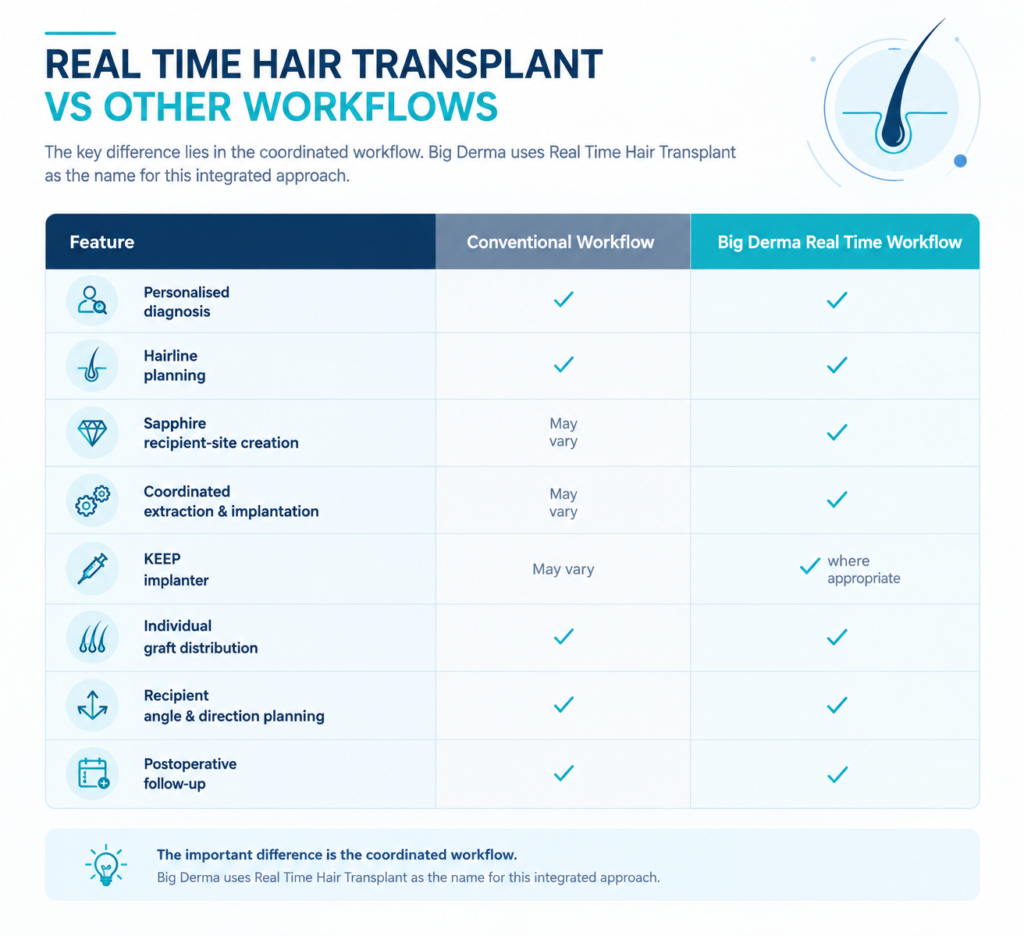
WHAT MAKES BIG DERMA REAL TIME HAIR TRANSPLANT DIFFERENT?
- Personalised Diagnosis: Treatment begins with diagnosis rather than automatically recommending surgery.
- Advanced Recipient-Site Creation: Sapphire blades are used according to the planned surgical design.
- Coordinated Extraction & Implantation: Extraction and implantation are closely coordinated during the procedure.
- KEEP Implanter: Grafts are implanted into prepared recipient sites using a KEEP implanter where appropriate.
- Personalized Hairline: Hairline design is based on the patient’s facial features and existing hair.
- Focus on Graft Handling: Every graft is handled carefully throughout the procedure.
WHO MAY BE SUITABLE FOR REAL TIME HAIR TRANSPLANT?
Real Time Hair Transplant may be considered for appropriately selected patients with:
- Receding Hairline: For patients requiring frontal restoration and having adequate donor availability.
- Male Pattern Hair Loss: After appropriate diagnosis and evaluation.
- Crown Hair Loss: When donor resources and the overall treatment plan make transplantation appropriate.
- Mid-Scalp Thinning: For selected patients requiring additional coverage.
- Hairline Reconstruction: </b.For selected cases requiring restoration of a depleted frontal area.
- Selected Female Hair Loss Cases: After appropriate diagnosis and medical evaluation.
WHO SHOULD NOT RUSH INTO A HAIR TRANSPLANT?
Hair loss does not automatically mean that transplantation is necessary. Some patients may benefit from medical hair-loss treatment, medication, PRP, GFC, scalp treatment, investigation of the underlying cause, or observation and monitoring.
At Big Derma: Diagnosis comes before transplantation. The doctor will assess whether surgery is appropriate for you before recommending a treatment plan.
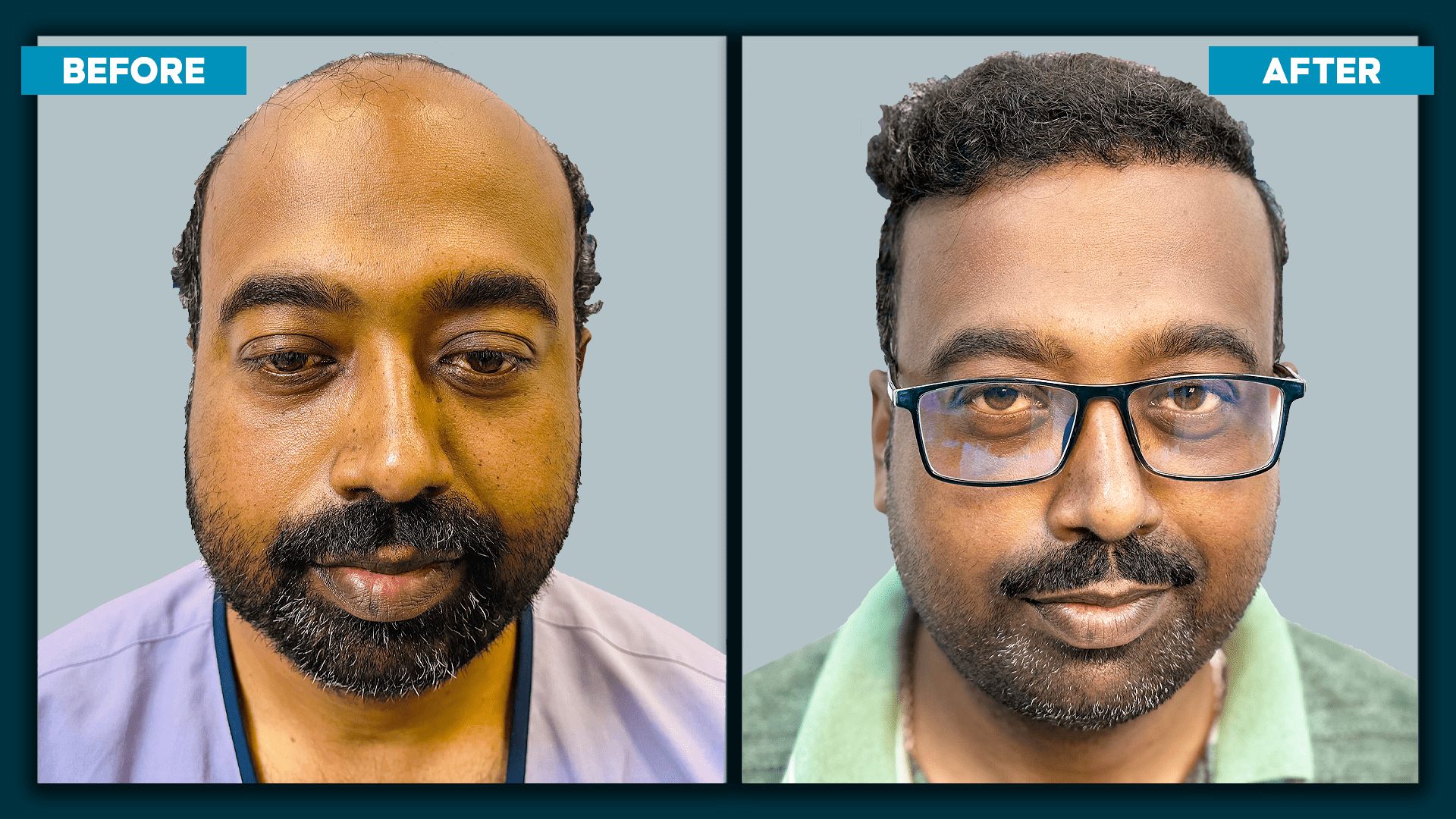
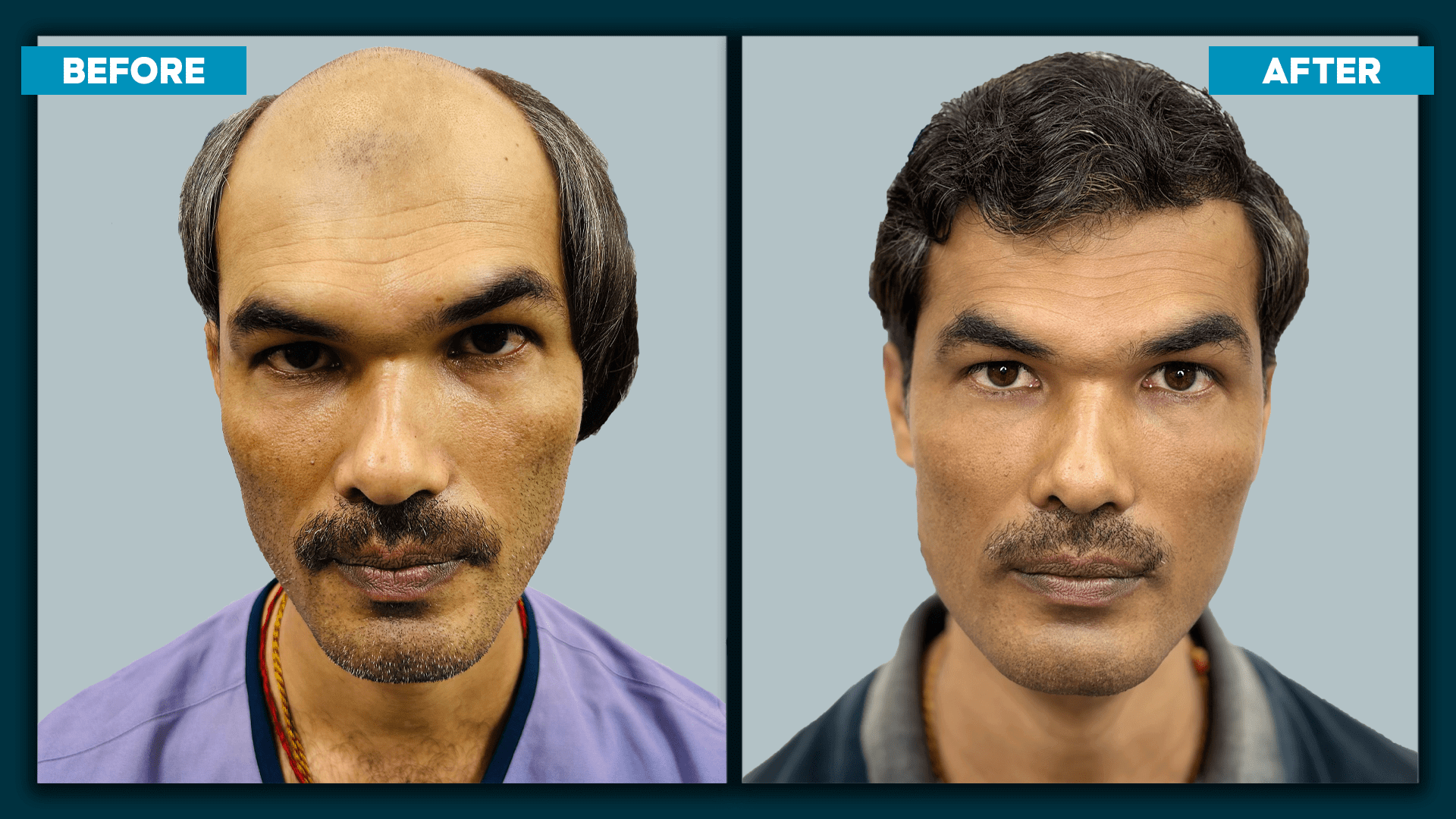
REAL TIME HAIR TRANSPLANT RESULTS
Hair transplantation is a gradual biological process:
- Immediately After Surgery: Small recipient sites, redness, and temporary swelling may be visible.
- First Few Weeks: Temporary shedding of transplanted hair shafts may occur.
- 3–4 Months: Early new growth may begin to become noticeable.
- Around 6 Months: Progressive improvement may become more visible.
- 9–12 Months+: The transplanted hair continues to mature.
Remember: Every patient is different. Growth speed and final appearance depend on individual biology, hair characteristics, surgical factors, and aftercare.
WHAT DETERMINES YOUR RESULT?
Technology is only one part of hair restoration.
- Diagnosis: Correctly understanding the cause and pattern of hair loss.
- Hairline Planning: Designing a natural and age-appropriate hairline.
- Donor Management: Using the available donor supply responsibly.
- Extraction: Careful harvesting of follicular grafts.
- Graft Handling: Minimising unnecessary manipulation.
- Recipient-Site Creation: Planning angle, direction, depth, spacing, and density.
- Implantation: Accurate placement of grafts according to the surgical design.
- Aftercare: Following the postoperative instructions provided by the medical team.
DOES REAL TIME HAIR TRANSPLANT GUARANTEE 100% GRAFT SURVIVAL?
No medical procedure can responsibly guarantee 100% graft survival. Individual graft survival and final growth depend on patient biology, donor quality, hair characteristics, surgical technique, graft handling, recipient-site preparation, postoperative care, and individual healing.
At Big Derma, the objective is to optimise the conditions for successful graft survival and natural growth.
WHY BIG DERMA?
SCIENCE. SKILL. PLANNING. NATURAL RESULTS.
At Big Derma, we believe the first question should not be: “How many grafts can you transplant?”
It should be: “Do you actually need a transplant?”
And when transplantation is appropriate:
PREPARE → EXTRACT → PROTECT → IMPLANT
EVERY GRAFT MATTERS.
BOOK YOUR CONSULTATION IN KOLKATA
DON’T CHOOSE A HAIR TRANSPLANT ONLY BY GRAFT COUNT. Ask about hairline design, donor management, graft handling, recipient-site creation, implantation technique, postoperative care, and long-term hair planning.