
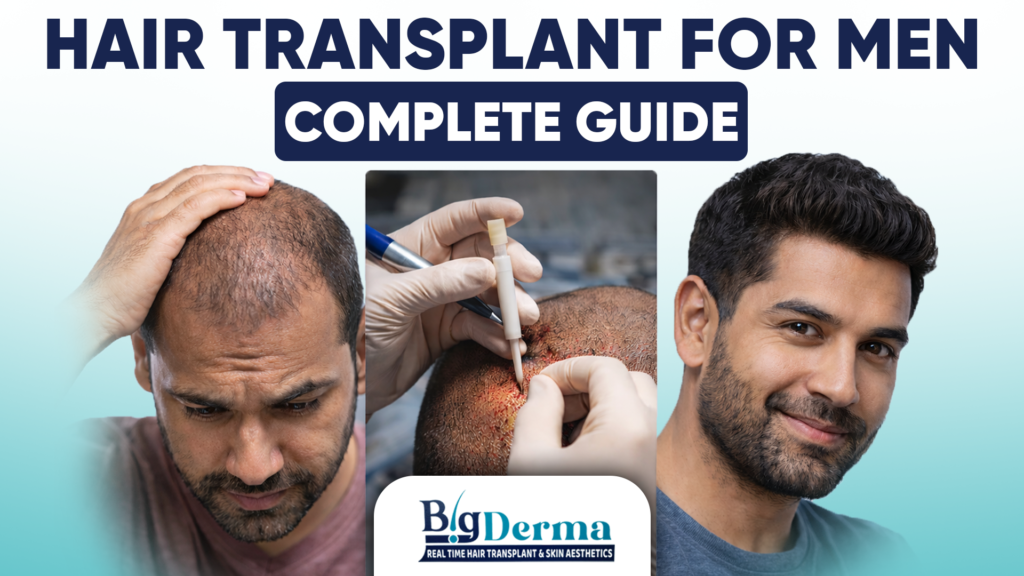
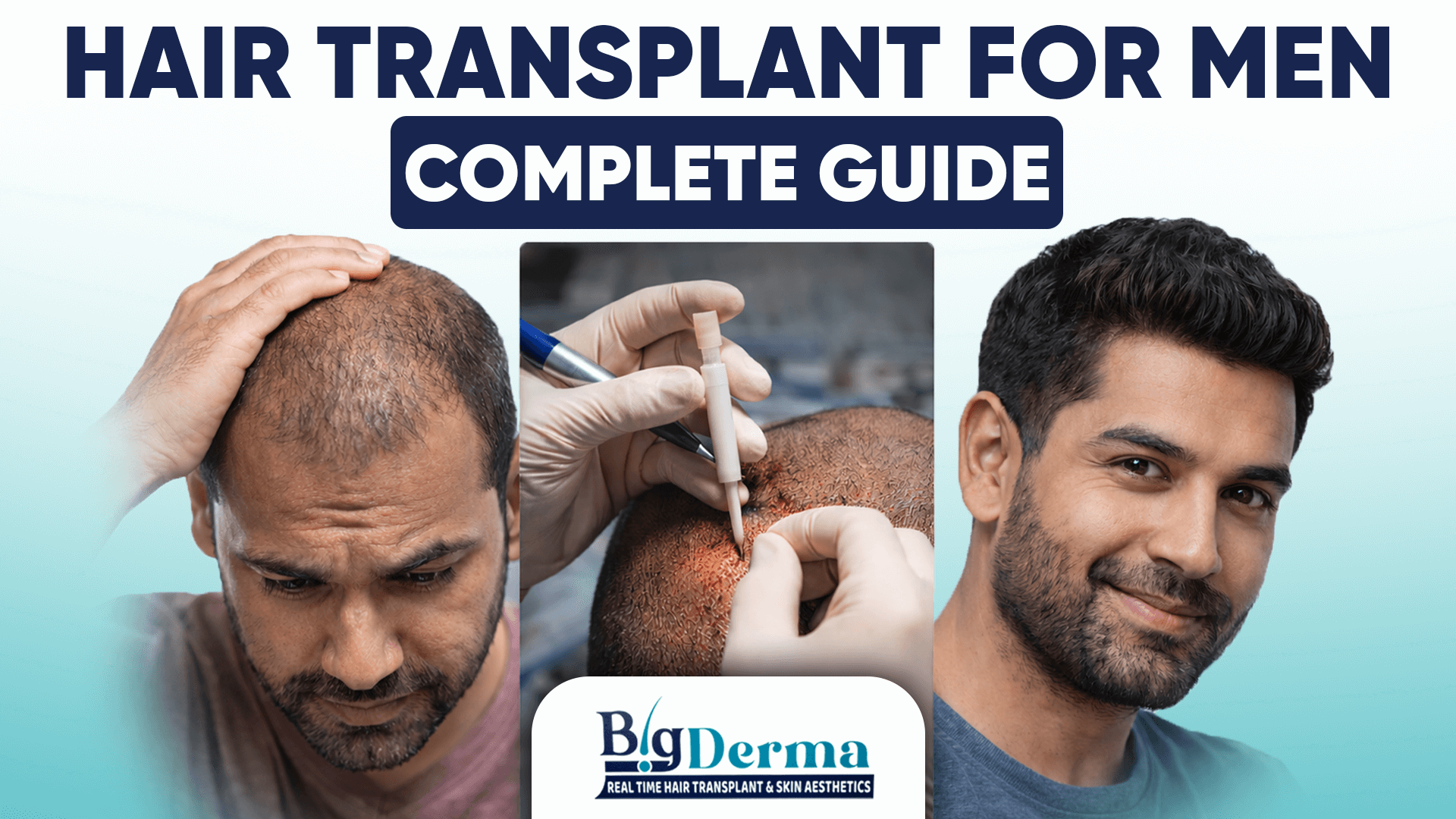
Hair loss is one of the most common cosmetic concerns among men. For many, it starts with a receding hairline or thinning crown and gradually progresses into visible bald patches. While hair loss is medically harmless, its psychological impact can be significant—affecting confidence, self-image, and social comfort.
At Big Derma Clinic, Kolkata, we specialize in advanced and permanent hair restoration solutions tailored specifically for male hair loss patterns. This complete guide explains everything men need to know about hair transplant procedures, from causes of hair loss to techniques, recovery, results, and long-term care.
Understanding Hair Loss in Men
Male hair loss usually follows a predictable pattern and is influenced by genetics and hormones.
What Is Male Pattern Baldness?
Male pattern baldness is a hereditary condition where hair follicles gradually shrink due to hormonal sensitivity. Over time, affected follicles stop producing healthy hair.
Common Areas Affected
- Frontal hairline
- Temples
- Crown (vertex)
- Mid-scalp
Main Causes of Hair Loss in Men
- Genetic predisposition
- Hormonal changes
- Aging
- Chronic stress
- Poor lifestyle habits
- Certain medical conditions
Understanding the cause and pattern of hair loss is crucial before planning a hair transplant.
What Is a Hair Transplant?
A hair transplant is a medical procedure that relocates healthy hair follicles from a donor area to areas affected by hair loss.
Donor Area Explained
The donor area is usually the back or sides of the scalp, where hair follicles are genetically resistant to hair loss. This genetic resistance is what makes hair transplant results permanent.
Goals of Hair Transplant for Men
- Restore a natural-looking hairline
- Increase hair density
- Cover bald patches
- Achieve long-term, permanent hair growth
- Improve confidence and appearance
Types of Hair Transplant Techniques for Men
Different techniques are used based on hair loss severity, donor hair quality, and personal expectations.
FUT (Follicular Unit Transplantation)
FUT is a traditional hair transplant method suitable for men with advanced baldness.
How FUT Works
- A thin strip of scalp is removed from the donor area
- Individual follicular units are extracted from the strip
- Recipient sites are created in bald areas
- Hair follicles are implanted carefully
Advantages of FUT for Men
- Ideal for extensive baldness
- Allows transplantation of a large number of grafts
- Strong graft survival rate
- Cost-effective for high graft requirements
Limitations of FUT
- Leaves a thin linear scar
- Longer healing time
- Less suitable for very short hairstyles
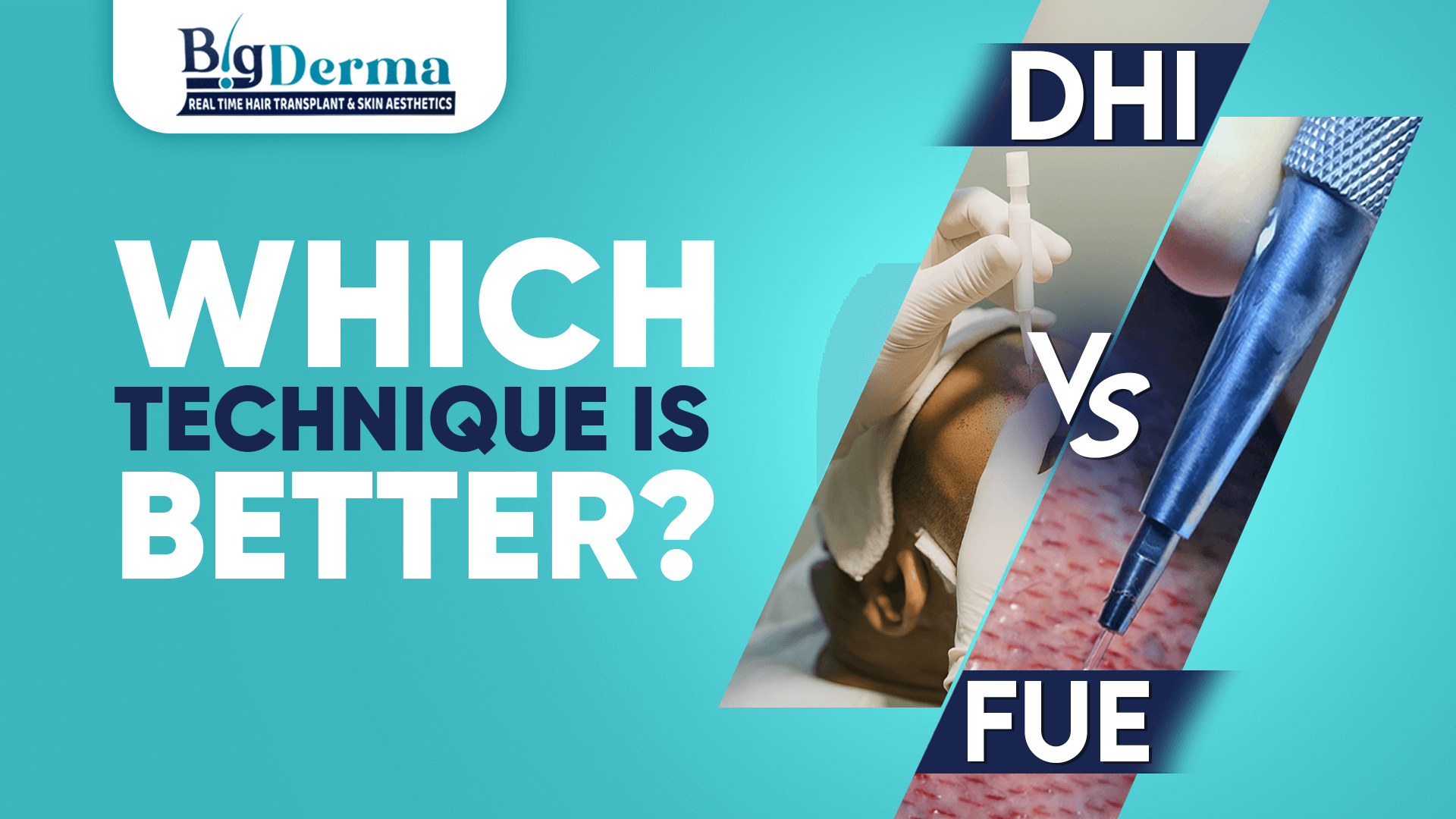
FUE (Follicular Unit Extraction)
FUE is a minimally invasive technique widely preferred by men today.
How FUE Works
- Individual hair follicles are extracted directly from the donor area
- Tiny punch tools are used
- Follicles are implanted into thinning areas
Advantages of FUE for Men
- Minimal visible scarring
- Faster recovery
- Suitable for short hairstyles
- Natural-looking results
Limitations of FUE
- Limited graft numbers per session
- Requires high precision
- Slightly longer procedure time
DHI (Direct Hair Implantation)
DHI is an advanced form of FUE offering superior precision.
How DHI Works
- Hair follicles are extracted individually
- A specialized implanter pen is used
- Follicles are implanted directly without pre-made incisions
Advantages of DHI for Men
- Excellent hairline design
- Better control over angle, depth, and direction
- Minimal trauma to scalp
- Faster healing
Limitations of DHI
- Time-consuming
- Best for mild to moderate hair loss
- Requires experienced specialists
Hair Transplant Procedure for Men: Step-by-Step
Understanding the procedure helps reduce anxiety and set realistic expectations.
Step 1: Consultation and Hair Analysis
At Big Derma Clinic, Kolkata, every hair transplant starts with a detailed evaluation.
During Consultation, Doctors Assess:
- Hair loss pattern
- Donor area density
- Hair thickness and texture
- Age and future hair loss risk
A personalized treatment plan is created to ensure natural and long-lasting results.
Step 2: Donor Area Preparation
The donor area is:
- Cleaned and trimmed
- Numbed using local anesthesia
This ensures the procedure is comfortable and pain-free.
Step 3: Hair Follicle Extraction
Depending on the chosen technique:
- FUT involves strip removal
- FUE and DHI involve individual follicle extraction
Careful handling of grafts is crucial for long-term survival.
Step 4: Implantation of Hair Follicles
This is the most critical step.
Focus Areas During Implantation
- Natural hair growth angle
- Correct direction
- Balanced density
- Symmetrical hairline design
This step determines how natural the final results will look.
Step 5: Post-Procedure Care
After the procedure:
- Scalp is cleaned and protected
- Aftercare instructions are provided
- Follow-up schedule is explained
Recovery After Hair Transplant for Men
Recovery is gradual and manageable.
First Few Days
- Mild swelling or redness
- Slight discomfort
- Scab formation
First Few Weeks
- Transplanted hair may shed (normal process)
- Scalp gradually heals
3–4 Months
- New hair growth begins
- Hair starts thickening
8–12 Months
- Final, natural-looking results visible
Is Hair Transplant Permanent for Men?
Yes, hair transplant results are considered permanent.
Why Transplanted Hair Lasts
- Donor hair is genetically resistant to hair loss
- Transplanted follicles retain donor characteristics
However, hair transplant does not stop natural hair loss in untreated areas.
Will Men Need Another Hair Transplant?
Some men may choose additional sessions.
Reasons Include
- Progression of natural hair loss
- Desire for increased density
- Expansion of bald areas
Proper long-term planning reduces the need for repeat procedures.
Ideal Candidate for Hair Transplant for Men
Men who benefit most:
- Have good donor hair density
- Experience pattern baldness
- Are in good overall health
- Have realistic expectations
Age is less important than donor hair quality and hair loss stability.
Common Concerns Men Have
Will Results Look Natural?
Yes, when performed by experienced specialists using proper technique.
Is the Procedure Painful?
Local anesthesia ensures minimal discomfort.
Will There Be Visible Scars?
Modern techniques result in minimal or hidden scarring.
Can Beard or Body Hair Be Used?
In selected cases, alternative donor hair may be considered.
Long-Term Care After Hair Transplant
Maintaining scalp health supports long-lasting results.
Hair Care Tips
- Gentle washing
- Avoid harsh chemicals
- Maintain scalp hygiene
Lifestyle Factors
- Healthy diet
- Stress management
- Adequate sleep
Why Choose Big Derma Clinic, Kolkata?
At Big Derma Clinic, we focus on natural results and long-term satisfaction.
What Makes Us Different
- Experienced hair transplant specialists
- Personalized treatment planning
- Advanced techniques and technology
- Ethical and transparent consultation
- Natural-looking, permanent results
Our mission is to restore hair, confidence, and quality of life.
Conclusion
A hair transplant for men is a proven and permanent solution to hair loss when performed with proper planning, technique, and expertise. Understanding the process, choosing the right method, and following professional guidance are key to achieving natural-looking results.
At Big Derma Clinic, Kolkata, we combine medical expertise with personalized care to deliver hair restoration results that look natural and last a lifetime.
FAQs: Hair Transplant for Men
At what age should men consider a hair transplant?
When hair loss stabilizes and donor hair is strong.
How long does the procedure take?
Usually several hours, depending on graft numbers.
Can hair transplant fail?
When performed correctly, success rates are very high.
Is hair transplant safe for men?
Yes, it is a medically safe and well-established procedure.


 Chat with us