
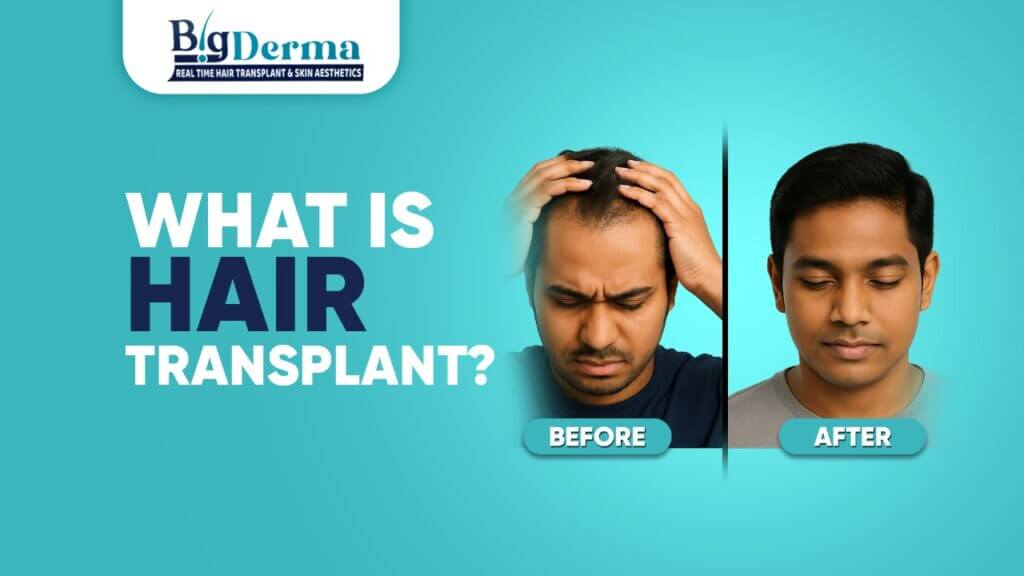
Hair loss can affect confidence and self-esteem, but modern solutions make it possible to restore a natural-looking hairline. At Big Derma, Kolkata, we specialize in hair restoration treatments, including advanced hair transplant techniques. This beginner’s guide explains everything you need to know about hair transplants, helping you make an informed decision.
What is a Hair Transplant?
A hair transplant is a surgical procedure that moves hair follicles from a part of the body (called the donor site) to a bald or thinning area (called the recipient site). It is a permanent solution for hair loss and is commonly used to treat male pattern baldness, female hair thinning, receding hairlines, or scars.
Hair transplants are not just cosmetic—they restore confidence, improve appearance, and offer a long-lasting solution for hair loss.
Types of Hair Transplants
There are two main types of hair transplant techniques:
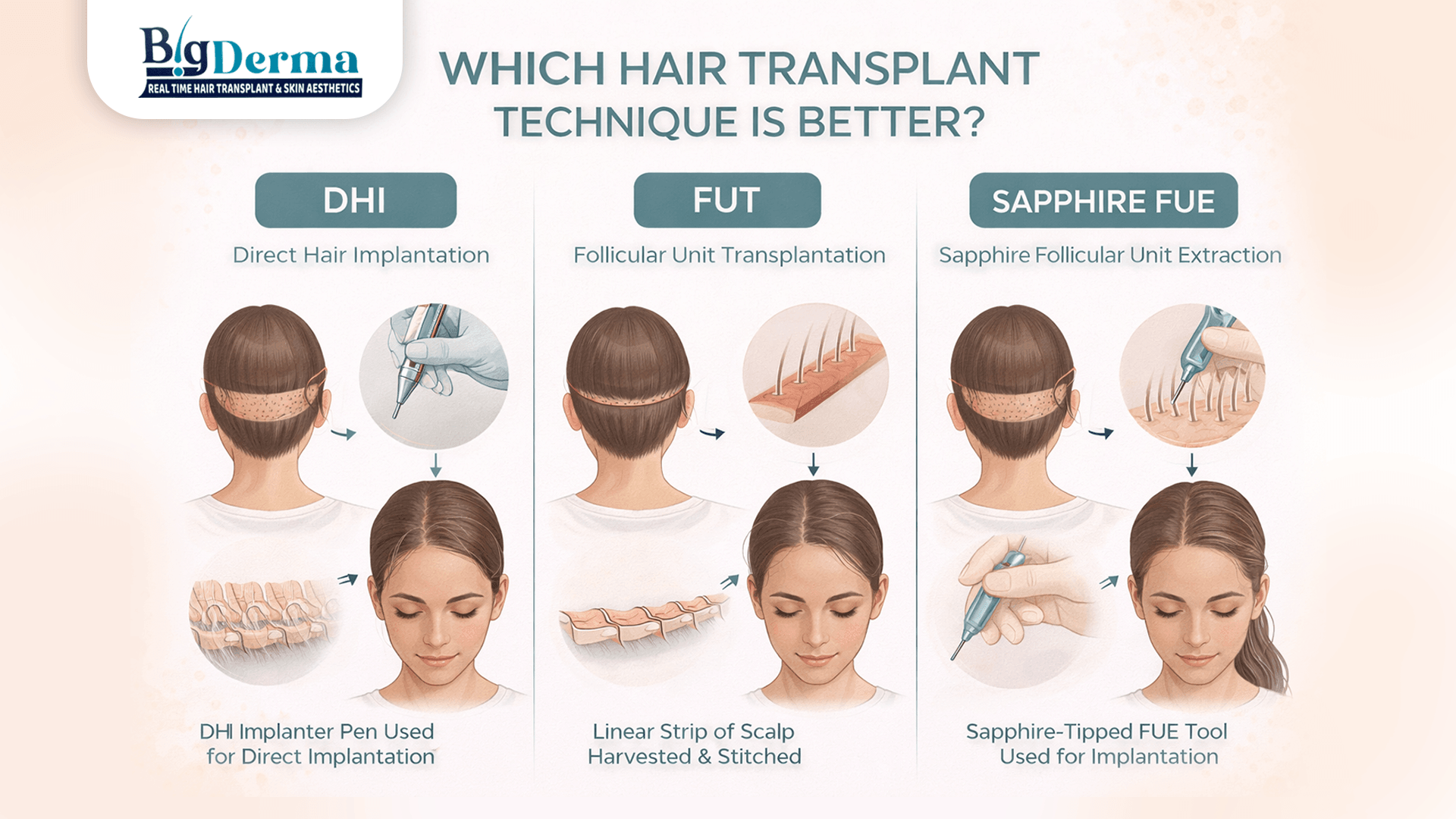
1. FUE (Follicular Unit Extraction)
FUE is a minimally invasive technique where individual hair follicles are extracted from the donor area and implanted into the thinning or bald area.
Benefits of FUE:
- Minimal scarring
- Faster recovery
- Natural hairline design
2. FUT (Follicular Unit Transplantation)
FUT involves removing a strip of scalp from the donor area, from which hair follicles are then extracted and transplanted.
Benefits of FUT:
- Suitable for large bald areas
- More grafts can be transplanted in one session
- Permanent results
At Big Derma, Kolkata, we choose the method that best suits your hair type, baldness pattern, and personal preference.
The Hair Transplant Process
The hair transplant procedure is carefully planned and performed in stages to ensure the best results. Here’s a step-by-step guide:
1. Consultation and Assessment
Every hair transplant begins with a detailed consultation. Our experts assess:
- The degree of hair loss
- Donor area quality
- Hair type and density
A personalized treatment plan is created to achieve natural results.
2. Preparing the Donor Area
The donor area, usually at the back or sides of the scalp, is cleaned and numbed with local anesthesia. Hair follicles are then carefully extracted using either FUE or FUT technique.
3. Implantation in the Recipient Area
The extracted follicles are implanted into the thinning or bald area. Precision is key—angle, depth, and direction are carefully controlled to ensure a natural-looking hairline.
4. Post-Procedure Care
After the procedure, patients are provided with aftercare instructions to support healing and maximize hair growth:
- Avoiding direct sun exposure
- Gentle washing of the scalp
- Following a healthy lifestyle
Recovery is usually quick, and patients can resume most activities within a few days.
Benefits of Hair Transplant at Big Derma, Kolkata
Choosing a hair transplant at Big Derma, Kolkata ensures:
- Permanent hair restoration
- Natural-looking results
- Minimal downtime and discomfort
- Expert care from experienced dermatologists
- Tailored solutions for men and women
Who Can Benefit from a Hair Transplant?
Hair transplant procedures are suitable for individuals with:
- Male or female pattern baldness
- Receding hairline or thinning hair
- Scars from injury or previous procedures
- Desire for a fuller hair density
Our experts provide personalized advice to determine whether you are the right candidate for a hair transplant.
Conclusion
A hair transplant is a safe, effective, and permanent solution for hair loss. With the right technique and expert care, you can achieve a natural-looking hairline and restored confidence. At Big Derma, Kolkata, we ensure each patient receives personalized treatment and professional guidance for the best possible outcome.
FAQs About Hair Transplants
Q1: Is hair transplant painful?
Local anesthesia is used, making the procedure comfortable and mostly pain-free.
Q2: How long before I see results?
New hair growth usually starts in 3-4 months, with full results visible in 8-12 months.
Q3: Will there be scars?
FUE leaves minimal, nearly invisible scars, while FUT may leave a thin line in the donor area.
Q4: Can women undergo hair transplants?
Yes, women experiencing hair thinning or bald patches are also suitable candidates.



 Chat with us