Table of Contents
ToggleComplete Planning Guide – Big Derma Clinic, Kolkata
Hair transplant planning is never about random numbers. One of the most common questions patients ask during consultation is: “How many grafts will I need?” The answer depends largely on the stage of hair loss, which is commonly measured using the Norwood classification system. For men experiencing pattern baldness, Norwood Grade 3, 4, and 5 are among the most frequently treated stages.
Understanding graft requirement at each level is essential because it directly affects density, coverage, cost, and long-term results. At Big Derma Clinic, Kolkata, graft planning is done carefully to ensure natural appearance today while protecting donor hair for the future.
Let’s understand this in detail.
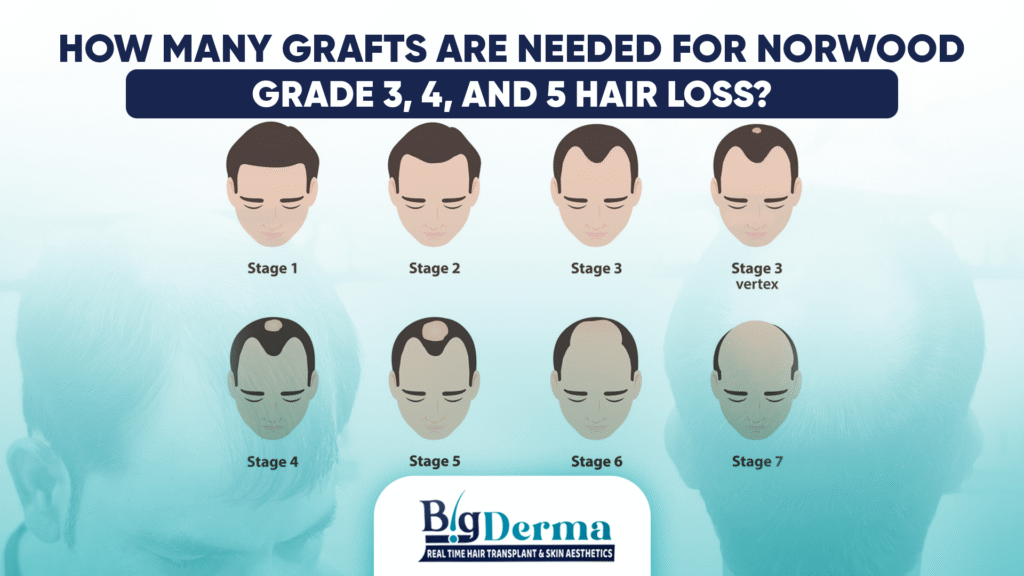
Understanding the Norwood Scale Before Calculating Grafts
Male pattern baldness progresses gradually. The Norwood scale categorizes this progression into stages based on how far the hairline has receded and how much crown thinning has occurred.
In early stages, recession is mild and limited to temples. As grades increase, both the frontal hairline and crown begin thinning, eventually connecting in advanced stages. Grade 3, 4, and 5 fall in the moderate category, where transplantation becomes a strong consideration.
However, graft calculation is not based only on the grade number. It also depends on scalp size, donor density, hair thickness, and desired density level.
How Many Grafts Are Needed for Norwood Grade 3?
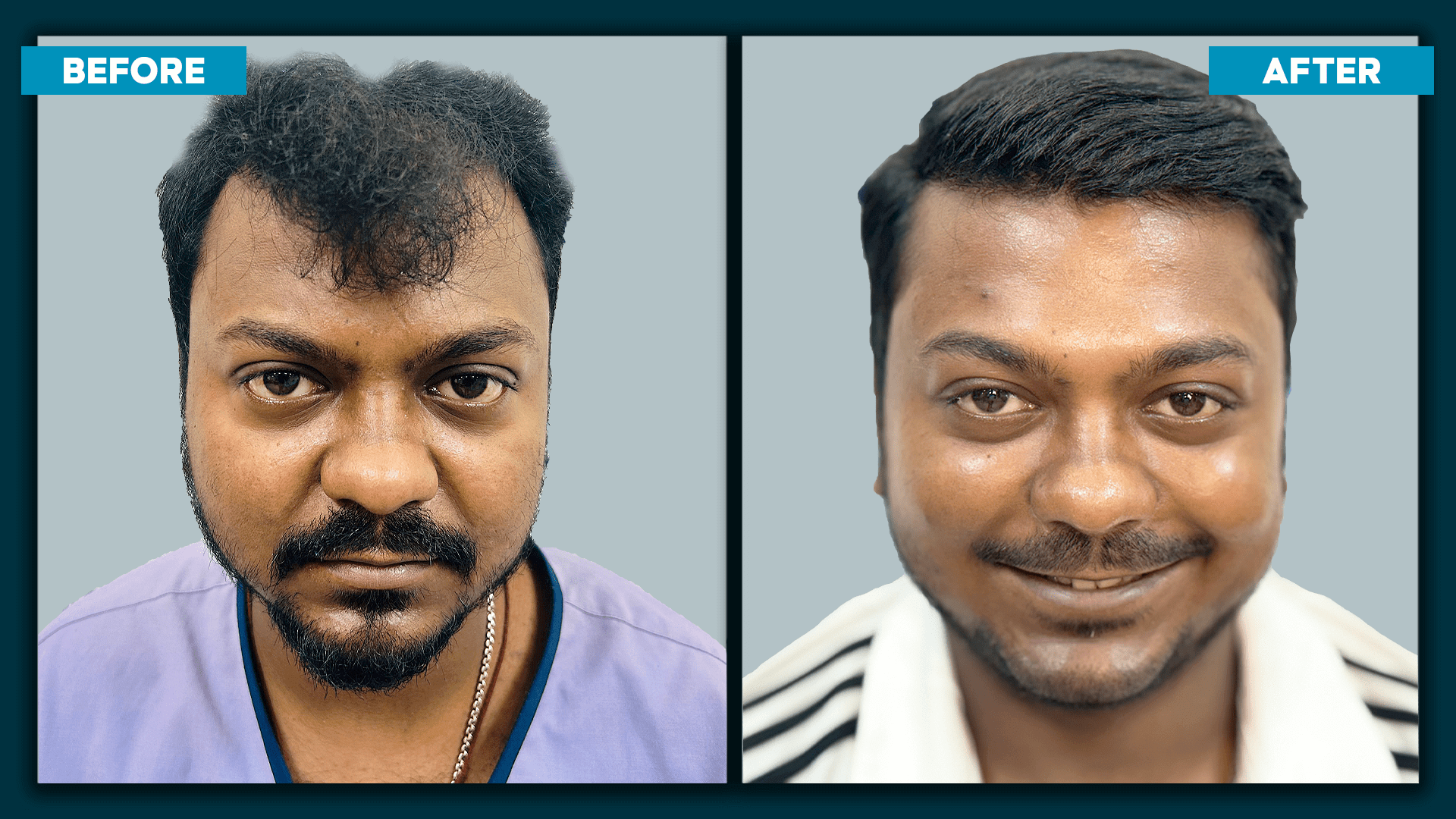
Norwood Grade 3 is typically the stage where visible temple recession becomes prominent. In some cases, the frontal hairline starts forming a noticeable “M” shape. The crown may still be unaffected, or thinning may be minimal.
For Grade 3 patients, graft requirement usually ranges between 1,500 to 2,500 grafts, depending on the extent of recession and desired hairline design. If the focus is only on rebuilding temples and lowering the hairline slightly, the number stays on the lower side. If density enhancement across the entire frontal zone is required, graft count increases.
At Big Derma Clinic, doctors design an age-appropriate hairline rather than creating an overly aggressive youthful look. Conservative planning ensures that if hair loss progresses in the future, additional sessions can be performed without exhausting donor reserves.
How Many Grafts Are Needed for Norwood Grade 4?
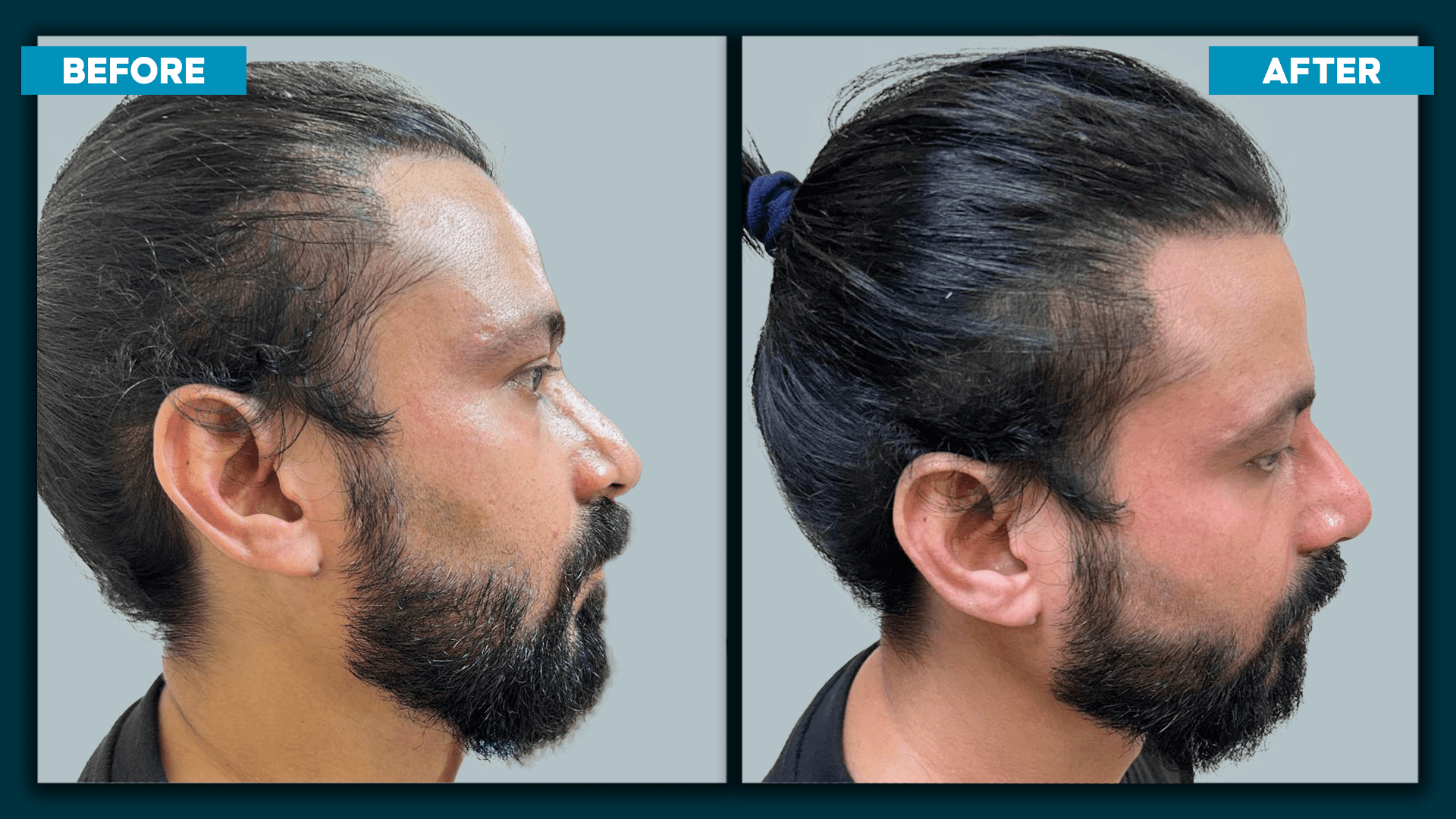
Norwood Grade 4 represents more advanced hair loss. At this stage, frontal recession is deeper, and noticeable thinning appears at the crown. However, there is still a visible bridge of hair separating the front and crown areas.
Because two zones may require attention, graft requirement typically increases. Most Grade 4 cases require between 2,500 to 4,000 grafts, depending on how much density the patient wants and whether the crown is included in the same session.
In many cases, doctors prioritize the frontal region first because it frames the face and has the greatest visual impact. The crown may be addressed in the same sitting if donor capacity allows, or it may be planned for a second session.
Strategic distribution becomes extremely important at this stage. Instead of spreading grafts thinly across large areas, experienced surgeons focus on creating the illusion of density where it matters most.
How Many Grafts Are Needed for Norwood Grade 5?
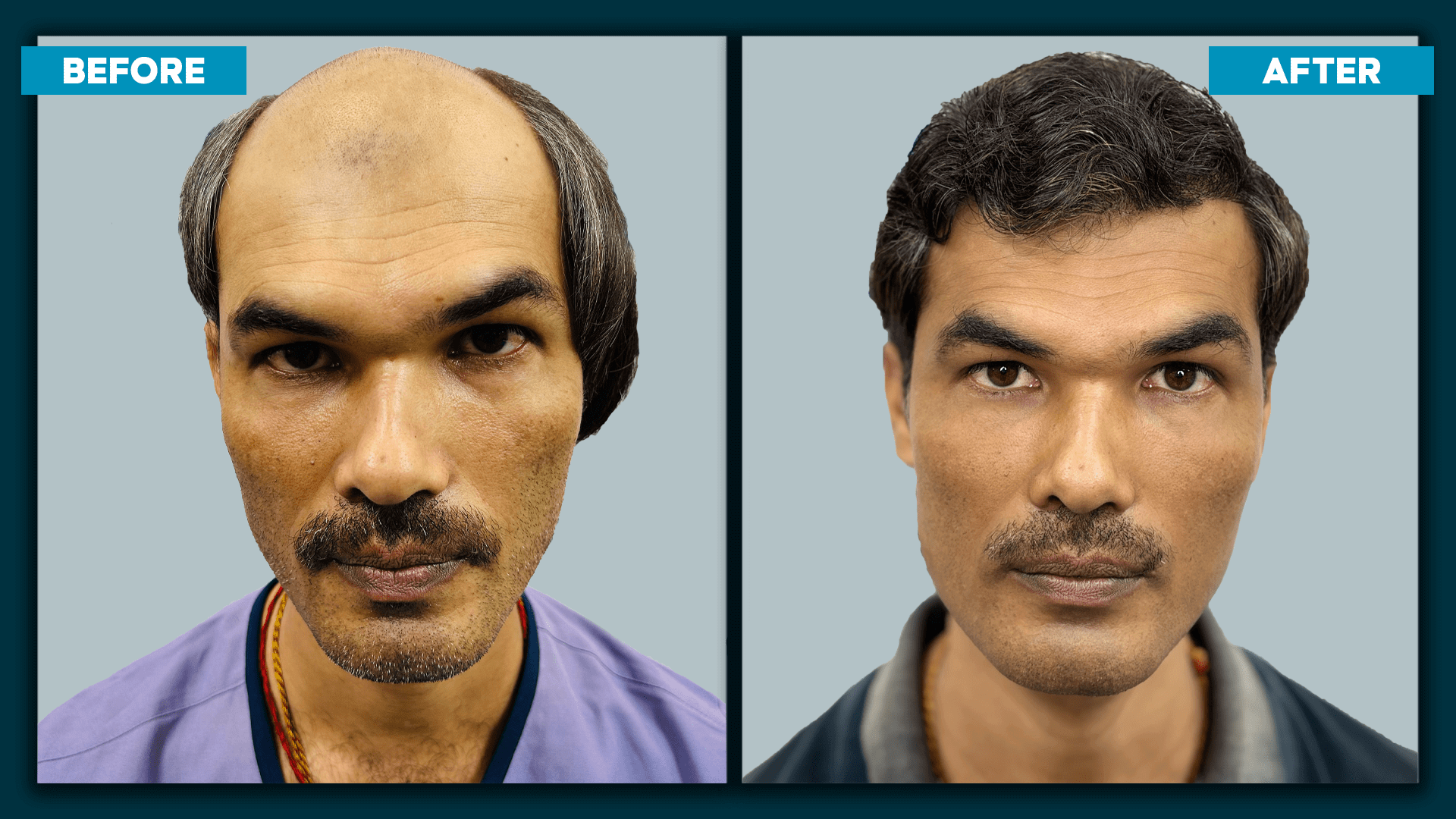
Norwood Grade 5 involves significant hair loss. The frontal and crown areas enlarge, and the separating bridge of hair becomes thinner. Coverage area increases considerably, making planning more complex.
Grade 5 patients usually require between 3,500 to 5,000 grafts, sometimes even more depending on scalp size and density expectations. However, it is not always advisable to transplant very high numbers in one sitting unless donor strength supports it.
At Big Derma Clinic, donor safety is prioritized. Overharvesting can cause visible thinning at the back of the scalp. Therefore, graft planning for Grade 5 is done with long-term sustainability in mind. Sometimes treatment is divided into multiple sessions to maintain balance and natural appearance.
Why Graft Numbers Are Not the Same for Everyone
Even if two patients both have Norwood Grade 4 hair loss, their graft requirement may differ significantly. This happens because graft calculation depends on several additional factors.
Hair thickness plays a major role. Thick hair shafts provide better coverage with fewer grafts, while thin hair requires higher graft counts for similar visual density.
Scalp laxity and donor density also affect planning. A patient with strong donor hair can achieve fuller coverage compared to someone with limited donor supply.
Desired density level is another important factor. Some patients prefer moderate natural density, while others request high-density packing in the frontal zone. Higher density requires more grafts per square centimeter.
Frontal Area vs Crown: Where Are More Grafts Needed?
Many patients are surprised to learn that the crown often requires more grafts than the frontal hairline. This is because crown hair grows in a circular pattern and needs strategic angling to look natural.
However, doctors usually prioritize the front because it is more visible in daily interactions. A well-designed frontal zone can dramatically improve appearance even if the crown is moderately thin.
In Grade 4 and 5 cases, graft distribution is often balanced between the frontal third and mid-scalp, with the crown treated either partially or in a second stage.
Can All Grafts Be Done in One Session?
Modern techniques allow large graft sessions, but that does not mean every patient should undergo mega-sessions. The safety of donor area and patient comfort must always come first.
At Big Derma Clinic, session planning is individualized. Some Grade 3 and Grade 4 patients can comfortably complete their procedure in one session. Grade 5 patients may require staged procedures depending on graft requirement and donor strength.
What Happens If Hair Loss Progresses After Transplant?
Hair transplant restores lost hair but does not stop future natural hair loss. This is why planning must consider possible progression to higher Norwood grades.
Conservative hairline placement, donor preservation, and sometimes medical therapy are recommended to protect long-term results. Patients are guided on maintaining their existing hair alongside transplanted grafts.
Does Higher Graft Count Mean Better Results?
Not necessarily.
A natural-looking transplant depends more on artistic placement and angle than just numbers. Poorly placed 4,000 grafts can look unnatural, while strategically placed 2,500 grafts can create excellent density illusion.
Quality of extraction, proper graft handling, and precise implantation are more important than chasing maximum graft numbers.
Recovery and Growth Timeline
Regardless of Norwood grade, the growth timeline remains similar. After transplantation, transplanted hair may shed within a few weeks. New growth typically begins after several months, gradually increasing in thickness and density.
Full cosmetic results generally become visible after several months, depending on individual growth cycles.
Why Consultation Is Essential Before Deciding Graft Numbers
Online graft calculators provide rough estimates, but they cannot evaluate donor strength, scalp condition, or long-term hair loss risk. A physical examination is necessary to determine realistic graft planning.
At Big Derma Clinic, Kolkata, consultation includes scalp analysis, donor mapping, and long-term projection planning before giving a graft estimate. This ensures safe, natural, and sustainable results.
Final Thoughts
The number of grafts needed for Norwood Grade 3, 4, and 5 hair loss varies based on coverage area, donor capacity, hair thickness, and density goals. While Grade 3 may require moderate graft numbers, Grade 4 and 5 involve more strategic planning and larger sessions.
A successful transplant is not about maximizing grafts in one day—it is about creating natural density that lasts for years without compromising donor health.
If you are unsure about your Norwood stage or graft requirement, a detailed consultation is the best first step toward informed decision-making.