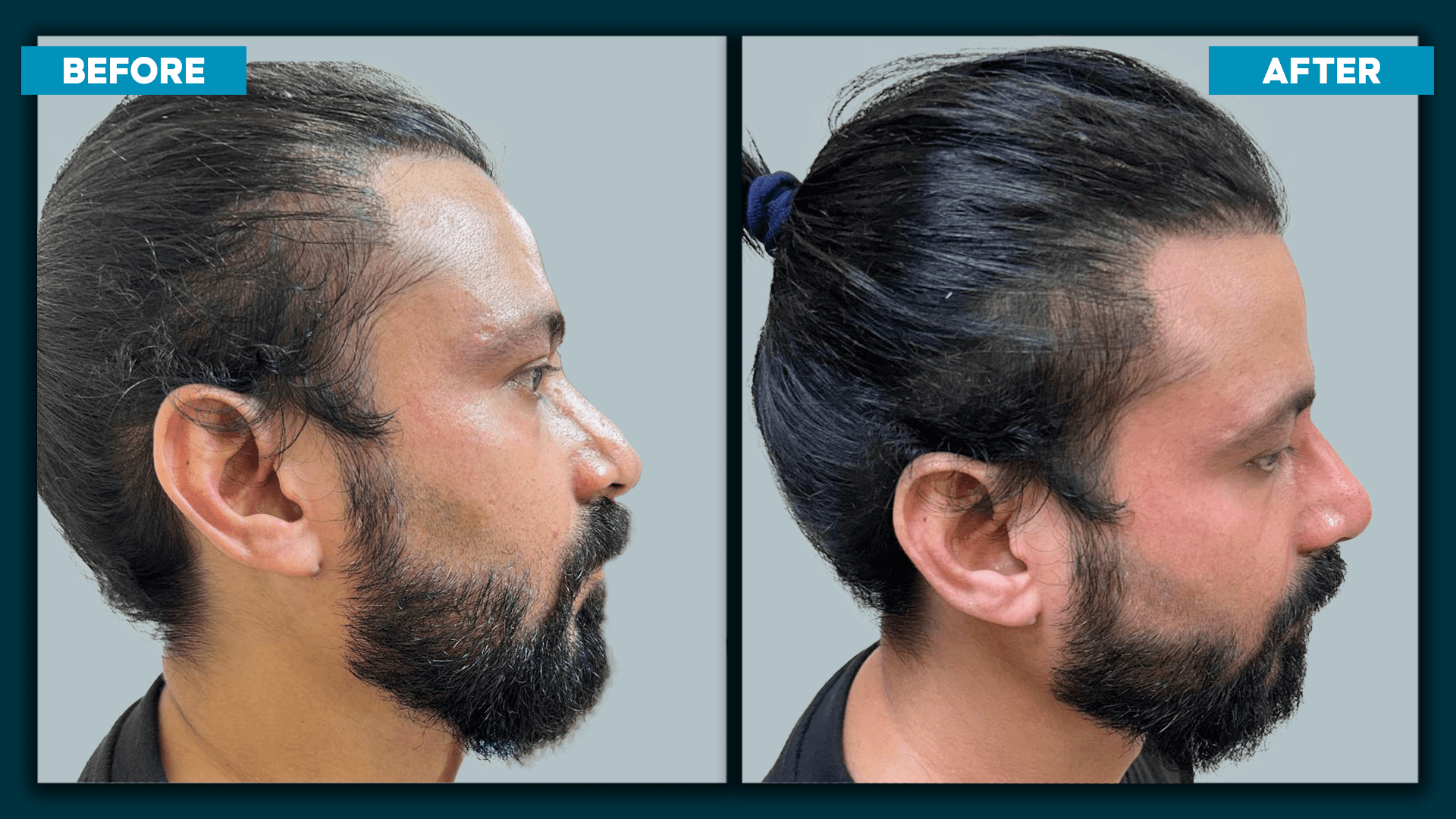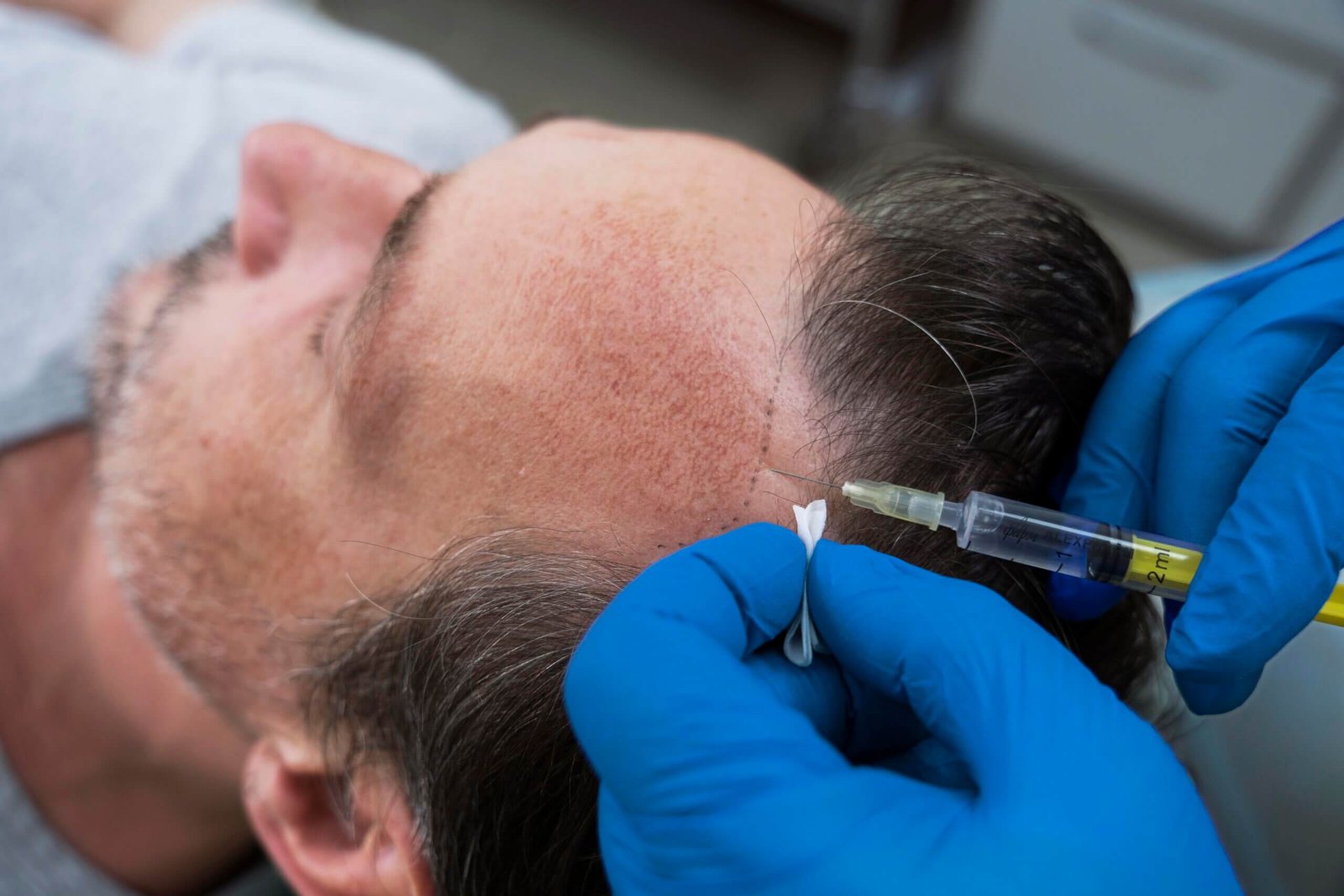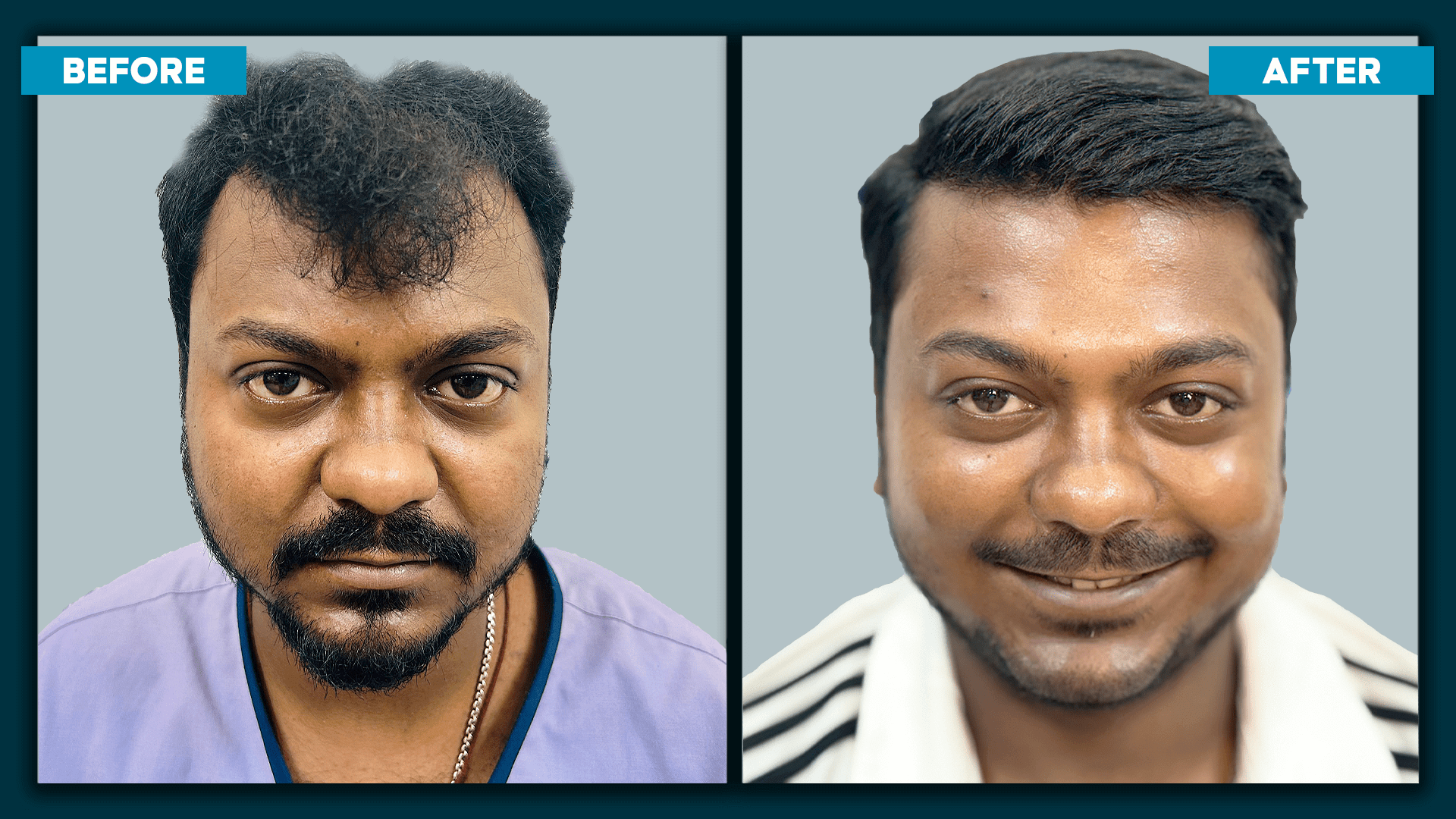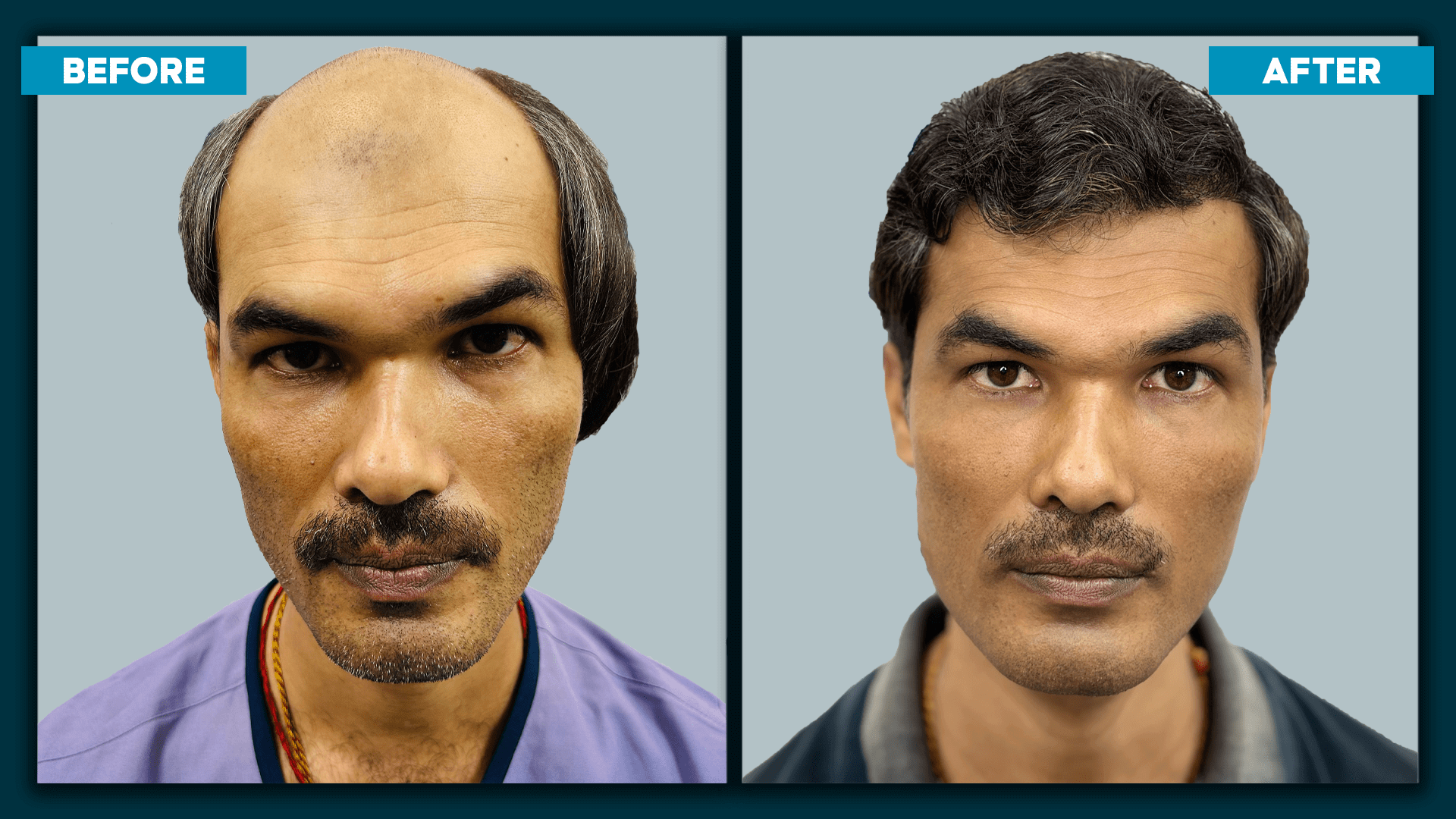
Hair transplant surgery has become one of the most reliable long-term solutions for pattern baldness and thinning hair. With modern techniques like Follicular Unit Extraction (FUE) and Follicular Unit Transplantation (FUT), patients today can achieve natural-looking results with minimal downtime. However, as the popularity of hair restoration continues to rise, one serious concern has also gained attention — donor area overharvesting.
Many patients focus only on how dense their front hairline will look, but very few understand the importance of protecting the donor area. The donor zone is the foundation of any successful transplant. If it is damaged or excessively harvested, the consequences can be permanent and aesthetically challenging.
This article explains what donor area overharvesting is, why it happens, its long-term effects, and — most importantly — how it can be prevented.
Understanding the Donor Area in Hair Transplant
In a hair transplant procedure, healthy hair follicles are taken from a “safe donor zone,” typically located at the back and sides of the scalp. These areas are genetically resistant to the hormone DHT (dihydrotestosterone), which causes male and female pattern hair loss.
Because these hairs are resistant, when transplanted to balding areas, they continue to grow permanently. However, there is one important limitation:
The donor area has a finite number of grafts.
On average, a person may have 6,000–8,000 grafts available in the safe donor zone over their lifetime. But not all of them can be extracted safely. Usually, only 40–50% of donor grafts can be harvested without creating visible thinning.
When a clinic extracts more than the safe limit, it leads to donor area overharvesting.
What Is Donor Area Overharvesting?
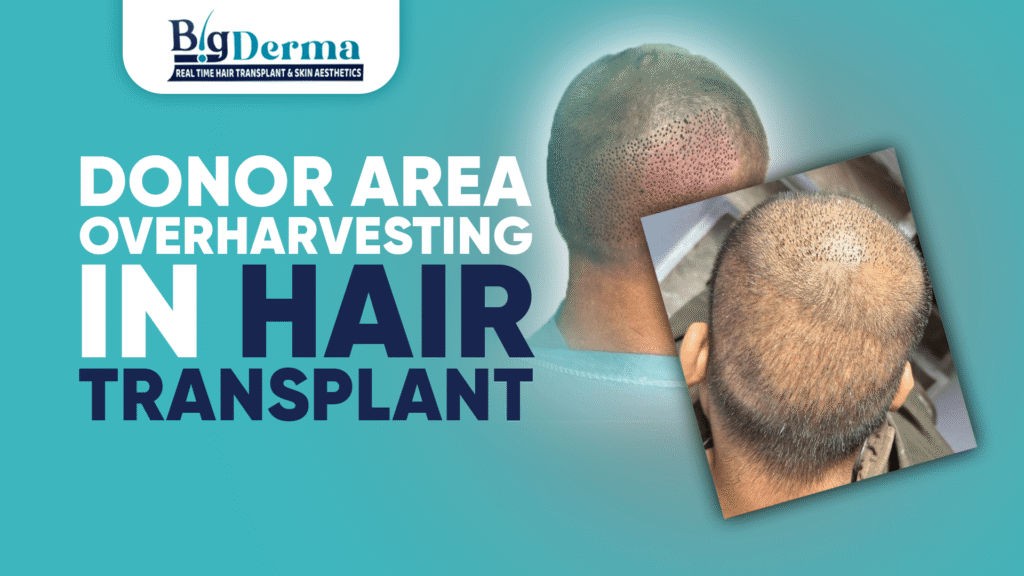
Donor area overharvesting occurs when too many hair grafts are extracted from the donor zone, exceeding its safe capacity. This results in visible thinning, patchiness, scarring, or a “moth-eaten” appearance at the back of the scalp.
Instead of looking dense and natural, the donor area may appear sparse — especially when hair is cut short.
Overharvesting is most commonly associated with FUE because this technique involves removing individual follicular units one by one. If the extraction pattern is not evenly distributed, or if too many grafts are removed from a small region, damage becomes noticeable.
Why Does Donor Overharvesting Happen?
1. Poor Surgical Planning
A proper hair transplant requires long-term vision. Some clinics focus only on delivering high graft numbers in one session without considering future hair loss progression. If a patient continues to lose native hair later, there may not be enough donor grafts left for correction.
2. Inexperienced Surgeons or Technicians
FUE requires precision. If punches are too close together or repeatedly taken from the same zone, density decreases rapidly. In some low-cost clinics, technicians perform most of the extraction process without adequate supervision.
3. Overpromising High Graft Numbers
Some clinics advertise “4,000–5,000 grafts in one session” without evaluating whether the patient’s donor capacity can safely support that number.
4. Multiple Transplants Without Planning
Patients who undergo repeated procedures without proper donor management are at higher risk of overharvesting.
Signs of Donor Area Overharvesting
Donor damage may not be obvious immediately after surgery. It becomes visible once the hair grows back. Common signs include:
- Patchy or uneven hair growth
- Visible white dot scarring (especially in FUE)
- Thinning that exposes the scalp
- A see-through appearance under bright light
- Difficulty keeping hair short
In severe cases, the donor area may look thinner than the original balding area.
Psychological Impact of Overharvesting
Hair restoration is often pursued to regain confidence. However, when donor damage becomes visible, patients may experience:
- Anxiety about short hairstyles
- Regret over choosing the wrong clinic
- Social discomfort
- Fear of running out of grafts for future correction
Many patients say, “I fixed the front but damaged the back.” That emotional distress can be significant because donor hair is a non-renewable resource.
How Is Donor Area Overharvesting Prevented?
Preventing overharvesting requires medical expertise, ethical practice, and long-term planning.
1. Proper Donor Assessment
Before surgery, a detailed donor evaluation must be done. This includes:
- Measuring donor density (hairs per cm²)
- Assessing scalp laxity (for FUT cases)
- Evaluating miniaturization
- Reviewing family history of hair loss
A responsible surgeon calculates the maximum safe lifetime extraction limit before planning the first session.
2. Strategic Extraction Pattern
In FUE, grafts should be extracted evenly across the entire safe donor zone, not concentrated in one small region. A random, well-distributed extraction pattern preserves visual density.
This technique ensures that even if 2,000–3,000 grafts are removed, the donor area still appears naturally dense.
3. Conservative Graft Planning
Not every patient needs extremely high graft numbers in a single session. Sometimes, dividing the procedure into staged sessions protects donor integrity.
A natural-looking hairline with moderate density is always better than an overly dense hairline with a destroyed donor area.
4. Considering FUT When Appropriate
In certain cases, FUT may be safer than FUE for preserving donor density. Because FUT removes a strip of scalp rather than extracting individual units from a wide area, it can maintain overall donor appearance better in some patients.
An experienced surgeon decides which technique suits the patient’s long-term goals.
5. Long-Term Hair Loss Planning
Hair loss is progressive. A 28-year-old patient with Norwood 3 may eventually progress to Norwood 5 or 6.
If the first transplant uses most of the donor supply, there may be no grafts left for future needs.
Responsible surgeons design a “master plan” considering:
- Current hair loss stage
- Future progression probability
- Age
- Donor reserve capacity
6. Avoiding Over-Extraction Per Square Centimeter
A healthy donor zone may contain 70–100 follicular units per cm². Safe extraction usually means removing no more than 15–20 units per cm² in a session.
Exceeding this threshold increases visible thinning risk.
7. Advanced Tools and Smaller Punch Sizes
Modern FUE punches range from 0.7 mm to 0.9 mm. Smaller punches reduce scarring and preserve surrounding follicles.
However, tools alone are not enough — surgeon skill remains the key factor.
Can Donor Overharvesting Be Fixed?
Correction is challenging but sometimes possible.
Options may include:
- Body hair transplant (using beard or chest hair)
- Scalp micropigmentation (SMP) to camouflage thinning
- Hair fiber or density treatments
- Limited corrective graft redistribution
However, restoration is never as simple as prevention. Once donor follicles are removed, they do not regenerate.
The Importance of Choosing the Right Clinic
When selecting a hair transplant clinic, patients should ask:
- Who performs the extraction — doctor or technician?
- How many grafts are safe for my donor?
- What is my lifetime donor capacity?
- Do you plan for future hair loss?
Transparency is a sign of professionalism. Clinics that guarantee “maximum grafts in one day” without evaluation should raise caution.
A Balanced Approach to Hair Restoration
The goal of a hair transplant is not just to create density in the front. It is to maintain harmony between:
- Recipient area
- Donor zone
- Future hair loss
- Natural aesthetics
A beautiful hairline means little if the back of the scalp looks depleted.
Ethical hair restoration focuses on sustainability — protecting donor health for life.
FAQ Section
Is donor overharvesting permanent?
Yes. Once grafts are removed, they do not grow back. Visible thinning may be permanent unless corrected with alternative methods.
How many grafts can be safely extracted?
It depends on donor density and scalp characteristics. On average, 2,000–3,000 grafts per session is considered safe for many patients, but individual evaluation is essential.
Does FUE always cause overharvesting?
No. When performed by experienced surgeons with proper planning, FUE can preserve donor appearance effectively.
Can short hairstyles reveal donor damage?
Yes. Overharvesting becomes more noticeable when hair is trimmed very short.
How can I avoid donor damage?
Choose an experienced clinic, avoid unrealistic graft demands, and ensure long-term planning is part of your treatment strategy.
Final Thoughts
Donor area overharvesting is one of the most preventable complications in hair transplant surgery. It does not happen because the technique is flawed — it happens because of poor planning, inexperience, or aggressive graft extraction.
Your donor area is a limited, valuable resource. Once compromised, it cannot fully recover. Therefore, the smartest decision is not choosing the clinic that promises the highest graft count — but the one that prioritizes balance, safety, and long-term natural results.
A successful hair transplant is not just about adding hair. It is about protecting what you already have.
If you are considering a procedure, ensure that your surgeon treats your donor zone as carefully as your hairline — because both define the final outcome.