One of the most common concerns patients have after surgery is:
“How should I sleep so I don’t damage my grafts?”
It may seem like a small detail, but sleeping incorrectly can increase swelling, disturb graft placement, or even affect growth. Understanding the correct sleeping position helps protect your investment and ensures optimal healing.
Why Sleeping Position Matters After Hair Transplant
During a hair transplant, follicular units are carefully implanted into tiny recipient sites. These grafts are not permanently secured immediately. In fact, for the first 72 hours, they are in a fragile state.
By day 7–10, grafts typically anchor into the scalp tissue. But until then:
- Excessive pressure can shift grafts
- Rubbing against pillows can cause friction
- Sleeping flat may increase facial swelling
- Contact with rough fabric may irritate scabs
Proper sleeping posture reduces these risks significantly.
The Best Sleeping Position: Elevated and On Your Back
The safest sleeping position after a hair transplant is:
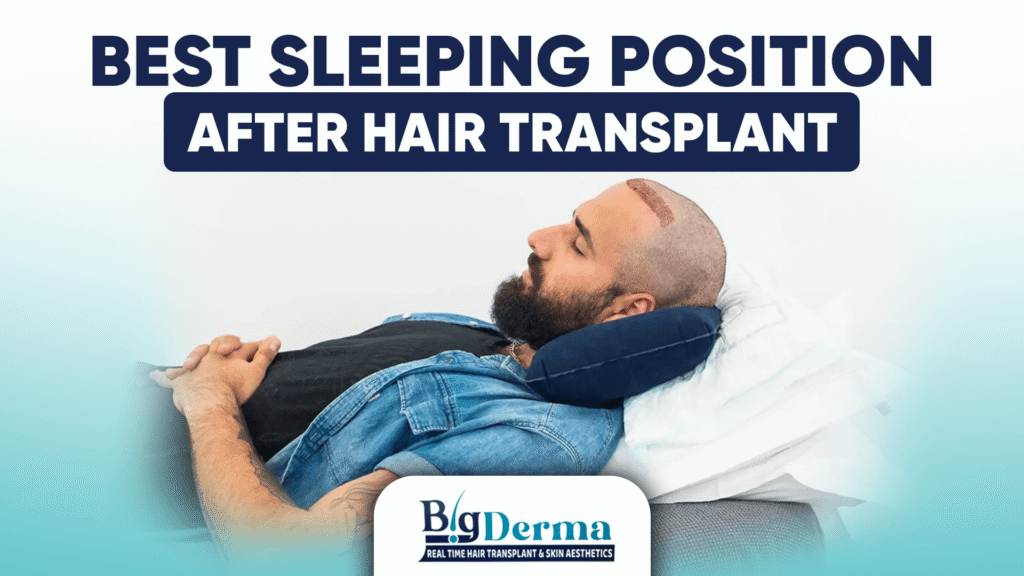
Sleeping on your back with your head elevated at a 30–45 degree angle.
This position provides two major benefits:
1. Protects the Grafts from Friction
When you sleep on your side or stomach, the transplanted area may rub against the pillow. This can disturb grafts during the first few days. Sleeping on your back keeps the recipient area away from direct contact.
2. Reduces Swelling
Post-transplant swelling is common, especially around the forehead and eyes. Keeping your head elevated allows gravity to prevent fluid accumulation in the face.
Many clinics recommend using:
- 2–3 pillows
- A recliner chair
- A travel neck pillow for stability
A neck pillow helps prevent your head from tilting sideways during sleep.
How Long Should You Sleep Elevated?
Most surgeons recommend sleeping upright for at least 5 to 7 days after the procedure. Some patients prefer continuing for 10 days to feel extra safe.
The critical period is the first 3–4 nights when grafts are most vulnerable. After day 7, risk of graft dislodgement becomes very low.
Positions to Avoid After Hair Transplant
1. Sleeping on Your Stomach
This is the most dangerous position because it puts direct pressure on the transplanted area. Even mild friction can disturb grafts during early healing.
2. Sleeping on Your Side
Side sleeping increases the chance of rubbing the recipient or donor area against the pillow. It may also cause uneven swelling.
3. Sleeping Completely Flat
Lying flat can worsen facial swelling due to fluid accumulation.
Avoid these positions for at least the first week.
What About the Donor Area?
Patients often focus only on protecting the recipient area (usually the front scalp), but the donor area — typically the back of the head — also needs care.
In FUE, tiny extraction points are created in the donor zone. In FUT, a linear incision is made.
Sleeping directly on the donor area may cause discomfort, but mild pressure usually does not damage healing grafts. However, minimizing friction is still advisable.
Using a soft pillow and clean pillowcase is important for hygiene and comfort.
Tips to Make Sleeping More Comfortable
Sleeping upright for several days can feel unnatural, especially if you are used to side sleeping. Here are practical tips to improve comfort:
Use a Recliner
Many patients find sleeping in a recliner chair easier than stacking pillows. It naturally maintains the correct angle.
Try a Travel Neck Pillow
A U-shaped neck pillow stabilizes your head and prevents rolling sideways.
Choose a Soft, Clean Pillowcase
Silk or satin pillowcases reduce friction and irritation.
Avoid Tight Caps at Night
Some clinics recommend wearing a loose surgical cap for the first few nights. If advised, make sure it does not apply pressure on grafts.
What Happens If You Accidentally Sleep Wrong?
Many patients panic if they wake up and realize they rolled onto their side. In most cases:
- If there is no bleeding
- No visible graft displacement
- No severe pain
Then grafts are likely safe.
By day 3–4, grafts become more secure. Minor accidental contact usually does not ruin the results.
However, if you notice active bleeding or visible graft loss, contact your clinic immediately.
Understanding the Graft Healing Timeline
Knowing the healing stages can ease anxiety:
- Day 1–3: Grafts are fragile and need maximum protection
- Day 4–7: Grafts begin anchoring into tissue
- Day 7–10: Risk of dislodgement becomes minimal
- Week 2: Scabs start falling off naturally
Once scabs shed, you can gradually return to your normal sleeping position unless your surgeon advises otherwise.
Managing Swelling During Sleep
Swelling typically appears on days 2–4 after surgery. It may move from the scalp down to the forehead or around the eyes.
To minimize swelling:
- Keep head elevated
- Avoid bending forward frequently
- Follow prescribed medication instructions
- Stay hydrated
Proper sleeping posture is one of the most effective non-medical ways to control swelling.
Psychological Comfort During Recovery
The first week after a hair transplant can feel stressful. Patients worry about:
- Damaging grafts while sleeping
- Accidentally touching the scalp
- Losing results
This anxiety is normal. Remember:
Hair grafts are delicate, but they are not “loose seeds.” Once placed, they sit inside tiny incisions that hold them in position. With basic care and proper posture, the risk of damage is very low.
Confidence during recovery improves overall experience and reduces unnecessary stress.
Common Questions Patients Ask
Can I sleep normally after 7 days?
Yes, in most cases you can return to your normal sleeping position after 7–10 days, once grafts are fully secured.
Is it okay if my donor area touches the pillow?
Mild contact is generally fine, but avoid aggressive rubbing.
Should I use a special pillow?
Not mandatory, but neck pillows or recliners help maintain elevation and prevent rolling.
Can I take sleeping medication?
Only if prescribed by your doctor. Avoid self-medicating.
Does FUT require different sleeping precautions?
The principles are similar. However, FUT patients should avoid excessive stretching of the back scalp to protect the incision line.
Creating a Safe Night Routine After Hair Transplant
Before going to bed:
- Follow post-op washing instructions
- Ensure pillowcases are clean
- Arrange pillows or recliner properly
- Use neck support
- Avoid alcohol or heavy meals late at night
Simple preparation reduces nighttime stress.
When Can You Resume Normal Lifestyle?
Most patients return to:
- Normal sleeping positions: After 7–10 days
- Light exercise: After 10–14 days
- Haircuts: After 3–4 weeks (depending on clinic advice)
Always follow your surgeon’s specific instructions, as individual cases vary.
Final Thoughts
The best sleeping position after a hair transplant is on your back with your head elevated at a 30–45 degree angle for the first week. This simple adjustment protects grafts, reduces swelling, and promotes smooth healing.
While it may feel uncomfortable initially, remember that this phase is temporary. A few careful nights can significantly impact your final results.
Hair restoration is a long-term investment. Protecting your grafts during the early healing period ensures that the effort, time, and cost you’ve invested translate into strong, natural, and lasting hair growth.
A successful transplant does not end in the operating room — it continues through responsible aftercare, including how you sleep.