Hair loss, known medically as alopecia, simply means your hair is falling out faster than it is growing back. Think of it this way: your scalp is constantly cycling through growth, rest, and shedding, and when that cycle gets disrupted, you start noticing the difference.
Not every hair fall is a problem. Natural hair loss is the everyday shedding of 50 to 100 strands, which is just your scalp refreshing itself. Unnatural hair loss is when you are losing significantly more than that, noticing thinning patches, a widening part, or a receding hairline that was not there before.
The most common signs are hair on your pillow every morning, a clogged drain after every wash, or scalp showing through in places it did not used to. The good news is that most causes are treatable once you understand what is actually driving the loss.
Types of Hair Loss
Hair loss is not one single condition. There are several distinct types, each with a different cause, a different pattern, and a different way of being treated. Getting this right is the first step, because applying the wrong treatment to the wrong type simply does not work.
You shed between 50 and 100 hairs a day. That sounds like a lot, but your scalp has roughly 100,000 hairs on it, so that level of shedding is just the natural cycle doing its job. New hair grows in as old hair falls out. The math works out fine.
The problem starts when that cycle breaks, when you are losing more than you are growing back.
Here is a simple way to check at home
- Run your fingers through dry hair from root to tip. Gently pull. If you get more than 5 to 6 hairs each time you do this at three different spots on your scalp, that is worth paying attention to.
- Look at your pillow in the morning. A few hairs? Normal. A visible cluster every single day? Not normal.
- Look at your part line in the mirror. If it looks noticeably wider than it did 6 months ago, your hair density is reducing.
- Check your bathroom drain. If it is clogging up every week when it used to be fine, your shedding has increased.
None of these tests are medical diagnoses. But they are honest signals. If two or more of these apply to you, you are not being paranoid, something has changed and it is worth understanding why.
| Normal Hair Shedding | Hair Loss You Should Take Seriously |
| 50 to 100 hairs per day | Consistently 150+ hairs per day |
| Hairs in the drain after washing | Large clumps in the drain or on the pillow |
| Part line looks the same as before | Part line visibly wider than 6 months ago |
| Temples slightly thin in bright light | Visible scalp showing through at crown or sides |
| Seasonal shedding (monsoon is common) | Shedding lasting more than 3 months continuously |
The 12 Real Causes of Hair Loss in India
Here is where I want to spend the most time with you, because this is where most articles fall short. They list causes like “genetics” and “stress” and leave it at that. I want to actually explain what is happening in your body and why India specifically creates conditions that other countries do not face in the same way.
- Genetic Hair Loss, The Most Honest Conversation
Let us start with the one nobody wants to hear but everyone needs to understand.
Androgenetic alopecia, what people call male pattern baldness or female pattern hair thinning, is the most common reason for hair loss in India. It affects around 58% of Indian men by the time they reach their late forties. But increasingly, I am seeing it in men in their mid-twenties. And in women, it shows up differently but it is just as real.
Here is what actually happens. There is a hormone called DHT, dihydrotestosterone. It is made from testosterone by an enzyme in your body. In people with genetic sensitivity, DHT gradually shrinks the hair follicles. Not overnight. Over months and years. Hairs start coming in thinner, shorter, lighter. Eventually the follicle gets so small it stops producing visible hair altogether.
The genetic part means this sensitivity is inherited. You may have got it from your mother’s father, your father, or both sides. The gene does not skip generations cleanly, it just expresses itself differently depending on hormones, age, and environment.

| Doctor’s Note The good news: genetic hair loss is the most treatable type. Minoxidil and finasteride both have strong clinical evidence. The earlier you start, the better your results. I say this every day in clinic, the patients who waited five years always wish they had come in sooner. |
- Nutritional Deficiencies, India’s Overlooked Epidemic
If I had to pick the second most common reason I see hair loss in my clinic, it would be this. And what makes it frustrating is that it is completely fixable.
Hair follicles are among the most metabolically active cells in the body. They need a constant supply of nutrients to keep functioning. When that supply dips, the body makes a rational choice, it diverts nutrition away from hair (which is not essential for survival) and towards organs that are. Your hair pays the price.
In India, deficiencies that I regularly test for and find in hair loss patients are:
Iron, The Big One
India has one of the highest rates of iron deficiency anaemia in the world. Women especially are affected, heavy periods, low dietary iron, and frequent pregnancies all compound the problem. Even if you are not formally anaemic, low ferritin (your body’s iron storage protein) is enough to trigger significant hair shedding. I always check ferritin alongside haemoglobin, because haemoglobin can be normal while ferritin is already depleted.
Vitamin B12
B12 deficiency is extremely common in vegetarians and vegans, which is a significant portion of the Indian population. B12 is found almost exclusively in animal products. Without it, red blood cell production is impaired, oxygen delivery to the scalp decreases, and hair growth slows. Many of my patients do not know they are deficient until I test them.
Vitamin D
Here is one that confuses people. We live in a country with abundant sunshine, yet vitamin D deficiency is rampant in India, affecting over 70% of the urban population by some estimates. The reason is simple: most of us spend our days indoors under screens and fluorescent lights. Vitamin D receptors are present in hair follicles, and deficiency impairs the growth cycle. I check this in almost every new patient.
Zinc and Protein
Zinc is essential for protein synthesis and cell repair in hair follicles. And protein itself, hair is made of keratin, which is a protein. If your daily diet is low in protein (very common in purely vegetarian diets without conscious planning), your hair growth is going to suffer. I often ask patients to just tell me what they ate yesterday. The answer is usually very telling.
| Doctor’s Note Before you go buying supplements from Instagram ads: please get your levels tested first. Taking iron supplements when you do not need them can cause real harm. A blood test is cheap. Get tested, then supplement based on what you actually need. |
- Thyroid Problems, More Common Than You Think
Both hypothyroidism (underactive thyroid) and hyperthyroidism (overactive thyroid) cause hair loss. And thyroid disorders are extremely prevalent in India, particularly in women.
The thyroid controls the hair growth cycle at a hormonal level. When it is disrupted in either direction, hairs spend less time in the growth phase and more time in the resting and shedding phase. The result is diffuse thinning, hair falling evenly across the whole scalp rather than in one spot.
What makes thyroid-related hair loss tricky is that it is often the last symptom patients notice, and by the time they figure out the connection, their thyroid issue has been going untreated for months. If you have hair loss along with fatigue, weight changes, feeling unusually cold or hot, or irregular periods, please get your thyroid tested. It is a simple blood test.
| Keep in mind Even if your thyroid report says ‘normal’, ask your doctor to specifically check TSH, T3, and T4. Some patients fall in the borderline range which is technically normal but still affects hair. |
- PCOD and Hormonal Imbalance in Women
Polycystic ovary syndrome affects roughly 1 in 5 Indian women. It causes the body to produce higher than normal levels of androgens, male hormones, which in women leads to the same DHT-related follicle shrinkage I described in genetic hair loss.
What I see in clinic: women with PCOD often notice their hair thinning at the top and temples, increased facial hair, irregular periods, and weight gain that is difficult to explain. These symptoms together are almost diagnostic even before any test.
The important thing to understand here is that treating the PCOD treats the hair loss. There is no separate hair treatment for PCOD-related loss, the root cause needs to be addressed. This usually involves hormonal management, lifestyle changes, and sometimes specific medications like spironolactone, which your dermatologist and gynaecologist should discuss together.
- Postpartum Hair Loss, The One That Catches New Mothers Off Guard
If you had a baby in the last year and your hair is falling heavily, please read this carefully because I want to give you the same reassurance I give my patients: this is normal, it is temporary, and your hair will come back.
During pregnancy, elevated oestrogen levels keep more hairs than usual in the growth phase. Your hair looks fuller than it ever has. Then after delivery, oestrogen drops sharply. All those hairs that were being held in the growth phase suddenly shift to the shedding phase at the same time. The result is dramatic, clumps in the shower, hair on everything, real fear.
This is called telogen effluvium. It typically starts 3 to 4 months after delivery and can last another 3 to 6 months. By around the one-year mark post-delivery, most women see their hair return to its pre-pregnancy density.
| Doctor’s Note What actually helps: ensure your iron and vitamin levels are not further depleted (breastfeeding increases nutritional demand significantly). Be gentle with your hair. Avoid tight hairstyles. This is not the time for chemical treatments. And check your thyroid, postpartum thyroiditis is common and can extend the shedding period significantly. |
- Stress, But More Specifically Than You Have Been Told
Everyone says “stress causes hair loss.” That is true, but vague. Let me be more specific because the type of stress matters and so does the timeline.
The kind of stress that causes hair loss is called telogen effluvium. It happens when a significant physical or emotional shock pushes a large number of hair follicles out of the growth phase simultaneously. Examples: a serious illness, major surgery, dramatic weight loss, a death in the family, a particularly brutal exam season or job loss.
The important detail most people miss: the shedding does not happen immediately. It happens 2 to 3 months after the stressful event. So patients often come to me saying, “I don’t understand why my hair is falling, nothing bad happened to me recently.” Then we work backwards and find the surgery, the bereavement, the COVID infection, right around 10 to 12 weeks before the shedding started.
Telogen effluvium is temporary. Once the trigger is removed and your body stabilises, the hair cycle corrects itself. But chronic stress, the kind that never really goes away, the low-level anxiety that many people in Indian metros live with daily, can keep the cycle disrupted for much longer.

- Scalp Health Problems, The Foundation People Ignore
You cannot grow healthy hair from an unhealthy scalp. This sounds obvious but it is genuinely overlooked.
Dandruff and seborrheic dermatitis are extremely common in India, especially in humid cities and during monsoon. The inflammation caused by the fungus Malassezia, which thrives in warm, humid conditions, irritates the scalp, blocks follicles, and disrupts the growth cycle. If your scalp is constantly itchy, flaky, or red, this inflammation is likely affecting your hair growth.
Tinea capitis is a fungal infection of the scalp that is more common in children but affects adults too. It causes patchy hair loss with scaling at the affected sites. It needs antifungal treatment, not just anti-dandruff shampoo.
The practical message: take your scalp health as seriously as your skin health. If there is persistent itching, flaking, or irritation on your scalp, see a dermatologist. Treating the scalp often meaningfully improves hair density within a few months.
- Hard Water, The Cause Specific to Indian Cities
This one does not come up enough, and I think it should. If you live in Delhi, Bengaluru, Mumbai, Chennai, or most of India’s major cities, there is a significant chance your water supply is hard, meaning it contains high levels of calcium and magnesium ions.
When hard water dries on your scalp and hair, these minerals deposit on the hair shaft and scalp surface. Over time, this mineral buildup weakens the hair shaft, causes breakage, makes hair feel rough and dull, and blocks follicular openings. It does not directly kill follicles but it creates a consistently hostile environment for healthy hair growth.
You can test for this: if your bathroom walls have white mineral deposits, and your shampoo does not lather well, your water is hard. A clarifying wash once a week, or a chelating shampoo that binds and removes minerals, can make a noticeable difference. Some patients with severe cases benefit from a water softening filter fitted to their shower.
| Doctor’s Note I have had patients improve their hair loss noticeably by just changing the quality of water they wash with. It is not always the full answer but it is often a meaningful contributing factor that gets zero attention. |
- Chemical Treatments and Heat Damage
Keratin treatments, bleaching, perming, rebonding, these are popular across India now and they all damage the hair shaft. To be fair, these treatments do not destroy follicles. The root continues to produce new hair. But if every new hair that grows out is immediately damaged above the scalp, the overall appearance is one of thinning, breakage, and poor density.
The danger level goes up with frequency. Getting a keratin treatment once in a while is very different from being in the chair every three months. Overlapping chemical treatments, especially bleaching followed by colouring followed by smoothing, create cumulative damage that can become quite severe.
If your hair is breaking above the scalp rather than falling from the root, this is likely your situation. The treatment is giving your hair a genuine rest from chemicals, deeply conditioning it, and being patient.
- Medications That Most Patients Do Not Connect to Hair Loss
A surprisingly large number of common medications list hair loss as a side effect. Patients rarely connect the two because they started the medication months before the shedding began. The ones I see most often in my practice:
- Blood pressure medications, particularly beta blockers (Metoprolol, Atenolol) and ACE inhibitors
- Antidepressants, especially SSRIs, and lithium-based mood stabilisers
- Cholesterol medications, statins can occasionally cause diffuse shedding
- Thyroid medications, paradoxically, sometimes the treatment itself causes transitional hair loss
- Oral contraceptive pills, some formulations with high androgenic activity can worsen hair loss in genetically predisposed women
- Long-term steroid use, affects the hair cycle systemically
If you started a new medication 2 to 4 months before your hair loss began, bring this up with your prescribing doctor. There is often an alternative that suits you better.
- Alopecia Areata, When the Immune System Gets Confused
Alopecia areata is one of the more distressing forms of hair loss because it appears suddenly and in a very visible way, round, smooth, completely bald patches on the scalp, beard, or eyebrows.
It is an autoimmune condition. For reasons that are still not fully understood, the immune system mistakenly treats hair follicles as foreign bodies and attacks them. The follicles go into a dormant state rather than being destroyed, which means regrowth is possible, and in mild cases, spontaneous regrowth without treatment does happen.
What is important to know: alopecia areata is not caused by poor hygiene, stress alone, or anything you did wrong. It has a genetic component and is associated with other autoimmune conditions like thyroid disease and vitiligo. It is not contagious. The patches can come and go unpredictably. For persistent cases, there are now effective treatment options including topical immunotherapy and newer JAK inhibitor medications.
- Age-Related Hair Thinning
After the age of 40, hair follicles naturally miniaturise as part of the ageing process. The growth phase shortens. Hairs come in finer. This affects both men and women, though it is more pronounced and follows a distinct pattern in men.
This is not preventable in the absolute sense, but it can be significantly slowed. Maintaining good nutrition, managing scalp health, keeping stress in check, and using appropriate treatments early all change the trajectory. I have 55-year-old patients with excellent hair density because they took care of it from their thirties. I have 38-year-olds who look significantly older because they ignored all the early signals.
Age is not destiny. It is just a variable in the equation.
What India Gets Wrong About Hair Loss, 6 Myths I Hear Every Week
Part of my job is undoing bad advice. These are the myths I correct most often.
Myth 1: Oiling your hair every day is essential
This one is deeply embedded in Indian households and I understand why, generations of grandmothers swore by coconut oil. Here is the actual clinical picture. Light oiling can reduce friction and add some moisture to the hair shaft. But applying heavy oil directly to the scalp every day can clog follicles, trap sweat and fungus, and worsen conditions like seborrheic dermatitis. If you are already prone to dandruff and you are oiling daily, you are making the problem worse. Use it lightly and less frequently, once or twice a week on the hair shaft is fine for most people.
Myth 2: Cutting hair makes it grow back thicker
No, it does not. Hair thickness is determined at the follicle level. Cutting the shaft changes nothing below the scalp. What happens is that after a haircut, the blunt end of newly growing hair feels coarser than the naturally tapered end it replaced. That tactile difference gets interpreted as “thicker” hair. It is not.
Myth 3: Only old people lose hair
I see patients in their early twenties every week. Genetic hair loss can begin the moment DHT sensitivity kicks in, sometimes as early as 18. Nutritional deficiencies affect every age group. Stress-related shedding is arguably more common in young working professionals than in any other demographic. This myth causes people to delay seeking help by a decade, by which point reversible loss has often become permanent.
Myth 4: Onion juice grows hair back
There is one small study that showed some benefit of onion juice for a specific type of patchy hair loss (alopecia areata). That study had a tiny sample and has not been replicated convincingly. For androgenetic alopecia, the most common type, there is no credible evidence that onion juice does anything meaningful. It is not harmful if you want to try it, but please do not use it as a substitute for actual treatment if your hair loss is progressing.

Myth 5: Hair loss means your testosterone is low
This is almost the exact opposite of true. Androgenetic alopecia is driven by DHT, which comes from testosterone. But the relevant factor is follicle sensitivity to DHT, not the amount of testosterone in your blood. Many men with excellent testosterone levels lose hair rapidly. This myth causes unnecessary anxiety and sometimes leads people to take testosterone supplements, which can actually accelerate hair loss in genetically predisposed people.
Myth 6: Stress-related hair loss is permanent
Telogen effluvium, shedding triggered by a stressful event, is almost always temporary. Once the trigger resolves and your body restores balance, the hair cycle corrects and density returns. It takes time, usually 6 to 12 months, but regrowth does happen. The only scenario where this becomes a concern is chronic, unrelenting stress over years, which continuously disrupts the cycle. Managing the stress manages the hair loss.
These are the things I notice in practice that generic hair loss articles written for a Western audience never address. They matter.
Seasonal shedding in India is real
Many Indians notice significantly more shedding during and just after monsoon. This is not your imagination. Changes in humidity, reduced sunlight during overcast months, and seasonal shifts in hormone levels all affect the hair cycle. Most of this resolves on its own within 6 to 8 weeks. If you are already dealing with underlying hair loss, the monsoon shedding can feel alarming, but the two things are usually separate.
Pollution is quietly damaging Indian scalps
Air pollution in Indian metros, the particulate matter, the diesel exhaust, the construction dust, accumulates on the scalp and hair. Studies from Indian dermatology journals have shown that pollutants can disrupt the scalp’s lipid barrier, trigger inflammation, and interfere with the proteins that structure the hair follicle. If you commute in open vehicles in a polluted city, washing your scalp properly at least every alternate day matters more than you might think.
Traditional remedies, what I respect and what I don’t
I was trained in modern medicine but I grew up in an Indian household. I take Ayurvedic herbs seriously when there is reasonable evidence behind them. Bhringraj (Eclipta alba) has some studies supporting its use for hair growth, it appears to extend the anagen growth phase in animal models. Ashwagandha has good evidence for reducing cortisol, which indirectly benefits stress-related hair loss. Brahmi has anti-inflammatory properties.
What I am more cautious about: the dozens of marketed “Ayurvedic hair oils” that list 40 ingredients but have no actual standardisation or clinical evidence. The individual herbs can have value. The commercial products built around vague traditions, I would need to see real evidence before recommending them.
The Vitamin D paradox
I want to stay on this for a moment because it surprises every patient. India receives more sunshine than almost anywhere on Earth, yet studies show that over 70% of urban Indians are vitamin D deficient. The reason is that most of us work indoors, commute in covered vehicles, and are appropriately using sunscreen when we do go outside. Vitamin D is produced through direct sun exposure on the skin, not through glass, not through sunscreen. And dietary sources of Vitamin D are very limited in Indian cooking. This matters for hair because Vitamin D receptors in the hair follicle play a role in the growth cycle. If your levels are low, supplementation is simple and the benefits go well beyond hair.
When Should You Actually See a Doctor?
I want to answer this honestly rather than just saying “see a doctor for everything,” because I know the reality of how people in India make these decisions.
| You can monitor at home for now if: Your hair fall is mild and recent, you have a clear cause (you just had a baby, or went through a stressful period, or changed your diet), and you are already addressing that cause. Monitor for 2 to 3 months. If it improves, you were right. If it does not, move to the next column. |
| Come in within a few weeks | Come in this week, do not wait |
| Hair thinning that has been ongoing for 3+ months with no clear cause | Sudden patchy bald spots appearing on scalp or beard |
| Your part line has widened noticeably | Significant shedding starting in a child |
| Hairline is receding at the temples or crown | Hair loss with scalp redness, scaling, oozing, or pain |
| Hair loss with fatigue, weight change, or irregular periods | Receding hairline in a woman above 40, could be FFA, which scars |
| You want a proper diagnosis before spending money on treatments | Hair loss with any skin rash elsewhere on the body |
What happens when you come to a dermatologist for hair loss: we do a proper scalp examination, often with a dermatoscope that magnifies the scalp 10 to 20 times. We do blood tests tailored to your symptoms. We diagnose the type of hair loss first, because treatment is completely different depending on whether it is androgenetic, telogen effluvium, alopecia areata, or something else. Then we build a plan. It usually takes one or two appointments to get a complete picture.
What Actually Works, A Practical Treatment Guide
I want to walk you through this as a progression rather than a list, because where you start depends on the type and stage of your hair loss.
Stage 1: Getting the Basics Right (Free to Low Cost)
This is where everyone should start regardless of anything else. If your nutrition is poor, your sleep is broken, your scalp is inflamed, and you are chronically stressed, no medication will compensate effectively.
- Fix the deficiencies: Get tested for iron, ferritin, B12, vitamin D, and zinc. Correct what is low with appropriate supplementation.
- Sort out your scalp: If you have dandruff or seborrheic dermatitis, use a medicated shampoo. Ketoconazole or zinc pyrithione-based shampoos are available over the counter in India and work well.
- Stop damaging habits: Reduce heat styling, stop tight hairstyles pulling on the hairline, take a break from heavy chemical treatments.
- Address hard water: Try a chelating shampoo (look for EDTA in the ingredients). If the problem is severe, consider a shower filter.
Stage 2: Early Medical Intervention
If lifestyle corrections are not enough after 2 to 3 months, or if the hair loss pattern suggests androgenetic alopecia, the following are evidence-based options:
Minoxidil
This is the most widely used topical hair loss treatment in the world and it has the best evidence behind it. In India, it is available without a prescription as a 2% or 5% solution. Applied to the scalp twice a day, it extends the growth phase and increases blood flow to the follicle. Results take 4 to 6 months to see. You need to use it consistently, stopping means the benefit reverses within 3 to 6 months. Cost in India: roughly Rs 300 to Rs 800 per month.

Finasteride (for men)
Finasteride is a prescription oral tablet that blocks the conversion of testosterone to DHT. It is highly effective for male androgenetic alopecia, clinical trials show it stops progression in over 80% of men and causes meaningful regrowth in around 65%. It requires a prescription and is taken daily. There are potential side effects related to sexual function that occur in a small minority of patients, this is something to discuss openly with your doctor. Cost in India: roughly Rs 200 to Rs 500 per month.
Platelet Rich Plasma (PRP)
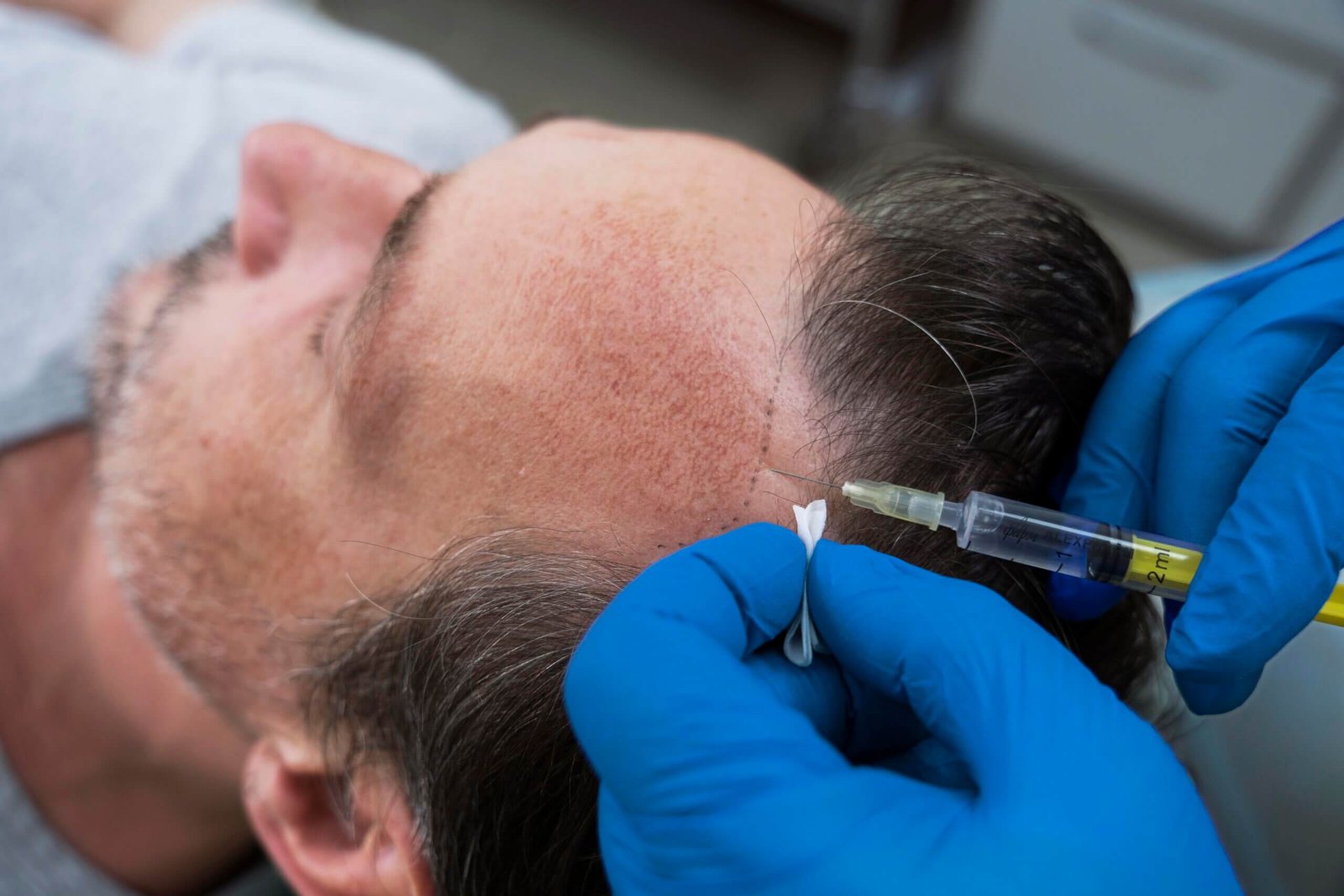
PRP is a procedure where we draw a small amount of your blood, concentrate the growth factors through centrifugation, and inject it into the scalp. It stimulates follicular activity and is a reasonable option for people in the early to moderate stages of hair loss who want a non-pharmaceutical approach or want to complement their existing treatment. Multiple sessions are needed, typically 3 to 4 sessions a month apart, followed by maintenance sessions every 6 months. Cost in India: approximately Rs 4,000 to Rs 15,000 per session depending on city and clinic.
Stage 3: Hair Transplant, When It Becomes the Right Option
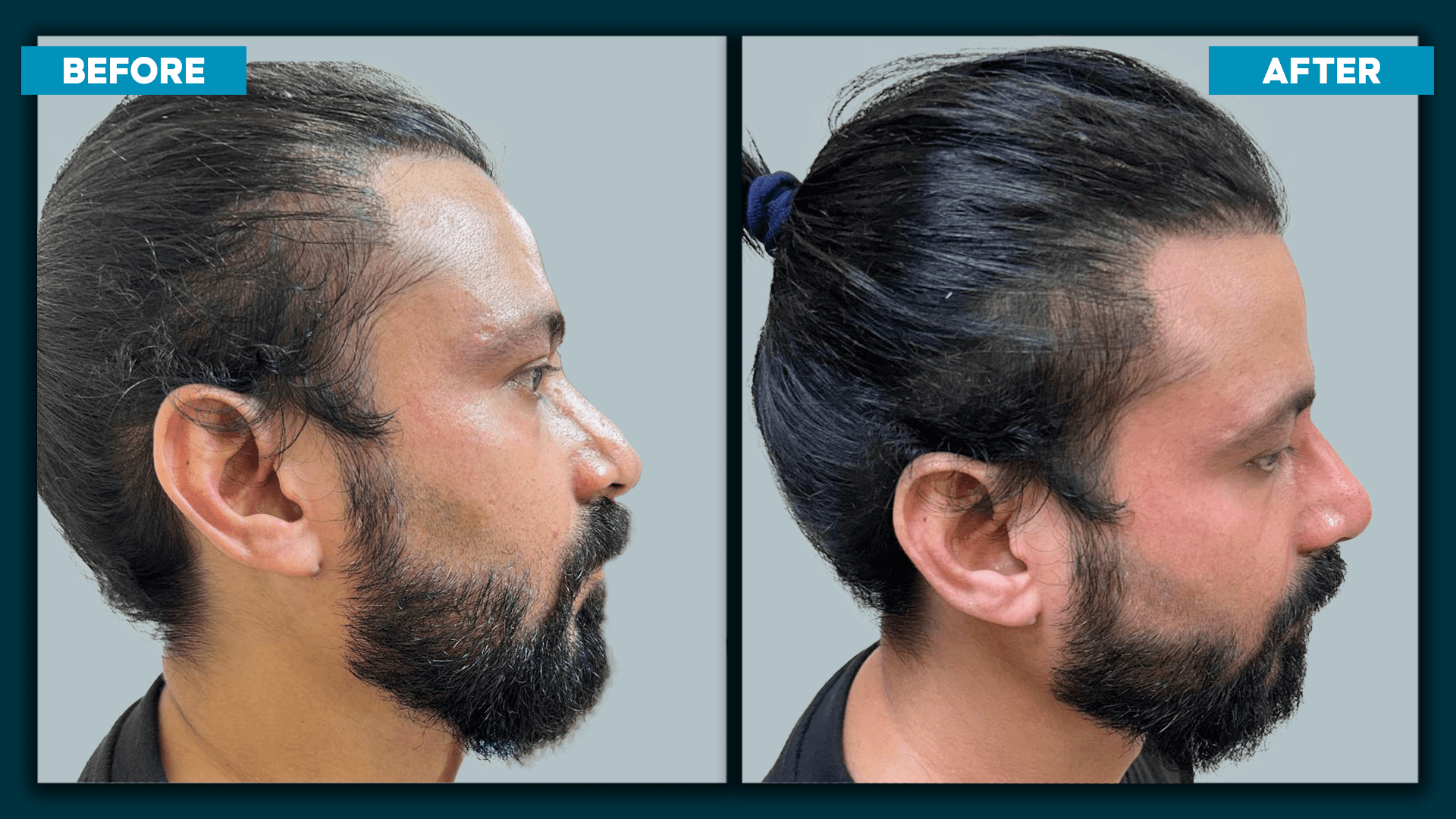
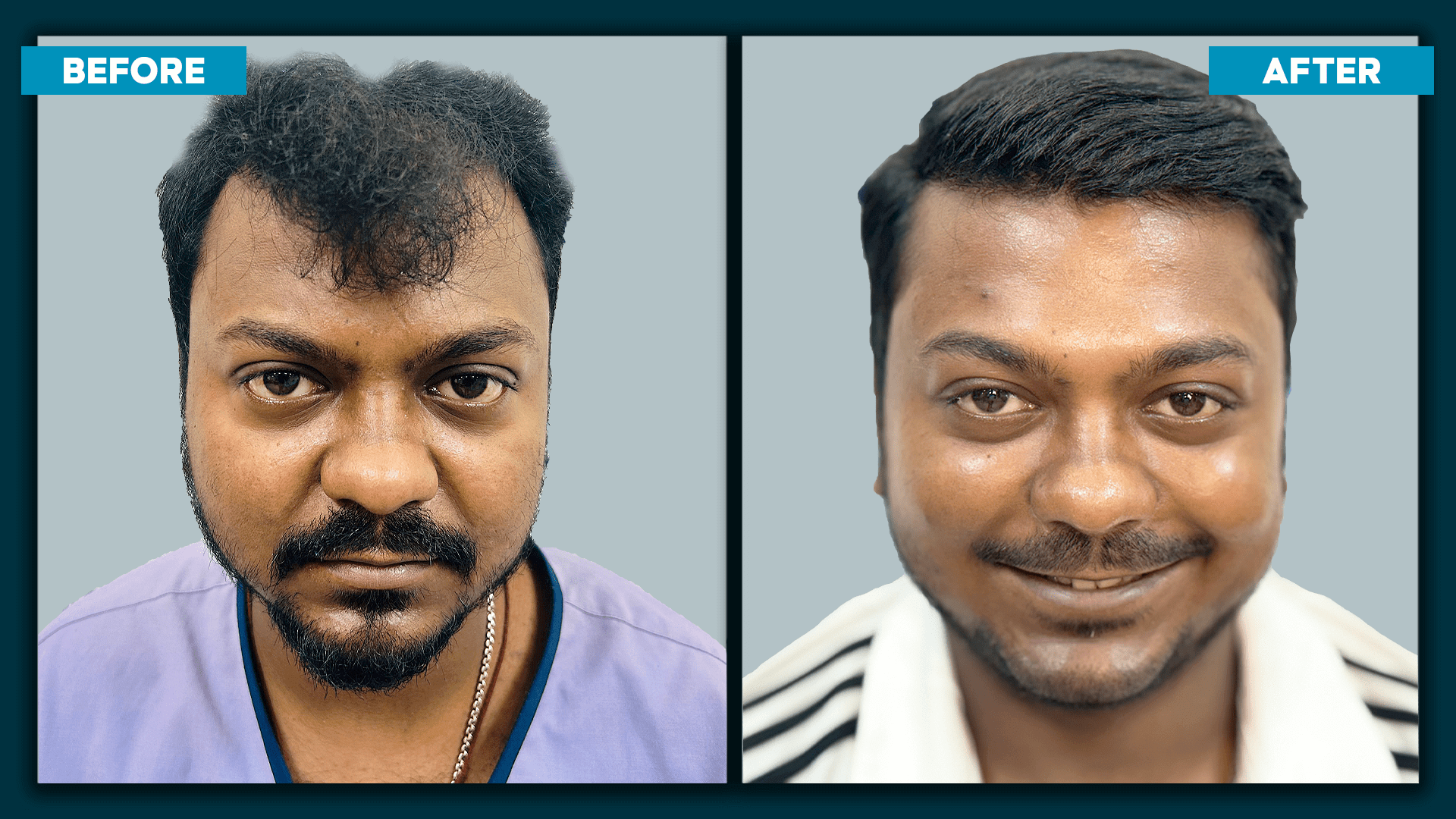
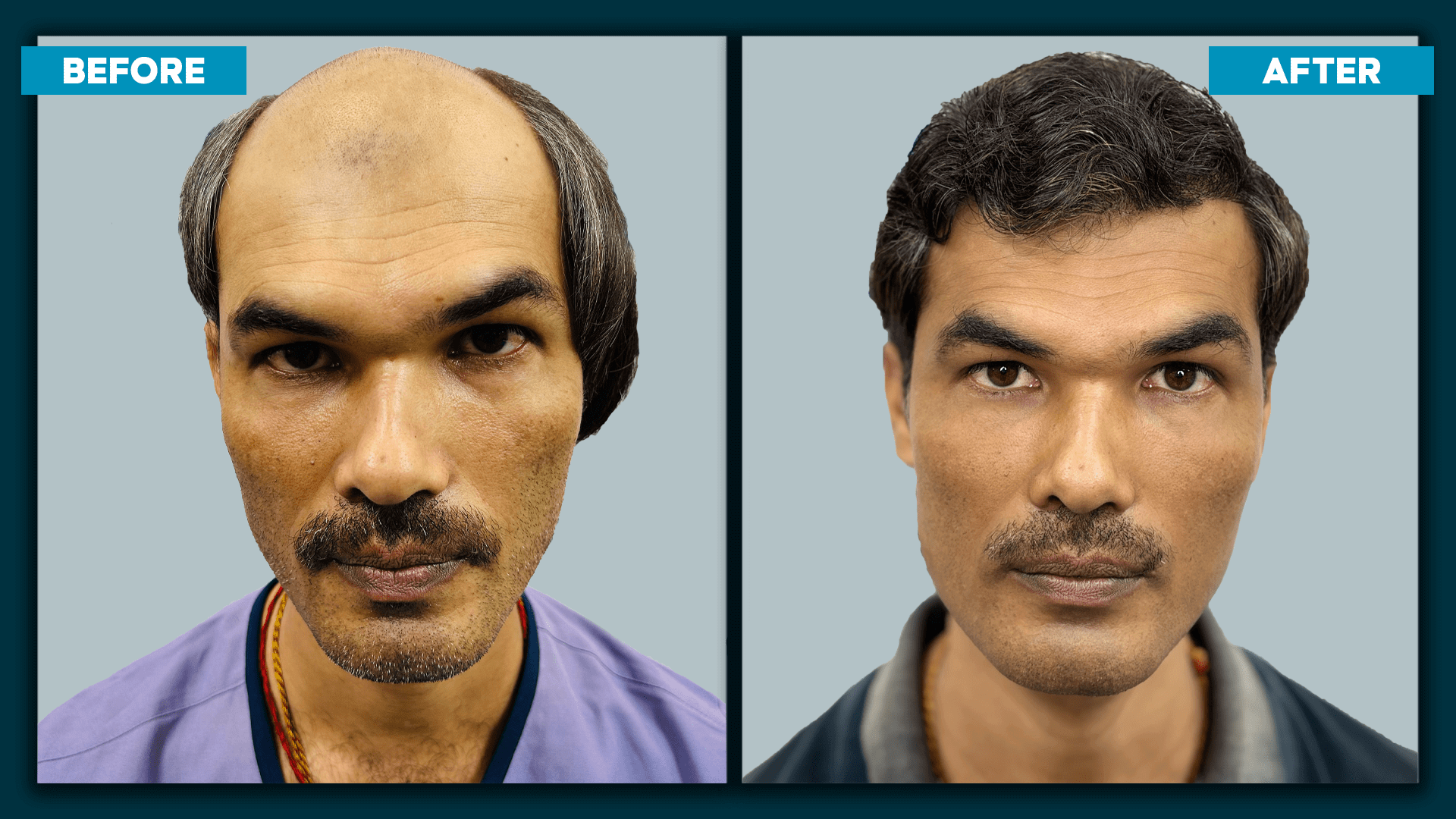
A hair transplant is not a treatment for everyone, and I say this as someone who performs them. It is appropriate when hair loss has stabilised (you are not actively losing more hair rapidly), there is sufficient donor hair at the back and sides of the scalp, and the density loss is significant enough that medical treatment alone will not provide the aesthetic result you want.
The two main methods are FUE (Follicular Unit Extraction) and FUT (Follicular Unit Transplantation). In FUE, individual follicular units are extracted from the donor area and transplanted to the thinning areas. It leaves no linear scar. In FUT, a strip of scalp is removed from the back, the follicular units are separated, and transplanted. It has a higher yield but leaves a scar.
In India, hair transplant costs range from approximately Rs 1,50,000 to Rs 3,50,000 depending on the number of grafts needed, the city, and the clinic. The results are permanent, transplanted hair does not contain DHT receptors and is resistant to genetic hair loss.
| Keep in mind One thing I tell every patient considering a transplant: a transplant moves hair, it does not create new hair. If you continue to lose your original hair after the procedure without medical management, you will need to plan for that. The best results come from combining a transplant with ongoing Minoxidil or Finasteride. |


Chat with us