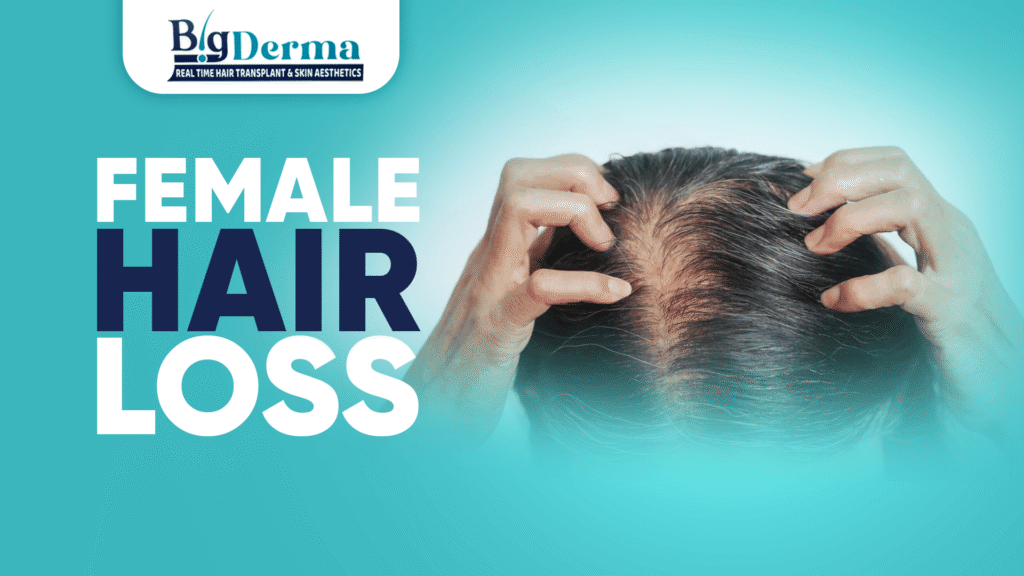
Hair loss in women, is most commonly caused by hereditary female pattern hair loss (FPHL), hormonal shifts (menopause, PCOS), and stress.This can cause shedding, bald spots and thinning hair. A dermatologist can help you determine what caused your hair loss and recommend treatment options.
What is hair loss in women?
Hair loss in women occurs when females experience unexpected or excessive loss of hair beyond the normal daily range.Normally ,It is completely natural to lose between 50 to 100 strands per day. This is part of a healthy hair growth cycle where old hairs fall out and new ones replace them.Hair loss (Alopecia) This occurs when the natural balance is disrupted — when hair falls out at a higher rate and fewer new strands grow back, resulting in progressive thinning or bald patches.
The cycles of hair growth
Hair does not grow continuously , it follows a structured cycle made up of three distinct phases. Every single strand on your head is at a different stage of this cycle at any given time.
1. Anagen Phase (Growth Phase) :
The anagen phase is the stage where your hair is actively growing. Your hair follicles are producing new hair and pushing it out through the scalp during this time.This phase is the longest one in the hair growth cycle — it can last anywhere from 2 to 8 years depending on the person.This phase generally refers to about 85% to 90% of the hair on your head.
2. Catagen Phase (Transition Phase)
After the anagen phase, your hair moves into the catagen phase. This is the stage where your hair stops growing and your body starts to prepare the follicle for rest.The catagen phase is the shortest stage in the entire hair growth cycle. It only lasts about two to three weeks. After that, your hair moves into the next and final stage — the resting phase.
3. Telogen Phase (Resting and Shedding Phase)
The telogen phase is the final stage of the hair growth cycle, where the hair rests before eventually falling out and making room for new growth.This phase lasts between two to four monthsAt the end of this phase, the hair naturally sheds and falls out
This is where the normal daily shedding of 50 to 100 strands comes from
Once the telogen phase is complete, the follicle re-enters the anagen phase and the entire cycle begins again. When something disrupts this natural process — such as hormonal imbalance, stress, or nutritional deficiency — more hairs than usual shift into the telogen phase at once, leading to noticeable hair loss in women.
Types of Female Hair Loss
Hair loss does not look the same for every woman. It can show up in different ways depending on the cause. Here are the most common types of hair loss that women experience.
Female Pattern Hair Loss (Androgenetic Alopecia) :
Female pattern androgenetic alopecia (FPHL) is a common, genetically determined, progressive form of hair loss in women, It is caused by genetics and hormonal changes in the body. Many women start noticing these changes in their 40s and 50s, though it can happen earlier.
Telogen Effluvium:
Telogen Effluvium is a type of hair loss that happens when the body goes through physical or emotional stress. During this time, many hair follicles suddenly enter the resting phase of the hair growth cycle.Triggered by factors like illness, childbirth, or severe stress, it causes hairs to enter a premature resting phase, leading to excessive shedding. It typically resolves within 6 months, with full regrowth expected once the underlying cause is addressed.
Anagen Effluvium :
Anagen effluvium is a type of hair loss that happens during the active growing phase of the hair cycle. Unlike other types that develop slowly, this one can cause hair to fall out very fast — sometimes within days or weeks.Medications cause this type because they compromise a growing hair follicle. An example is chemotherapy.
Alopecia Areata :
Alopecia areata is a condition where hair falls out in small patches. It is an autoimmune condition. This means the immune system mistakenly attacks the hair follicles, causing sudden, patchy hair loss. It can affect women of any age, including young women and teenagers. There is no single known cause, but stress and genetics are thought to play a role.
How common is hair loss in women?
Hair loss in women is very common.Most people assume hair loss is a men’s problem. But that is not the full picture.Studies show that more than 50% of women will experience noticeable hair loss at some point in their life. That is more than half of all women. Yet it still does not get talked about as much as it should.It can start as early as your 20s, but it becomes more noticeable with age. Many women first notice it around menopause when hormone levels start to change.
Symptoms of Female Hair Loss:
Hair loss in women does not always show up as a bald patch. Most of the time it starts slowly and gets worse over months or even years. That is why so many women do not notice it until a good amount of hair is already gone.Female hair loss can show up in different ways. Some women notice more shedding. Others see their part getting wider or their ponytail getting thinner. In some cases the scalp becomes visible through the hair. It really depends on the type of hair loss and what is causing it.
The signs of hair loss in women may include:
- Seeing more hair fall out daily.
- A part line that keeps getting wider
- Patches of thinner or missing hair
- Seeing your scalp through your hair
- A smaller, thinner ponytail
- Hair breaking off
Causes of Female Hair Loss:
Hair loss in women is more common than most people think. It can happen at any age and usually has more than one cause. Whether it starts with a widening part, a thinner ponytail, or more hair on your pillow — understanding what’s behind it is the first step to fixing it.
Several things can trigger hair loss in women, including:
* Damaged or weakened hair follicles
* Sudden changes in diet or rapid weight loss
* Emotional or physical stress
* Chemical hair treatments like coloring, bleaching, or rebonding
* Medical treatments such as chemotherapy or radiation therapy
* Health conditions like thyroid disorders, anemia, or vitamin deficiencies
* Hormonal changes during pregnancy, menopause, or due to hormonal imbalance
* Certain medications including blood pressure drugs, gout medicines, or high doses of Vitamin A
* Genetic factors or a family history of hair loss
In many cases, hair loss happens when the natural hair growth cycle gets disrupted. Healthy hair needs balanced hormones, good nutrition, and strong follicles to grow properly. When even one of these is off, the hair starts to thin or shed faster than it grows back.The good news is that most causes of female hair loss are treatable — especially when caught early.
What are the risk factors for hair loss in women?
Female hair loss is rarely caused by one thing alone. In most cases, it is a mix of age, genetics, hormones, and health conditions working together.
Risk Factors:
- Women over 40 are more likely to experience hair thinning as hair growth naturally slows with age
- A family history of hair loss increases the risk of female pattern baldness
- Menopause reduces estrogen levels, which weakens follicles and increases shedding
- Chemotherapy and radiation therapy affect hair follicles and often cause temporary hair loss
Other Risk Factors:
- Hormonal conditions like PCOS or thyroid disorders can disrupt the hair growth cycle
- Low levels of iron, zinc, biotin, and vitamins D and E weaken hair over time
- High stress — both physical and emotional — can trigger sudden, heavy shedding
- Tight hairstyles, chemical treatments, and certain medications can also speed up hair los
Most of these risk factors are manageable. The earlier they are identified, the better the chances of slowing hair loss and supporting healthy regrowth.
Female Hair Loss Treatment
Female hair loss can happen due to hormones, genetics, stress, nutritional deficiency, medical conditions, or hairstyling damage.Treatment for female hair loss depends on the cause. It may include:
Top Female Hair Loss Treatments:
Topical minoxidil:
Topical minoxidil is one of the most commonly used treatments for hair loss in women. It is applied directly to the scalp once or twice a day, depending on the concentration and your doctor’s recommendation.Both 2% and 5% minoxidil are used to treat hair loss in women. The right one for you depends on how much hair loss you have and how your scalp reacts to products.The 5% formula works faster and is a good option if you have more hair loss. The 2% formula is milder and works better for women who have a sensitive scalp.

Platelet-Rich Plasma (PRP) therapy :
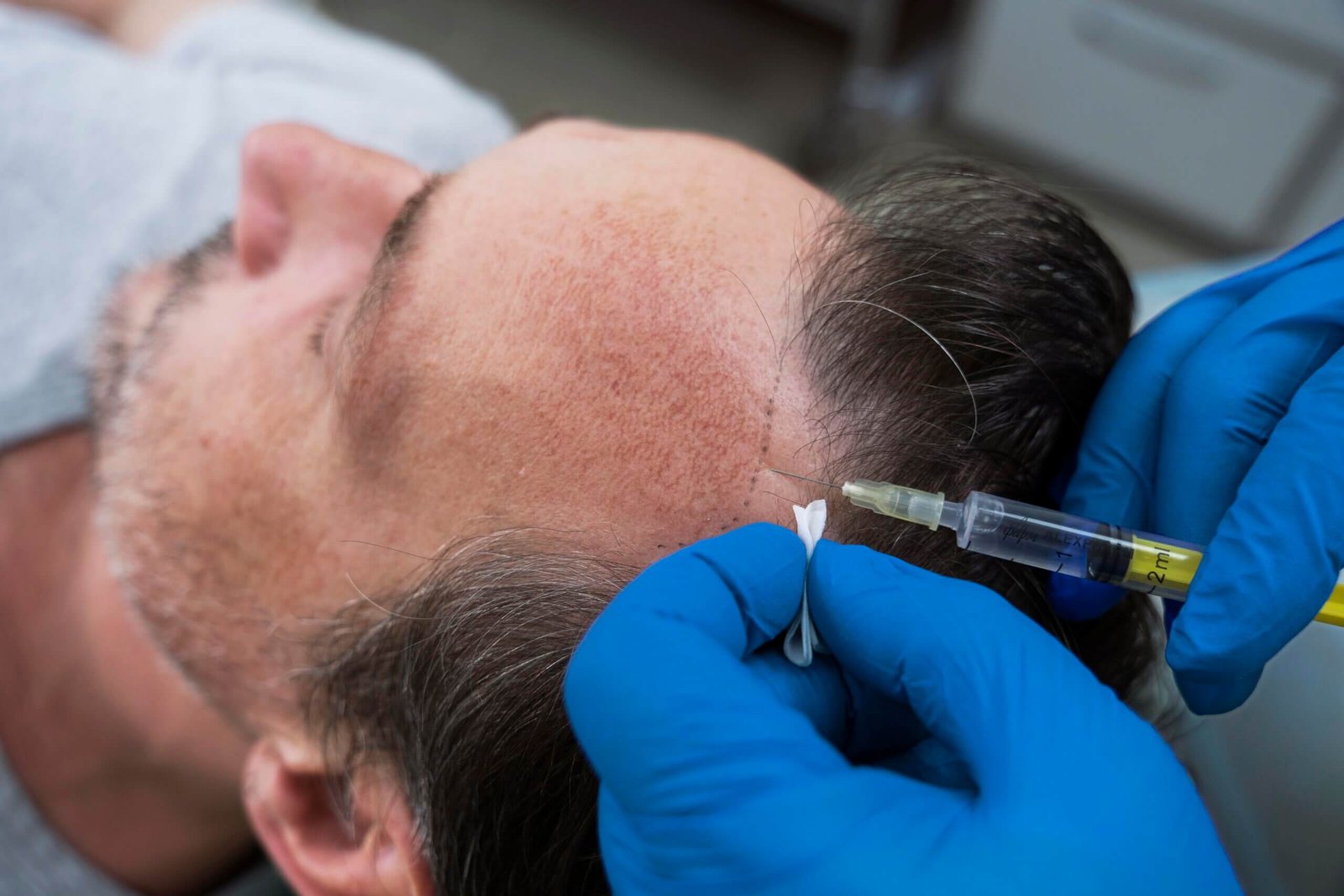
It is a popular non-surgical treatment for female hair loss, especially for women suffering from female pattern hair loss (FPHL) or hair thinning.PRP works by delivering concentrated growth factors directly to the scalp. These growth factors help
- Stimulate dormant hair follicles
- Increase blood supply to the scalp
- Strengthen weak hair roots
- Promote thicker and healthier hair growth
- Extend the hair growth (anagen) phase
GFC therapy :
GFC (Growth Factor Concentrate) therapy is an advanced form of PRP therapy. It is a non-surgical treatment used to treat hair loss in women.In this treatment, growth factors are taken from your own blood and injected into the scalp. This helps wake up weak or inactive hair follicles and encourages new hair growth.
Female Hair Loss Solution:
Hair transplant for female hair loss is a surgical procedure used to restore hair in areas where thinning or baldness has occurred. During this treatment, healthy hair follicles are taken from a donor area (usually the back of the scalp) and transplanted into thinning or bald areas to create natural hair growth.It is a permanent and effective solution for women experiencing pattern hair loss, thinning hairline, or localized bald patches.