
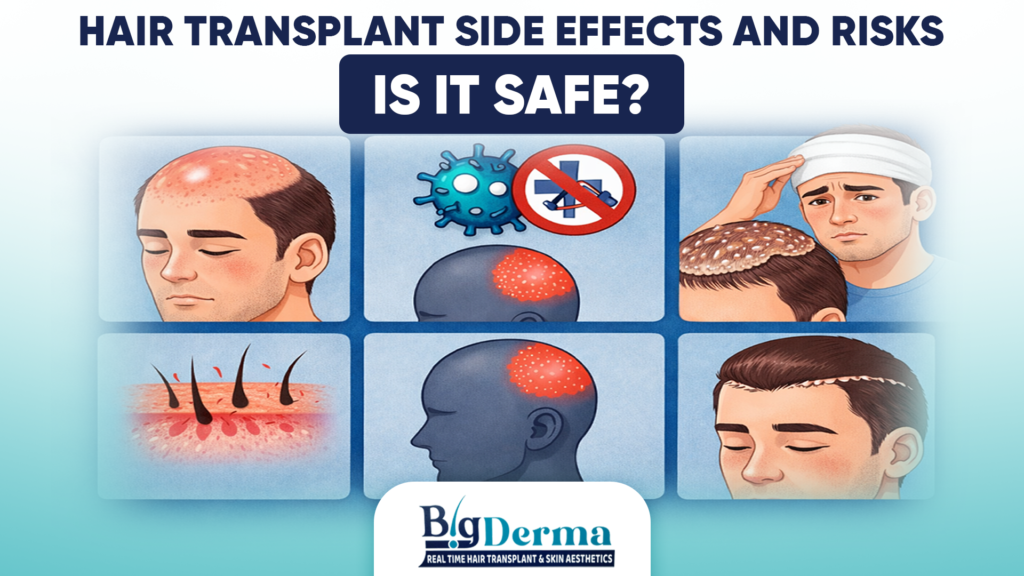
Hair transplant has become one of the most trusted and widely performed cosmetic procedures for hair loss. With advanced techniques and improved technology, millions of people worldwide achieve natural-looking hair restoration every year.
However, a common and very valid question remains:
Is hair transplant safe? Are there any side effects or risks?
At Big Derma Clinic, Kolkata, we believe in complete transparency. Every medical procedure—no matter how advanced—comes with certain side effects and risks. The key lies in understanding which effects are normal and temporary, and which risks can be avoided with proper care and expert handling.
This complete guide explains all possible hair transplant side effects, risks, safety facts, and long-term outcomes in detail.
Is Hair Transplant a Safe Procedure?
Short Answer
Yes, hair transplant is generally safe when:
- Performed by qualified professionals
- Conducted in a sterile medical environment
- Proper aftercare is followed
Hair transplant is a minimally invasive procedure, not a major surgery.
Why Hair Transplant Is Considered Safe
- Uses patient’s own hair follicles
- No risk of rejection
- Performed under local anesthesia
- Long history of successful outcomes
Safety depends more on who performs the procedure and how, rather than the procedure itself.
Understanding Hair Transplant Side Effects vs Risks
Many people confuse side effects with risks.
Side Effects
- Common
- Temporary
- Part of the normal healing process
Risks
- Less common
- Often preventable
- Usually linked to poor technique or poor aftercare
Understanding this difference helps reduce unnecessary fear.
Common Side Effects After Hair Transplant (Normal & Temporary)
These side effects are expected and usually resolve on their own.
Pain and Discomfort After Hair Transplant
Why It Happens
- Local anesthesia wears off
- Tiny incisions on scalp
What It Feels Like
- Mild to moderate soreness
- Tightness in donor area
How Long It Lasts
- Usually 2–4 days
Management
- Prescribed pain medication
- Proper rest
Pain is manageable and temporary.
Swelling After Hair Transplant
Swelling is one of the most common side effects.
Causes
- Fluid injection during surgery
- Body’s inflammatory response
Common Areas
- Forehead
- Around eyes
Timeline
- Appears day 2–3
- Subsides within 5–7 days
Prevention & Control
- Head elevation
- Cold compress (not on grafts)
- Adequate hydration
Swelling does not affect hair growth.
Redness and Inflammation
Why Redness Occurs
- Micro-incisions in scalp
- Increased blood flow during healing
Duration
- 3–7 days in most patients
- Slightly longer in sensitive skin
Redness fades naturally as healing progresses.
Itching After Hair Transplant
Cause
- Healing skin
- Formation of scabs
Is It Normal?
Yes, itching is very common.
Important Warning
- Do NOT scratch
- Scratching can dislodge grafts
Relief Tips
- Doctor-recommended sprays
- Gentle washing
Itching usually reduces within 7–10 days.
Scab Formation and Crusting
Why Scabs Form
- Dried blood around grafts
- Natural healing response
Timeline
- Forms within first few days
- Falls off naturally in 7–10 days
What Not to Do
- Do not pick scabs
- Do not scrub
Scabs falling off naturally is a positive sign of healing.
Temporary Hair Shedding (Shock Loss)
This is one of the most misunderstood side effects.
What Is Shock Loss?
- Temporary shedding of transplanted hair
- Occurs 2–8 weeks after surgery
Important Facts
- Hair roots remain intact
- New hair grows back stronger
Is It Permanent?
No, shock loss is temporary and normal.
Less Common but Possible Hair Transplant Risks
These risks are uncommon and often avoidable.
Infection Risk After Hair Transplant
Why Infection Can Occur
- Poor hygiene
- Not following aftercare
- Unsterile environment
Symptoms
- Excessive pain
- Pus formation
- Fever
Prevention
- Sterile surgical setup
- Proper antibiotics
- Clean aftercare routine
At Big Derma Clinic, Kolkata, strict sterilization protocols minimize this risk.
Excessive Bleeding
Why It Happens
- Blood pressure issues
- Certain medications
- Excessive scalp manipulation
Risk Level
Low, when done correctly.
Prevention
- Medical history review
- Controlled surgical technique
Bleeding is usually minimal and controlled.
Poor Graft Survival
What Causes It
- Improper graft handling
- Excessive touching after surgery
- Smoking or alcohol
Result
- Reduced hair density
Prevention
- Expert surgical technique
- Strict aftercare compliance
Graft survival depends heavily on expertise and patient discipline.
Unnatural Hairline or Density
Why This Happens
- Poor planning
- Lack of artistic skill
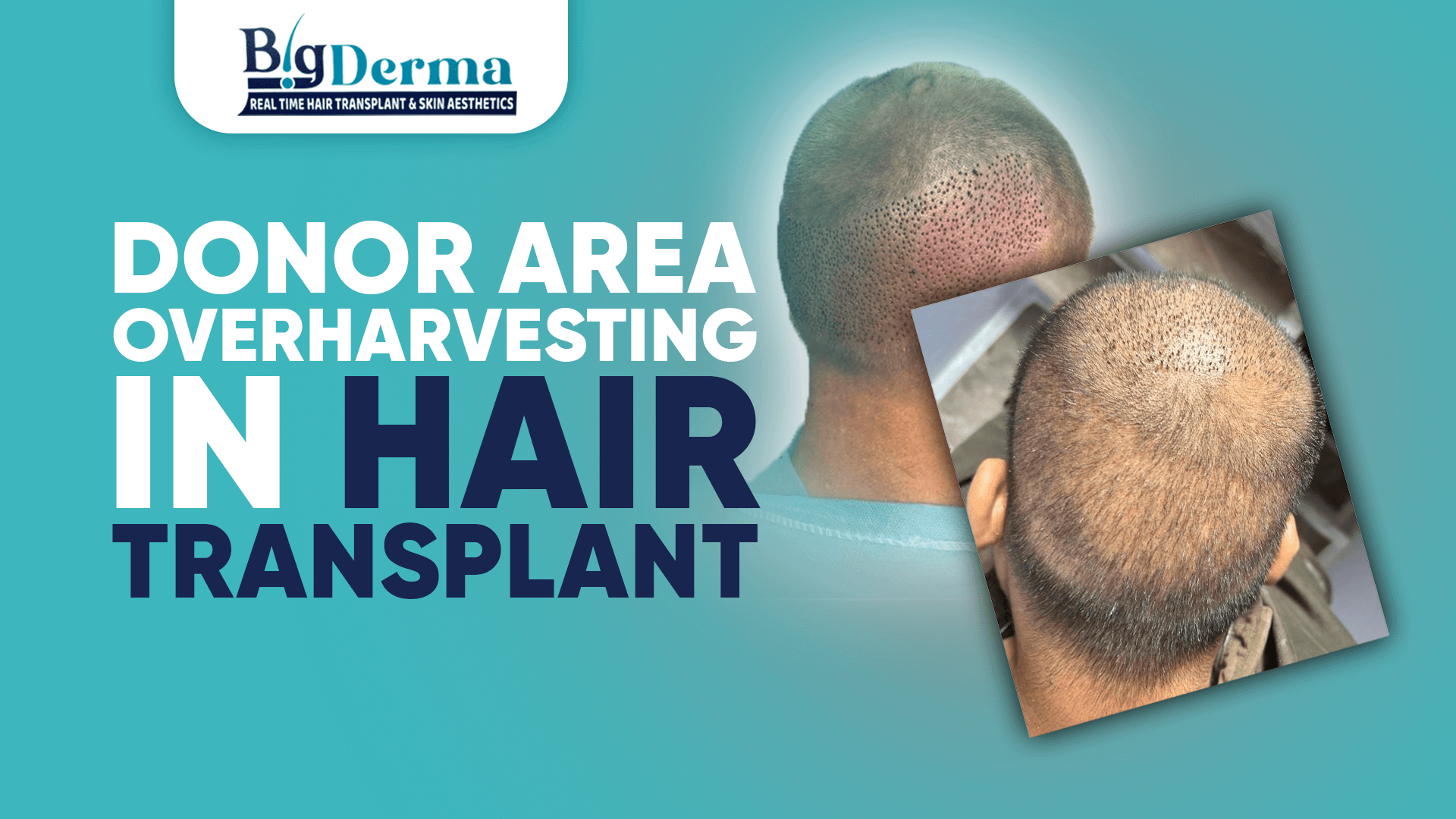
- Overharvesting donor area
Long-Term Impact
- Artificial appearance
- Need for corrective surgery
This is not a medical risk but an aesthetic risk.
Overharvesting of Donor Area
What It Means
- Taking too many grafts from donor zone
Possible Effects
- Visible thinning at back of head
- Patchy donor area
Prevention
- Proper donor assessment
- Conservative extraction strategy
Donor management is crucial for lifelong results.
Numbness or Sensation Changes
Cause
- Temporary nerve irritation
Duration
- Few weeks to few months
Is It Permanent?
Very rarely. Most cases recover fully.
Scarring Risk After Hair Transplant
Modern Techniques and Scarring
- Advanced methods minimize visible scars
- Scars are usually tiny and hidden
Factors Affecting Scarring
- Healing capacity
- Skin type
- Surgical skill
Proper technique ensures minimal scarring.
Allergic Reactions (Rare)
Possible Triggers
- Anesthetic agents
- Medications
Prevention
- Pre-procedure allergy history
Allergic reactions are extremely rare and manageable.
Is Hair Transplant Safe in the Long Term?
Yes, hair transplant is permanent and safe long-term.
Why Long-Term Safety Is High
- Uses natural hair follicles
- No foreign implants
- Hair grows naturally
Once healed, transplanted hair behaves like normal hair.
Who May Have Higher Risk?
Certain conditions require extra caution.
Higher Risk Groups
- Uncontrolled diabetes
- Blood clotting disorders
- Autoimmune scalp conditions
What’s Important
- Honest medical disclosure
- Proper pre-surgery evaluation
Not everyone is an ideal candidate—and ethical clinics will tell you that.
How to Reduce Hair Transplant Risks
Before Surgery
- Choose experienced clinic
- Full scalp and medical evaluation
- Set realistic expectations
During Surgery
- Sterile environment
- Skilled medical team
After Surgery
- Follow aftercare strictly
- Avoid smoking and alcohol
- Attend follow-ups
Most risks are preventable with discipline.
Myths About Hair Transplant Safety
Myth 1: Hair Transplant Is Dangerous
Fact: It is a safe, routine procedure.
Myth 2: Hair Transplant Causes Cancer
Fact: There is no scientific link.
Myth 3: Transplanted Hair Will Fall Permanently
Fact: Hair shedding is temporary.
Why Choose Big Derma Clinic, Kolkata?
At Big Derma Clinic, patient safety is our top priority.
Our Safety Protocols
- Advanced surgical techniques
- Strict sterilization standards
- Experienced medical professionals
- Detailed pre- and post-care guidance
We focus on natural results with minimal risk.
Conclusion
So, is hair transplant safe?
Yes—when performed correctly, hair transplant is one of the safest cosmetic procedures available today.
Most side effects are temporary and part of healing, while serious risks are rare and preventable. The key lies in choosing the right clinic, following medical advice, and maintaining realistic expectations.
At Big Derma Clinic, Kolkata, we ensure that your hair restoration journey is not only effective but also safe, ethical, and confidence-boosting.
FAQs: Hair Transplant Side Effects & Safety
Are hair transplant side effects permanent?
No, most side effects are temporary.
Is hair transplant painful?
Discomfort is mild and manageable.
Can hair transplant fail?
Failure is rare when done by experts with proper care.
Is hair transplant safe for everyone?
Most people are suitable, but medical evaluation is essential.

 Chat with us