
Hair Loss Treatment | Best Hair Transplant in Kolkata
Losing hair can affect more than just your appearance; it impacts your confidence, self-image, and daily life. Whether you’re dealing with male or female pattern baldness, a receding hairline, patchy beard, or thinning eyebrows, a hair transplant offers a medically proven, permanent solution. Using advanced techniques like FUE (Follicular Unit Extraction) and FUT (Follicular Unit Transplant), your own healthy hair follicles are relocated to thinning areas growing naturally, needing no special maintenance, and lasting a lifetime. The procedure is performed under local anaesthesia, takes 5–8 hours, and most patients return to routine within days.
At Big Derma, we combine advanced hair restoration science with artistic precision to deliver results that look completely natural, never artificial. Our expert-led doctor follows advanced FUE technology and creates a customized treatment plan according to your hair type, facial structure and long-term goals.We focus not just only on hair restoration, but also on restoring your confidence, safely, ethically, and with complete transparency every step of the way to our patient. At Big Derma hair transplant programme is led by board-certified dermatologists and trichology specialists with deep expertise in scalp health, follicle density mapping, and hairline design, ensuring every transplant looks natural, not operated.
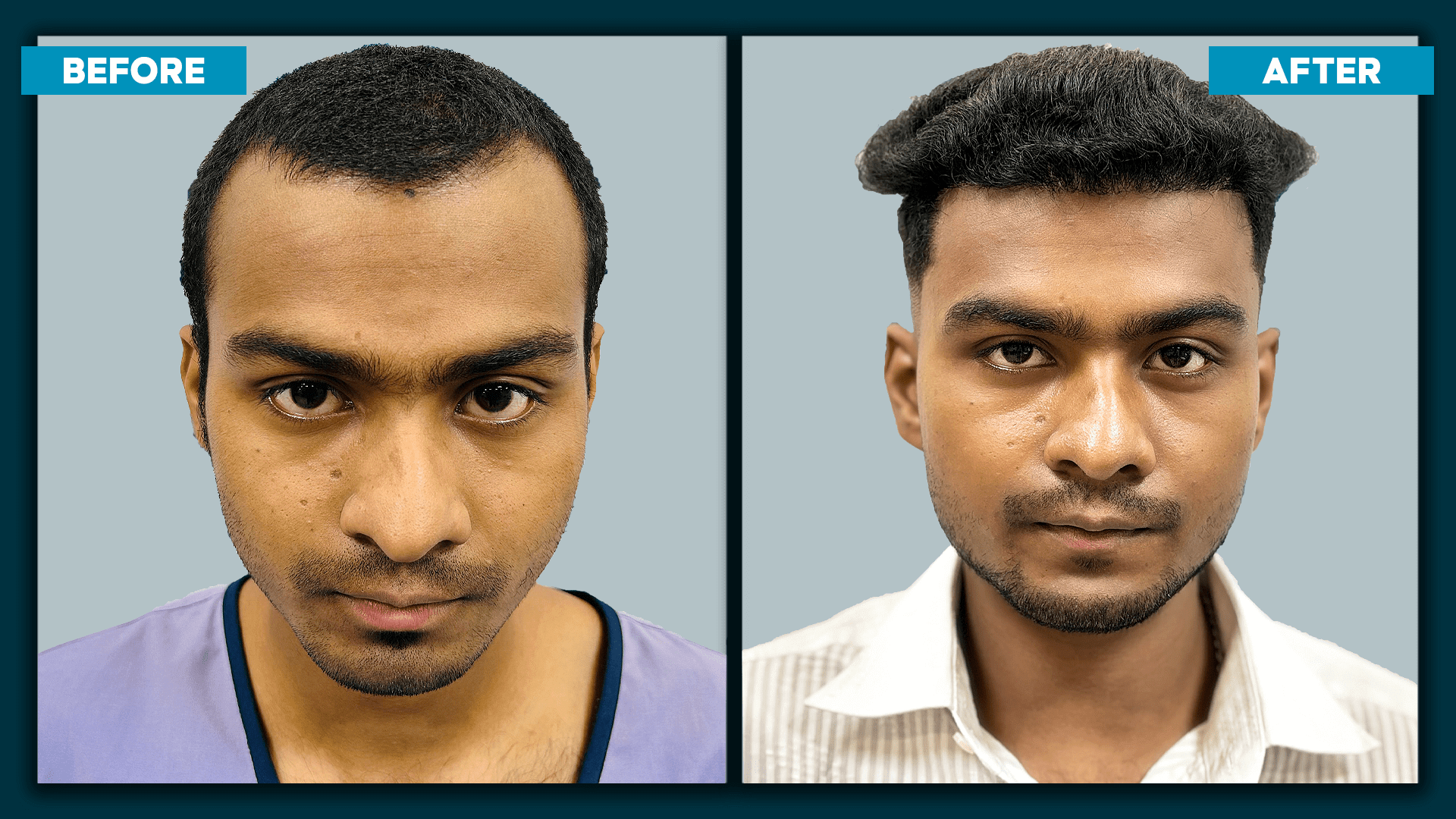
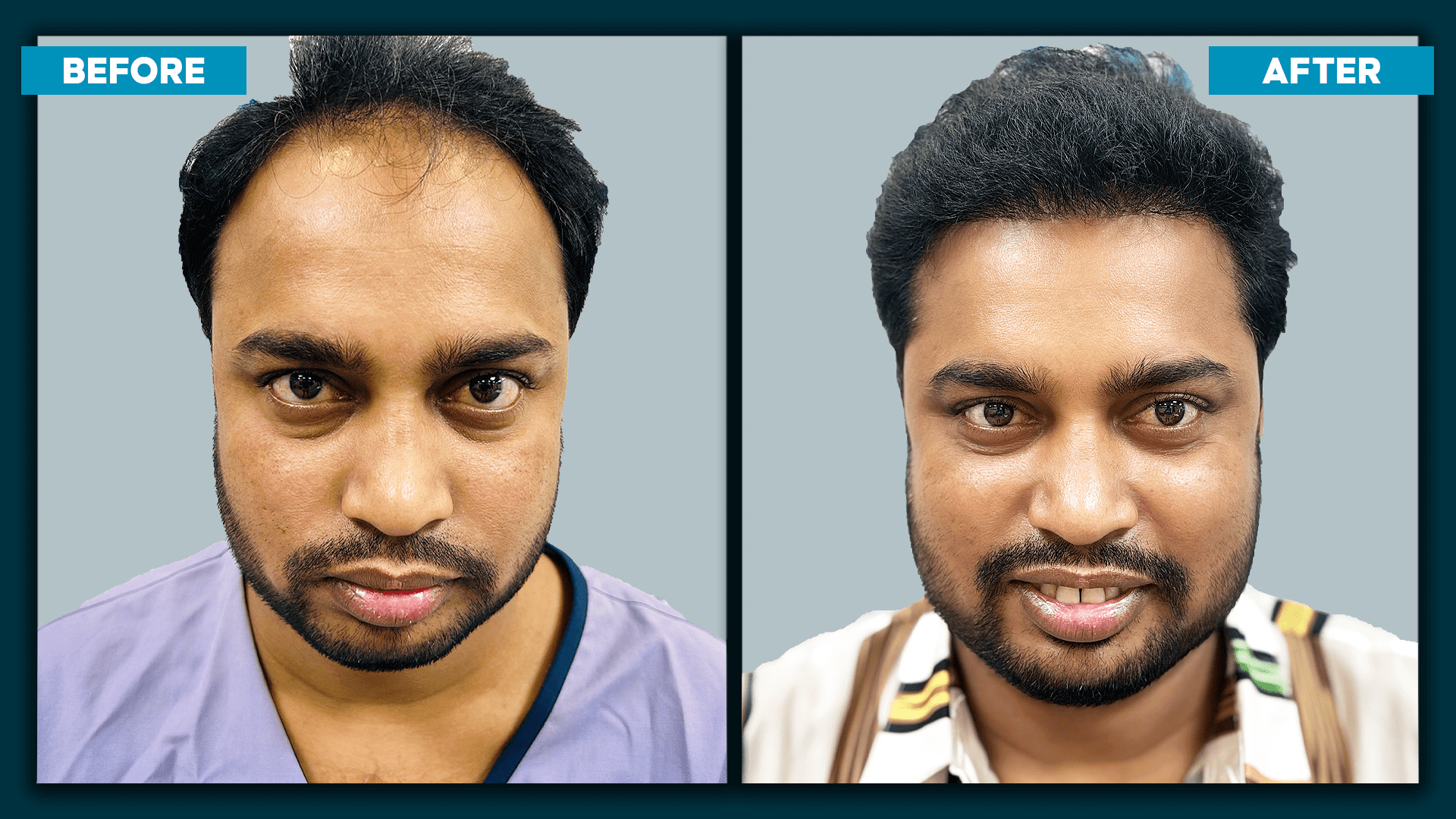
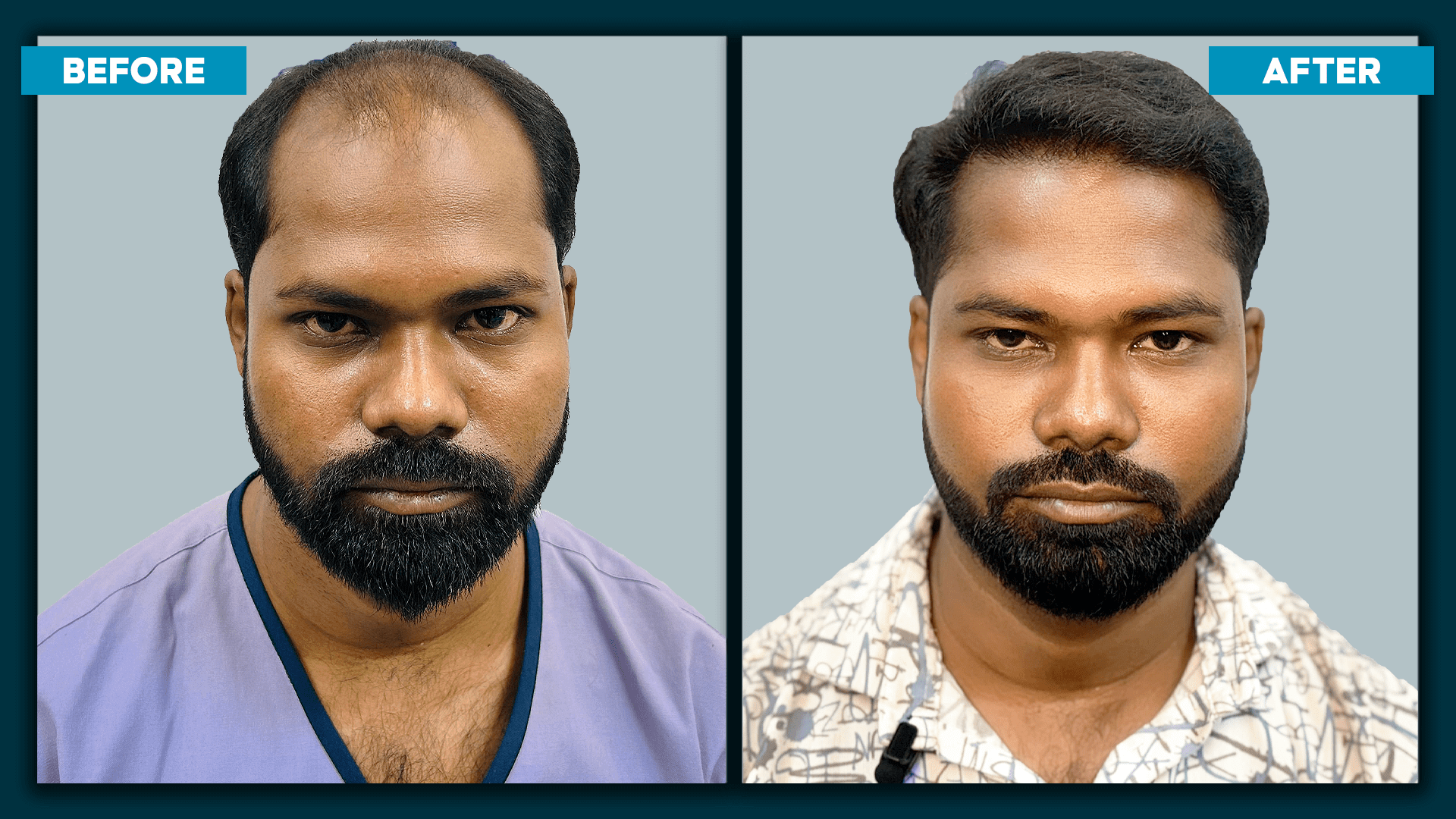
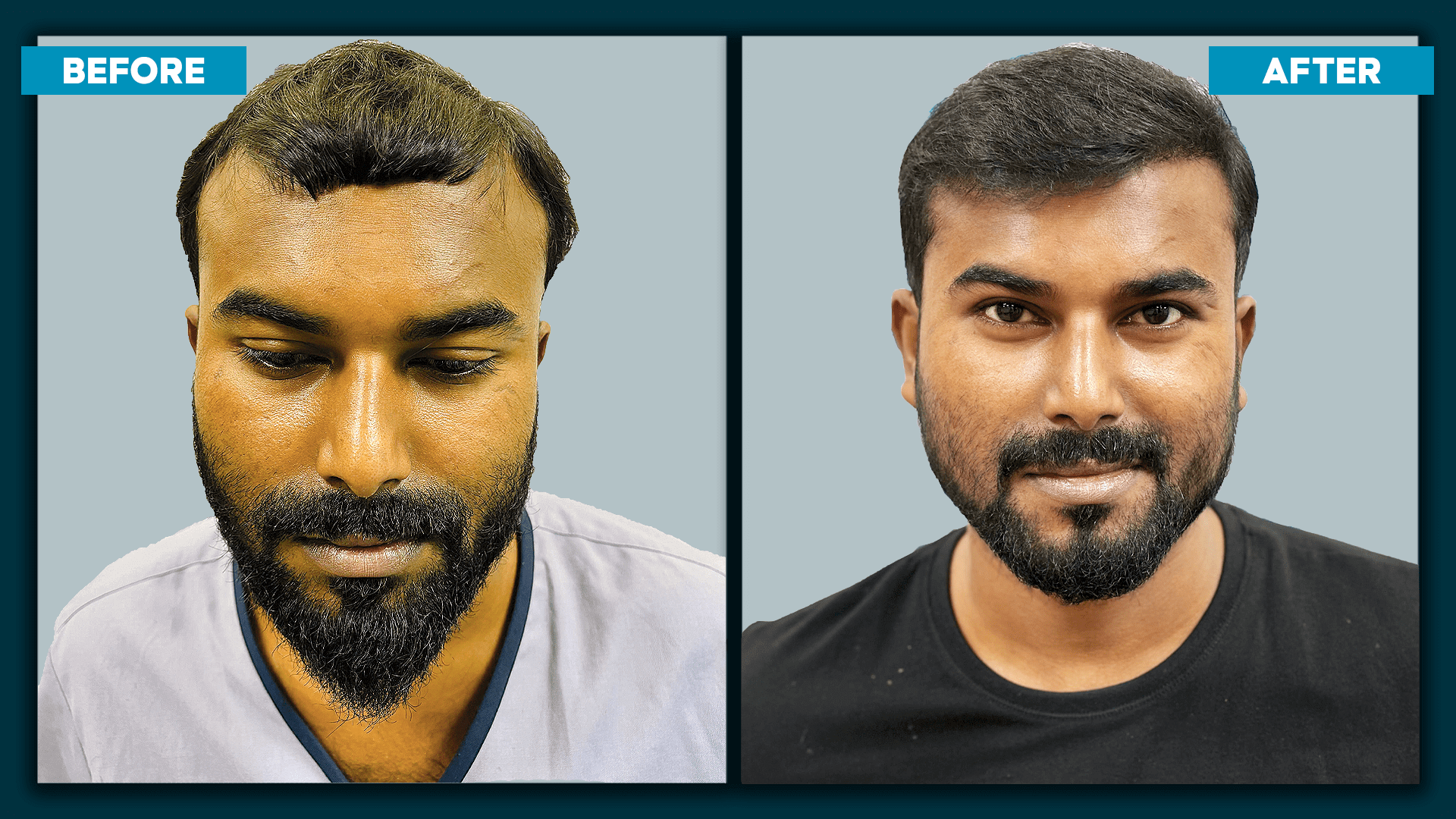
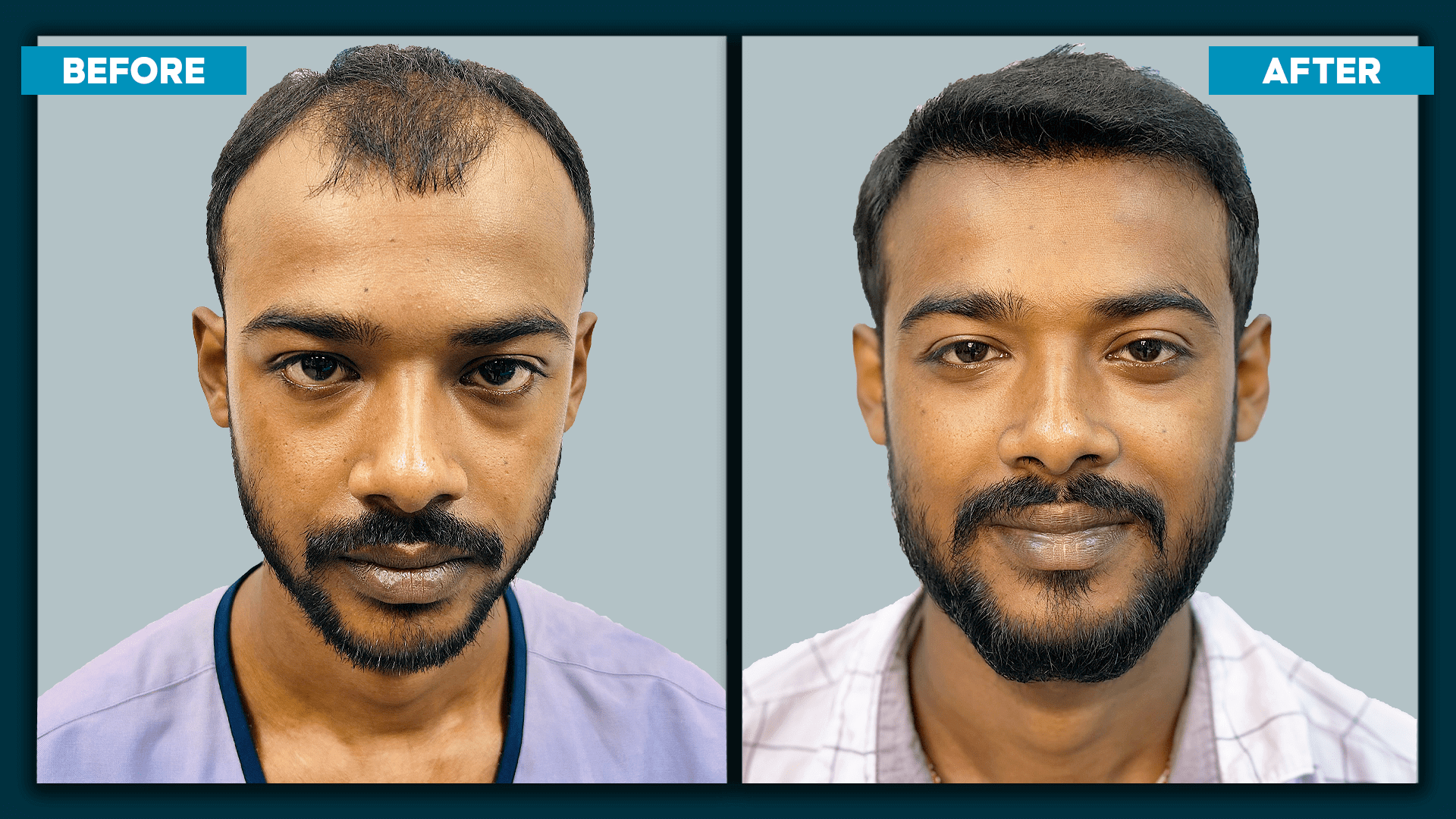
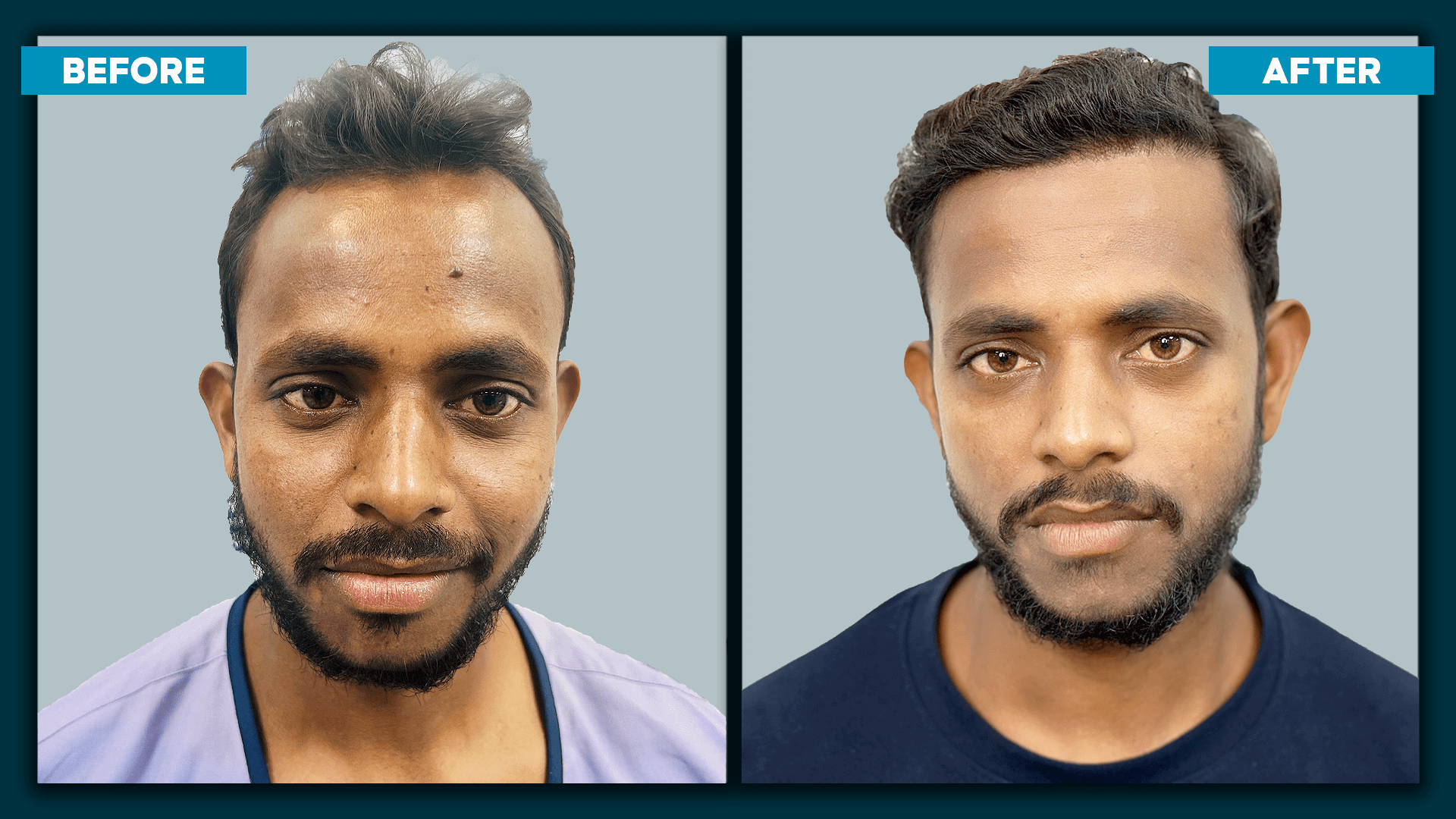
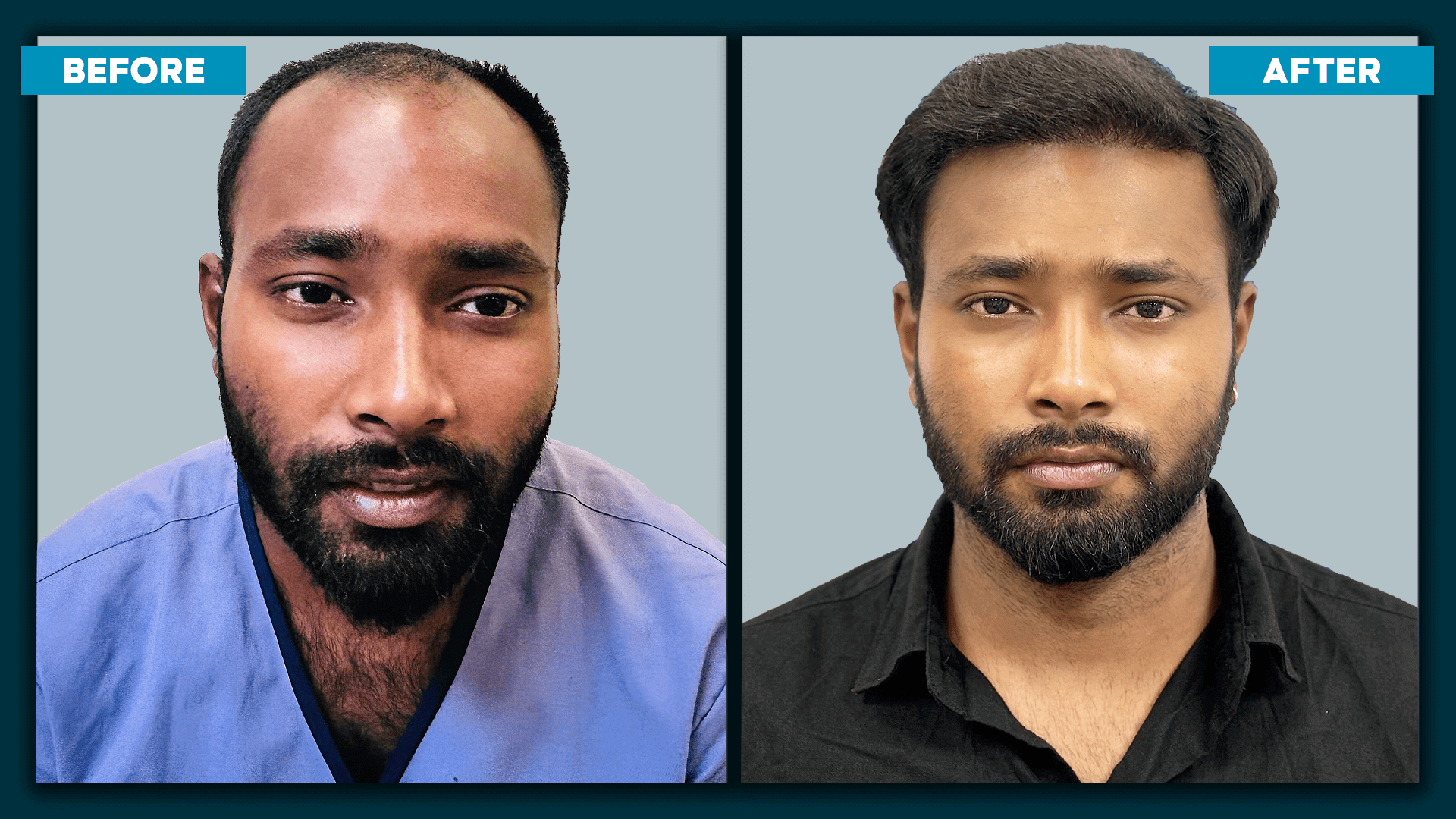
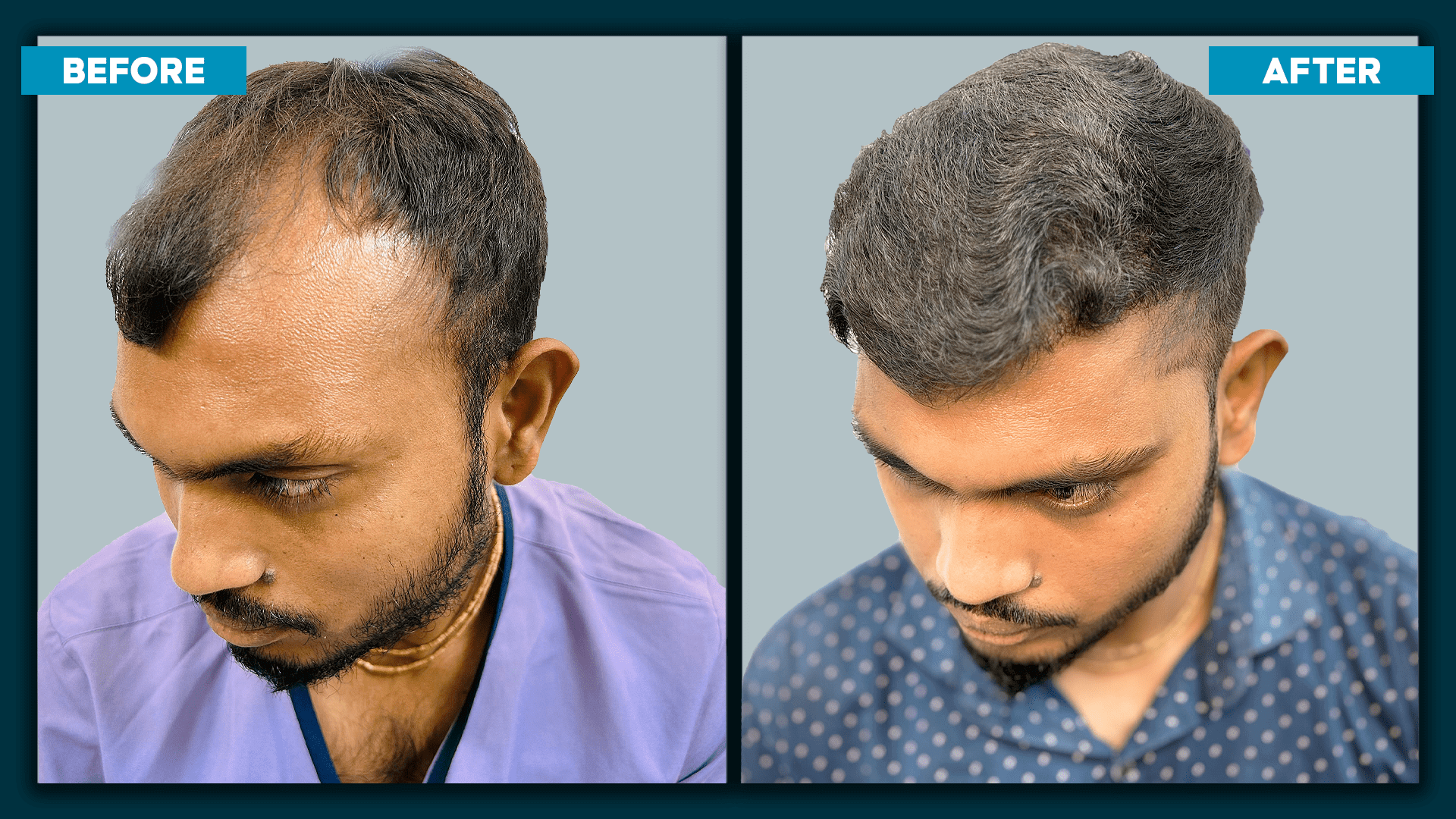
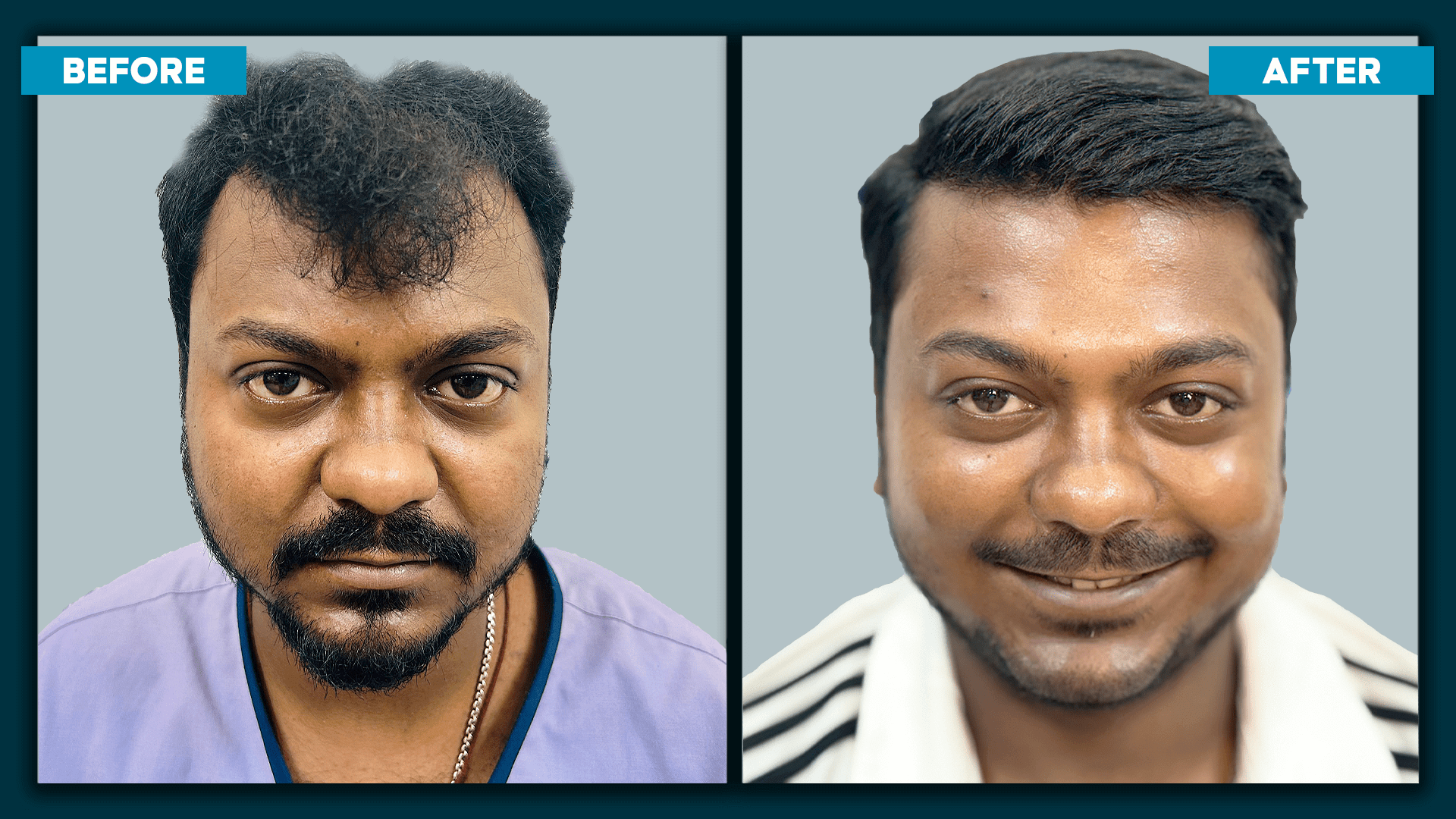
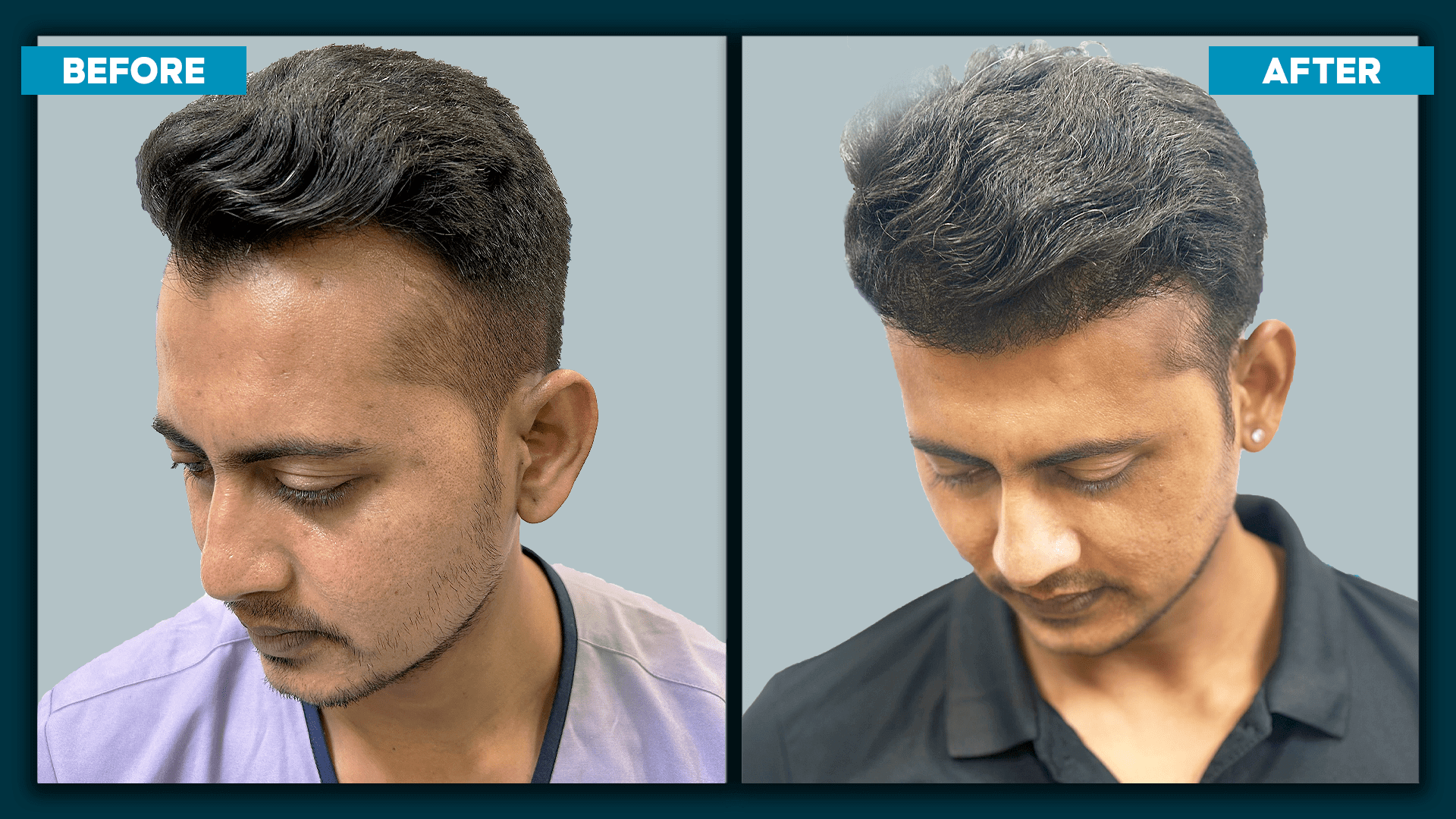
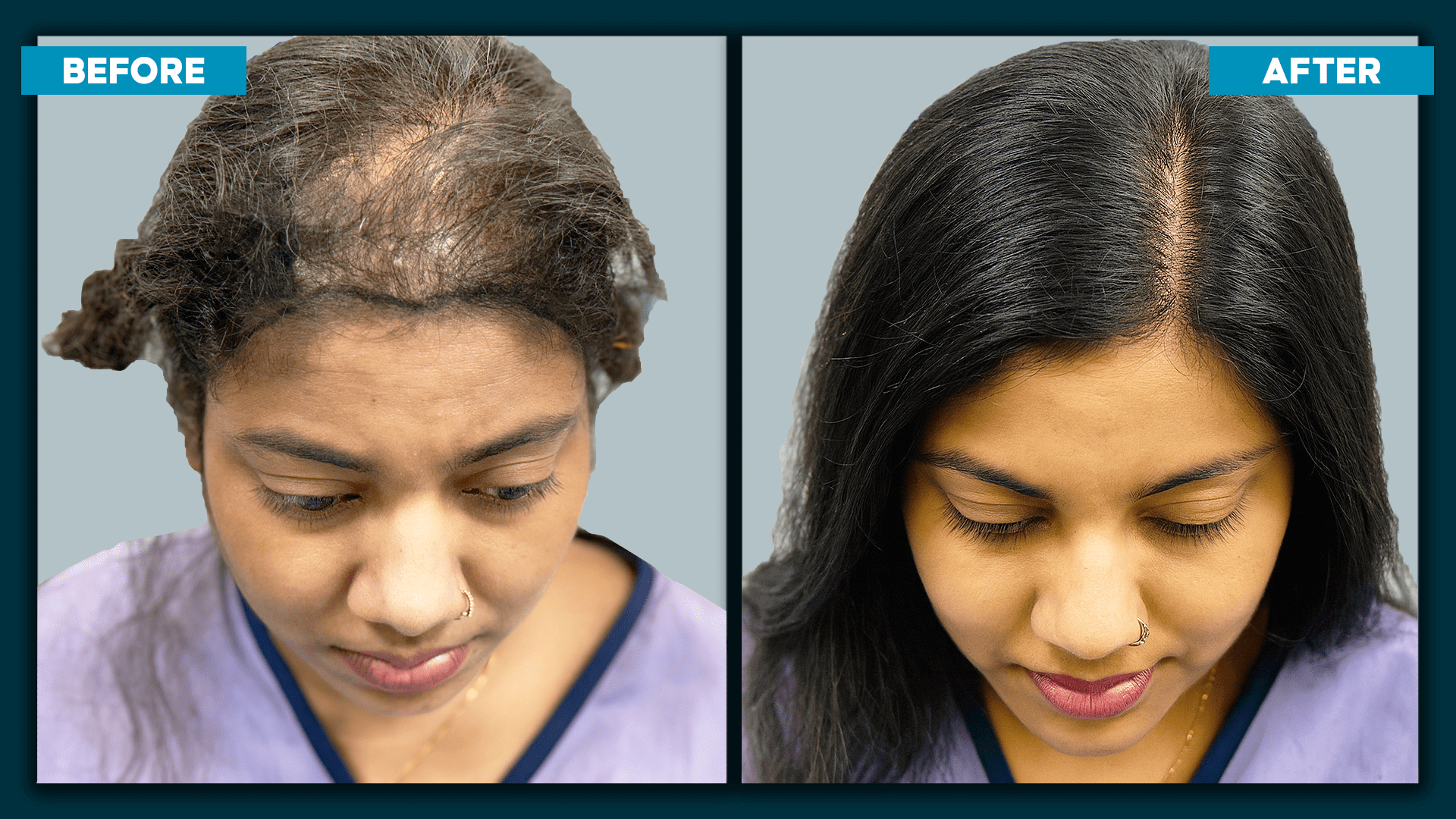
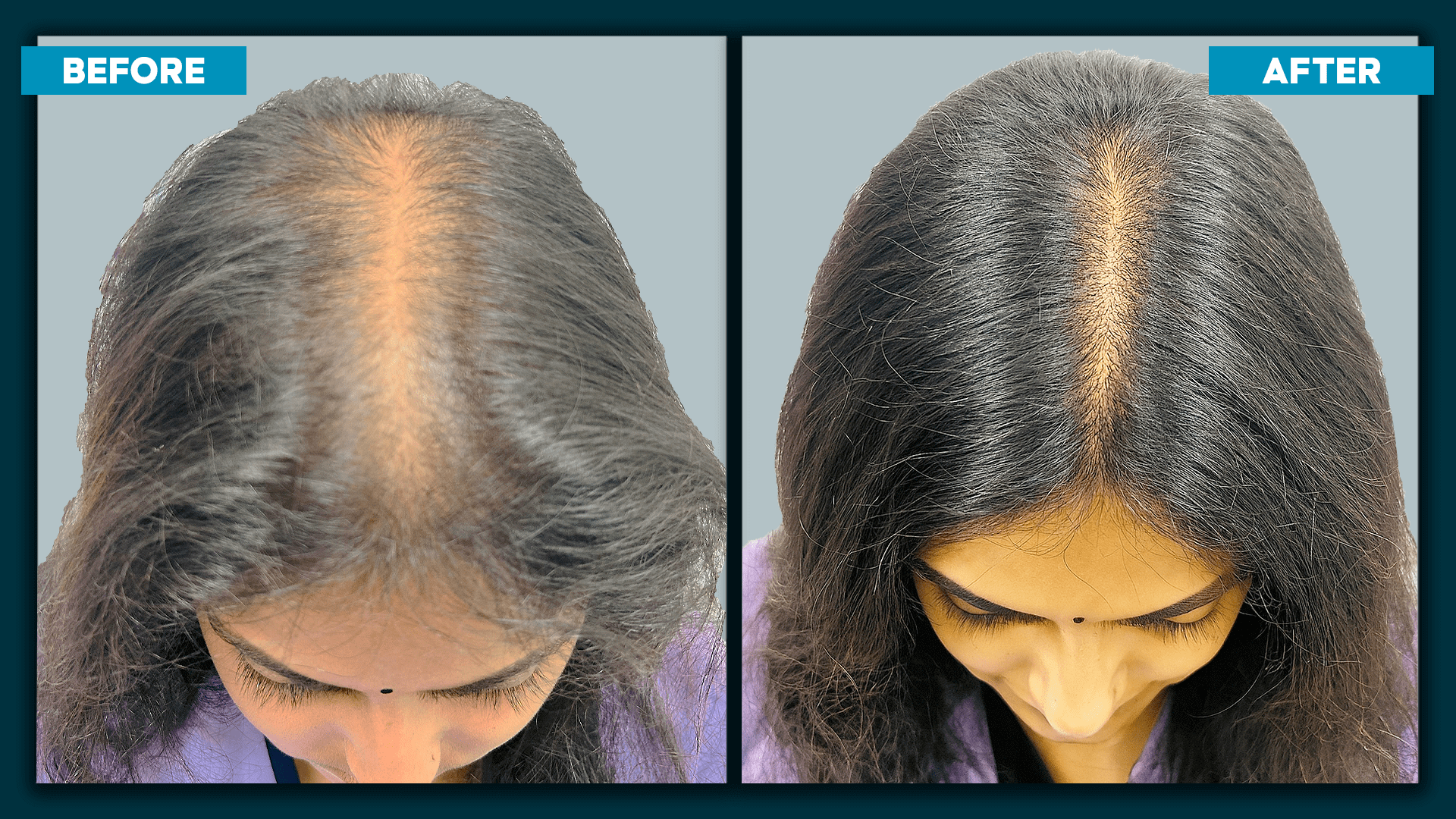
Real Result
What Is Hair Transplant?
Hair transplant is a surgical procedure, but it is far more straightforward than the word ‘surgical’ might suggest. There are no general anaesthetics, no hospital stays, and no dramatic recovery. You come in, get comfortable, and spend the day at the clinic while the procedure is carried out.
The science behind it is simple. Hair at the back and sides of your scalp the area called the donor zone is genetically programmed to stay. It does not respond to DHT the same way hair at the front and top does. When these follicles are moved to a thinning area, they carry that genetic resistance with them. They continue to grow permanently in their new location, just as they would have grown in the donor area.
During the procedure, the surgeon harvests individual hair follicles or a small strip of follicle-bearing skin from the donor zone, prepares them carefully under magnification, and then places them one by one into tiny recipient sites created in the balding area. The angle, depth, and direction of each placement matter enormously this is what separates a result that looks natural from one that looks operated. An experienced hand designs the hairline and places grafts to mirror the way hair naturally grows on that person’s scalp.
The procedure is done under local anaesthesia. You are fully awake but feel nothing in the scalp once the anaesthesia takes effect. Most people watch a film, listen to music, or just rest. After the procedure, you go home the same day. There are no stitches in the recipient area and the donor area heals on its own within a few days.
FUE, FUT, or Both - Which Technique Is Right for You?
There are two main ways to harvest hair follicles for a transplant: FUE and FUT. Both produce natural, permanent results. The differences lie in how the donor area is managed, the volume of grafts that can be harvested, recovery time, and cost. Understanding the difference helps you have a more informed conversation with your surgeon because the right choice depends on your specific pattern of hair loss, not a blanket preference.
FUE – Follicular Unit Extraction
In FUE, hair follicles are extracted one at a time from the donor area using a small circular punch, typically 0.7 to 1.0 mm in diameter. Each punch leaves a tiny round mark which heals within a few days and is not visible once surrounding hair grows back. There is no linear scar, which is why FUE is preferred by people who want to wear their hair very short. Recovery is faster, and the procedure is virtually painless. FUE works well for sessions up to around 2,500 to 3,000 grafts. For larger requirements, it is often combined with FUT.
FUT – Follicular Unit Transplant (Strip Method)
In FUT, a narrow strip of scalp is removed from the donor area, and hair follicles are extracted from this strip by a team working under magnification. The donor area is then closed using a technique called trichophytic closure, which allows hair to grow through the fine scar line, making it nearly invisible even at close distance. FUT allows for larger graft volumes in a single session and has a lower rate of graft damage during extraction typically under 5%, compared to 10 to 20% with FUE depending on the surgeon’s experience. It is the preferred technique for patients who need 3,000 or more grafts and are not concerned about wearing very short hair at the back.
FUE + FUT Combined For Advanced Hair Loss
For patients at Norwood Grade 5, 6, or 7, achieving adequate density often requires harvesting more grafts than either technique alone can provide in a single session. Combining FUE and FUT allows the surgeon to maximize graft yield from the donor area while keeping the donor zone intact for future sessions if needed. This is sometimes called a mega session or giga session, covering 4,000 to 7,000 or more grafts in one sitting.
PRP-Enhanced Transplant
PRP stands for Platelet-Rich Plasma — a concentration of growth factors derived from your own blood. When applied to the scalp during or after a hair transplant, PRP has been shown to improve graft survival, reduce the initial shedding phase, and support faster early growth. At Big Derma, PRP can be added to any hair transplant procedure and is something we discuss with patients individually based on their case.
Here is a direct comparison to help you decide:
FUE | FUT | |
Scarring | Tiny dot marks, not visible with normal hair length | Single thin line, near-invisible with trichophytic closure |
Pain during procedure | Almost painless very comfortable | Mild discomfort on procedure day, manageable |
Recovery time | Faster 5 to 7 days to look presentable | 7 to 10 days |
Graft volume per session | Up to 2,500–3,000 in one sitting | Up to 3,500+ in one sitting |
Best for | Smaller sessions, shorter hairstyles, scarring concerns | Larger sessions, grade 4–7 baldness, better cost per graft |
Cost comparison | Slightly higher per graft | More economical per graft |
Hair transection risk | Around 10–20% depending on surgeon skill | Under 5% with an experienced surgeon |
Combined with PRP | Yes — improves graft survival | Yes — faster growth and density |
How Much Hair Loss Do You Have | and How Many Grafts Will You Need?
Hair loss is classified using a scale called the Norwood Scale for men, and the Ludwig Scale for women. Most surgeons refer to the Norwood Scale when estimating graft requirements. The higher the grade, the larger the bald area, and the more grafts needed to restore adequate density.
The table below gives a general estimate. These are not fixed numbers — your final graft count depends on factors like your natural hair density, hair texture (finer hair may need more grafts to achieve the same coverage), the size of your bald area, and how much donor hair is available. This is exactly why a proper scalp evaluation matters before any numbers are discussed.
Norwood Grade | Baldness Pattern | Grafts Needed | Recommended Technique |
Type 1–2 | Slight recession at temples | 1,500 – 2,500 | FUE |
Type 3 | Noticeable recession, early thinning on crown | 2,500 – 3,000 | FUE or FUT |
Type 4 | Clear separation between frontal and crown hair | 2,800 – 3,500 | FUT or FUE+FUT |
Type 5 | Large bald area on top, thin bridge of hair | 3,500 – 4,500 | FUE + FUT Combined |
Type 6–7 | Near-complete baldness on top and crown | 4,500 – 7,000+ | Mega Session FUT + FUE + PRP |
Note: Graft counts above are estimates based on average scalp coverage needs. Your Big Derma specialist will assess your scalp directly and give you an accurate count during consultation
Not Just Scalp Hair, Specialised Transplants at Big Derma
Beard and Moustache Transplant
Patchy or uneven facial hair is more common than people realise — and it is not just about aesthetics. For many men, the inability to grow a consistent beard affects how they feel about themselves professionally and socially. The causes can be genetic, or they can result from scarring, follicle damage, or past skin conditions.
Beard and moustache transplants use the same FUE technique, with hair typically taken from the scalp. The grafts are placed at precise angles to match the natural growth direction of facial hair — this is a detail that matters a great deal for achieving a natural look. Results are permanent. The transplanted hair behaves like beard hair — it grows at the same rate and can be trimmed, shaped, and groomed exactly like natural facial hair. Full density is usually visible around 8 to 12 months after the procedure.
Eyebrow Hair Transplant
Eyebrows define the face more than most people appreciate until they start to thin. Over-plucking over the years, alopecia areata, thyroid conditions, or physical trauma can all lead to sparse or incomplete eyebrows. An eyebrow transplant restores them using fine scalp hairs placed individually at very specific angles to replicate the natural growth direction of eyebrow hair.
This procedure requires significant artistic precision. Eyebrow hair grows in a particular layered pattern — it does not all point in the same direction. At Big Derma, the design stage of an eyebrow transplant is taken seriously: we work with each patient to agree on shape, thickness, and arch before a single graft is placed.
Hairline Reconstruction
A receding hairline is often the first thing people notice — and the first thing they want addressed. Hairline design is one of the most technically demanding parts of hair restoration, because a hairline that looks slightly too straight, too low, or too uniform immediately reads as artificial. A natural hairline has subtle irregularity — small single-hair grafts at the front edge, gradually increasing in density as you move back.
At Big Derma, hairline design is personalised to your face shape, age, and the long-term trajectory of your hair loss. We do not draw the same hairline on every patient. The goal is a result that makes people think you simply never lost your hair.
Female Hair Transplant
Hair loss in women is often overlooked and undertreated — partly because the pattern is different and less obvious, and partly because many clinics simply do not have enough experience with it. Female pattern hair loss typically presents as diffuse thinning across the crown and top, with the frontal hairline often remaining intact. This makes both the diagnosis and the surgical approach different from male pattern baldness.
At Big Derma, we treat female hair loss with the same thoroughness as male cases. We start by ruling out underlying hormonal or nutritional causes. If a transplant is appropriate, we use FUE to restore density in the thinning areas while preserving the existing hairline and avoiding disruption to areas that still have healthy hair.
First Consultation to Your Final Result
One of the biggest sources of anxiety around hair transplants is not knowing what to expect and when. People worry about the procedure itself, about the initial shedding, about whether the results are working. Here is exactly what the journey looks like honestly, and in the right order.
Step 1: Scalp Consultation and Trichoscopy
This is where everything begins. We examine your scalp using a trichoscope a device that gives a magnified view of individual follicles and the scalp surface. We assess the health of your existing hair, map the extent of hair loss, evaluate donor density, and confirm whether you are a suitable candidate. We also talk through your expectations openly. If a transplant is not the right option for you at this point, we will tell you and suggest what might help instead.
Step 2: Personalised Treatment Plan
Based on the consultation, we put together a plan specific to you. This includes the recommended technique, estimated graft count, hairline design, session structure, and a clear cost breakdown. Nothing proceeds until you understand and agree with the plan. There is no pressure to book on the same day.
Step 3: Pre-Procedure Preparation
In the days before your procedure, we advise you to avoid alcohol, smoking, aspirin, and certain supplements that can affect bleeding. You will need a basic blood test to confirm you are fit for the procedure. We will also walk you through what to do and not do on the morning of the procedure day.
Step 4: Procedure Day
You arrive at the clinic, the scalp is cleaned and the donor area is trimmed. Local anaesthesia is administered — this is the one moment of mild discomfort, and it passes within minutes. Once the anaesthesia takes effect, you feel nothing. Depending on your graft count, the procedure takes 5 to 8 hours. Most patients watch something on their phone, listen to music, or nap. You can eat and drink during breaks. At the end, you leave the clinic the same day with basic aftercare instructions and medication.
Step 5: The First Two Weeks
The transplanted area will have small scabs around each graft site. These are normal and fall off naturally by day 7 to 10. You will be given a specific washing routine to follow do not scrub, do not wear hats, do not let the scalp dry out. Mild swelling around the forehead is common in the first two to three days and settles on its own. Most people look presentable enough to return to work or social situations within a week.
Step 6: Shock Loss – The Phase That Surprises Most People
Between weeks two and six, the transplanted hairs will fall out. This is called shock loss, and it is completely expected. The hair shafts shed, but the roots remain alive under the skin. This phase catches many people off guard because it looks like the transplant has failed it has not. The follicles are simply transitioning into a new growth cycle in their new location. Knowing this in advance makes it much easier to get through.
Step 7: Early Growth Begins (Month 3 to 4)
Around the three-month mark, fine new hairs begin to emerge from the transplanted follicles. They will look thin and soft at first this is normal. Hair growth is a gradual process and the early hairs are not representative of the final result. Many patients feel encouraged when they see the first signs of growth and nervous when it looks patchy at this stage. Both feelings are completely normal.
Step 8: Visible Progress (Month 6 to 9)
By month six, the transplanted hair has grown enough to make a noticeable difference in coverage. Density continues to build. This is when most people start to feel confident about their result and can start styling their hair normally.
Step 9: Full Result (Month 12 to 18)
The final result is typically visible between 12 and 18 months post-procedure. Coarser hair types tend to show full results closer to 12 months. Finer hair may take slightly longer to achieve full density. At this point, the transplanted hair behaves exactly like the rest of your hair it grows, responds to styling products, and needs regular cutting.
Step 10: Long-Term Follow-Up
Hair transplants are permanent but your existing non-transplanted hair can still thin over time due to ongoing pattern baldness. At Big Derma, we offer follow-up evaluations and discuss long-term management strategies like finasteride or minoxidil where appropriate, to help you protect the hair you still have alongside the hair that was transplanted.
Why Choose Big Derma for Hair Transplant in Kolkata
Dermatologist-Led, Every Time
At Big Derma, your procedure is performed and supervised by a qualified dermatologist with specialist training in hair restoration — not delegated to technicians once the surgeon leaves the room. This matters more than it sounds. The design of the hairline, the angle of graft placement, and decisions made during the procedure require a trained clinical eye and real-time judgment. We do not cut corners on this.
Trichoscopy Before Anything Else
We assess before we advise. Every patient gets a trichoscopy evaluation before any treatment is discussed. This tells us the current state of your follicles, the extent and pattern of your hair loss, and whether a transplant is genuinely appropriate for you right now. Some patients we see are better served by medical management first. We are honest about this, even if it means not proceeding with a procedure.
Hairline Design That Looks Natural
The hairline is the first thing people notice. Getting it wrong — too straight, too low, or too dense at the very front — creates an immediately visible, artificial look. We treat hairline design as a clinical and artistic process, personalised to your face shape, age, and the natural frame of your features. Every hairline we design is different.
Minimising Graft Damage
Grafts are living tissue. The less time they spend outside the body, the better their survival rate. We work with efficient processes to minimise the time between extraction and placement, and we store grafts in a solution that keeps them viable. Graft survival is a key factor in how dense your final result looks — and it is something we take seriously at every stage of the procedure.
Transparent Pricing, No Hidden Charges
You will receive a clear, itemised cost breakdown before any money changes hands. This includes the procedure cost per graft, any PRP or medication add-ons, post-procedure care, and follow-up appointments. We do not add charges after the fact and we do not push unnecessary add-ons.
Aftercare That Does Not End at the Door
Your follow-up care at Big Derma is structured and ongoing. We schedule check-ins at one month, three months, six months, and one year to monitor your progress and address any questions. If something looks unusual, we investigate — we do not just reassure. Hair transplant patients are long-term patients, and we treat them that way.
Step 1
Get Consultation (Scalp analysis, graft estimate, method selection).
Step 2
Procedure Day (Comfortable, safe environment)
Step 3
Recovery & Follow-ups (Detailed aftercare instructions)
Step 4
Enjoy Your New Hair (Show growth timeline: 3 months, 6 months, 1 year)