
Choosing the best hair transplant method in India in 2026 can be challenging because several modern techniques are now available. Each method offers different benefits depending on your hair loss pattern, scalp condition, and the results you want to achieve. Understanding these options is important to find the most effective hair transplant method for natural and long-lasting results.
Hair transplant is a surgical procedure in which hair is moved from one part of the scalp to areas that are bald or thinning. It is also known as hair restoration or hair replacement. The three most common hair transplant methods are FUE, DHI, and FUT. While these techniques can deliver similar hair restoration results, each method has unique differences in procedure, recovery time,cost and benefits.
Types of Hair Transplant Methods or technique (FUE,DHI, FUT)
Understanding the different types of hair transplant techniques is important for achieving the best possible results from a hair restoration procedure. In a hair transplant, healthy hair follicles are taken from a donor area of the body and implanted into the recipient area, usually the scalp where hair thinning or baldness occurs. With advancements in hair restoration treatments, several surgical techniques are now available, each offering its own advantages and approach. Among the most commonly used methods are DHI, FUE, and FUT, which are widely practiced by hair transplant clinics to restore natural hair growth. Let’s take a closer look at these procedures.
What is FUE Hair Transplant?
FUE (Follicular Unit Extraction) hair transplant is a minimally invasive procedure used to treat hair loss, thinning hair, and baldness. In this technique, healthy hair follicles are carefully extracted from the donor area usually the back or sides of the scalp and transplanted into areas experiencing hair loss.
The procedure uses specialized micropunch tools to remove individual follicular units, creating very tiny wounds that heal quickly and cause minimal discomfort. Once extracted, the hair follicles are preserved in a specialized solution before being implanted into the recipient areas of the scalp.
Each follicular unit can contain 1 to 4 hairs, which helps achieve natural-looking density and strong hair growth from root to tip. Over time, the transplanted follicles begin to grow new, healthy hair, gradually restoring fuller coverage on the scalp.
FUE is a widely accepted and advanced hair restoration technique known for its natural results, minimal scarring, and quicker recovery compared to traditional hair transplant methods.
What is DHI Hair Transplant ?
DHI Hair Transplant (Direct Hair Implantation)
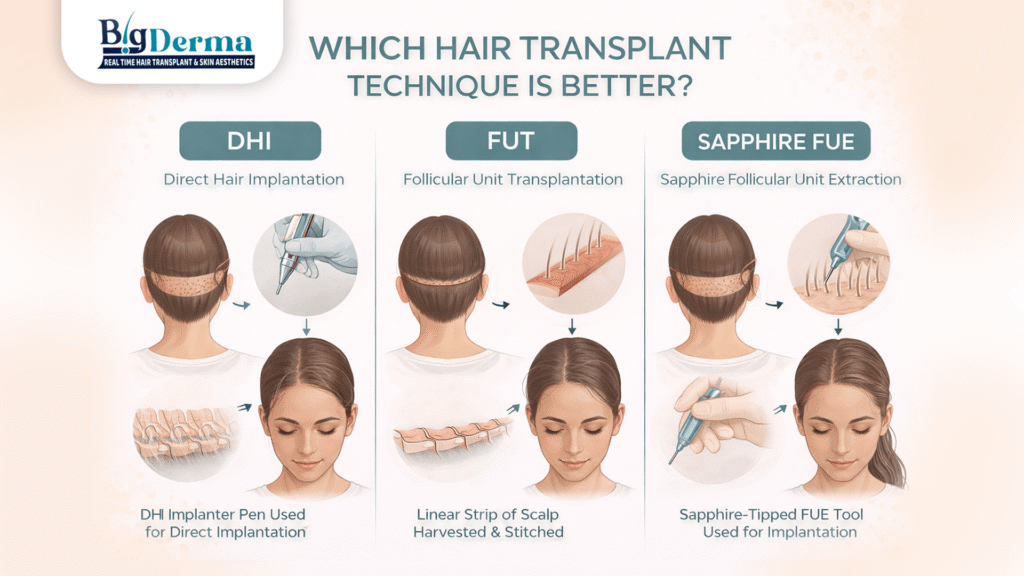
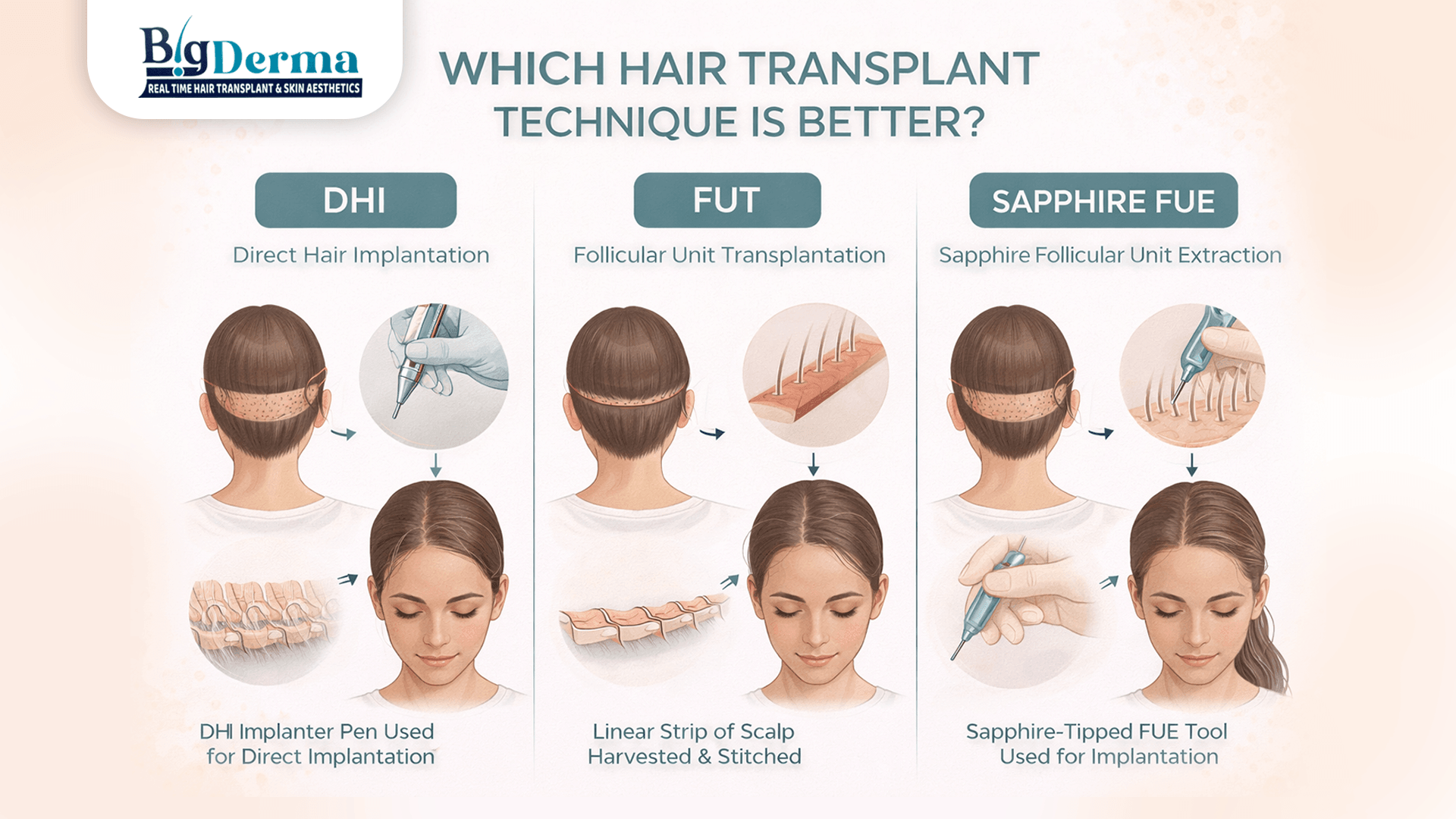
DHI, or Direct Hair Implantation, is an advanced hair restoration technique similar to the FUE method. In this procedure, individual hair follicles are carefully extracted from the donor area, usually the back of the head. Unlike traditional methods, the harvested follicles are implanted directly into the thinning or bald areas using a specialized tool known as the Choi Implanter Pen.
This innovative instrument allows surgeons to control the depth, direction, and angle of each implanted hair follicle, helping achieve more natural-looking results. Since the follicles are implanted immediately after extraction, the time they remain outside the body is minimized, which may improve graft survival.
One of the advantages of the DHI technique is that the entire head does not need to be shaved only the donor area may require trimming. The procedure is considered one of the most advanced hair transplant methods available, offering precise implantation and high success rates.
Recovery is generally quick, and most patients begin to notice visible hair growth within 6 to 12 months after the procedure. Because of its precision and advanced technology, DHI is typically more expensive than other hair transplant techniques.
What is FUT Hair Transplant?
FUT stands for Follicular Unit Transplantation. It is a hair transplant method used to treat hair loss or bald areas on the scalp.
In this procedure, a small strip of skin with healthy hair is removed from the back of the head. This area is called the donor area. The strip is then divided into many small hair grafts under a microscope.
After that, the doctor makes tiny openings in the bald or thinning areas of the scalp and places the hair grafts into these openings. Over time, the transplanted hair begins to grow naturally.
Unlike FUE or DHI, FUT removes a strip of skin instead of taking out hair follicles one by one. Because of this, it can leave a thin line scar at the back of the head.
FUT is usually less expensive than other hair transplant methods and may be used when a large number of hair grafts are needed.
Hair Transplant Procedure
During the procedure, whether it is FUE, DHI, or FUT, the treatment area is prepared first. The hair may be trimmed or shaved, and a local anesthetic is given to numb the scalp so you do not feel pain during the process.
Hair follicles are then taken from the donor area, usually the back of the head. These follicles are carefully placed into the bald or thinning areas of the scalp.
After the procedure is finished, the doctor applies antibiotic cream to protect the area and covers it with a bandage to help the scalp heal properly.
After Hair Transplant Care
After a hair transplant procedure, whether FUE, DHI, or FUT, it is normal to feel mild pain or discomfort for a few days.
Good aftercare is very important for proper healing and healthy hair growth. For the first 10–14 days, the scalp should be handled very gently so the transplanted grafts can settle in place. Patients are usually advised to sleep with their head slightly elevated (about 45 degrees) and spray the scalp with a saline solution if recommended by the doctor. It is also important to avoid direct sunlight and excessive sweating during this time.
Do not touch, rub, or wash the treated area for the first three days. Smoking and alcohol should also be avoided in the early days after the procedure, as they can slow down the healing process.
Your doctor may prescribe painkillers or anti-inflammatory medicines to reduce pain and swelling. In some cases, antibiotics may also be given to help prevent infection.
Patients are usually advised not to brush or comb their hair for about three weeks after the transplant. It is also better to avoid wearing hats, caps, helmets, or hair accessories, as they may affect the newly placed grafts.
You should avoid heavy exercise or strenuous physical activity for about a week. Most people are able to return to their normal daily routine within a few days.
Always follow the instructions given by your doctor, as proper care after the procedure helps the scalp heal well and supports good hair growth.
Which is the Best and Most Advanced Hair Transplant Technique?
There is no single hair transplant method that is best for everyone. The right technique depends on several factors such as the level of hair loss, the quality of the donor hair, the number of grafts required, budget, and personal expectations. A qualified doctor will examine the scalp and suggest the most suitable treatment based on the patient’s condition.
FUE (Follicular Unit Extraction) is one of the most commonly used and advanced hair transplant techniques today. In this method, individual hair follicles are taken from the donor area and transplanted into the bald or thinning areas of the scalp. It usually leaves very small marks, and the recovery time is also quicker, which is why many patients choose this method.
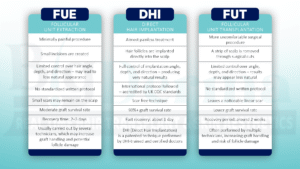
DHI (Direct Hair Implantation) is another advanced hair transplant technique. It uses a special tool called the Choi Implanter Pen to place hair follicles directly into the scalp. This method allows the doctor to control the angle, depth, and direction of the hair during implantation, which helps create a more natural-looking result. However, this technique is usually more expensive than other methods.
FUT (Follicular Unit Transplantation) is a traditional hair transplant method. In this procedure, a small strip of scalp is removed from the donor area and then divided into individual grafts. These grafts are then placed into the bald areas. FUT can provide a large number of grafts in one session and is often more affordable, but it may leave a thin line scar at the back of the head.
Today, many clinics prefer FUE and DHI as advanced hair transplant techniques because they are less invasive and provide natural-looking results. However, the best option always depends on the patient’s hair condition and the doctor’s recommendation after proper examination.
Still confused about which hair transplant technique is right for you?
Explore different hair transplant methods and get expert guidance by visiting our website:
thebigderma.com



 Chat with us