
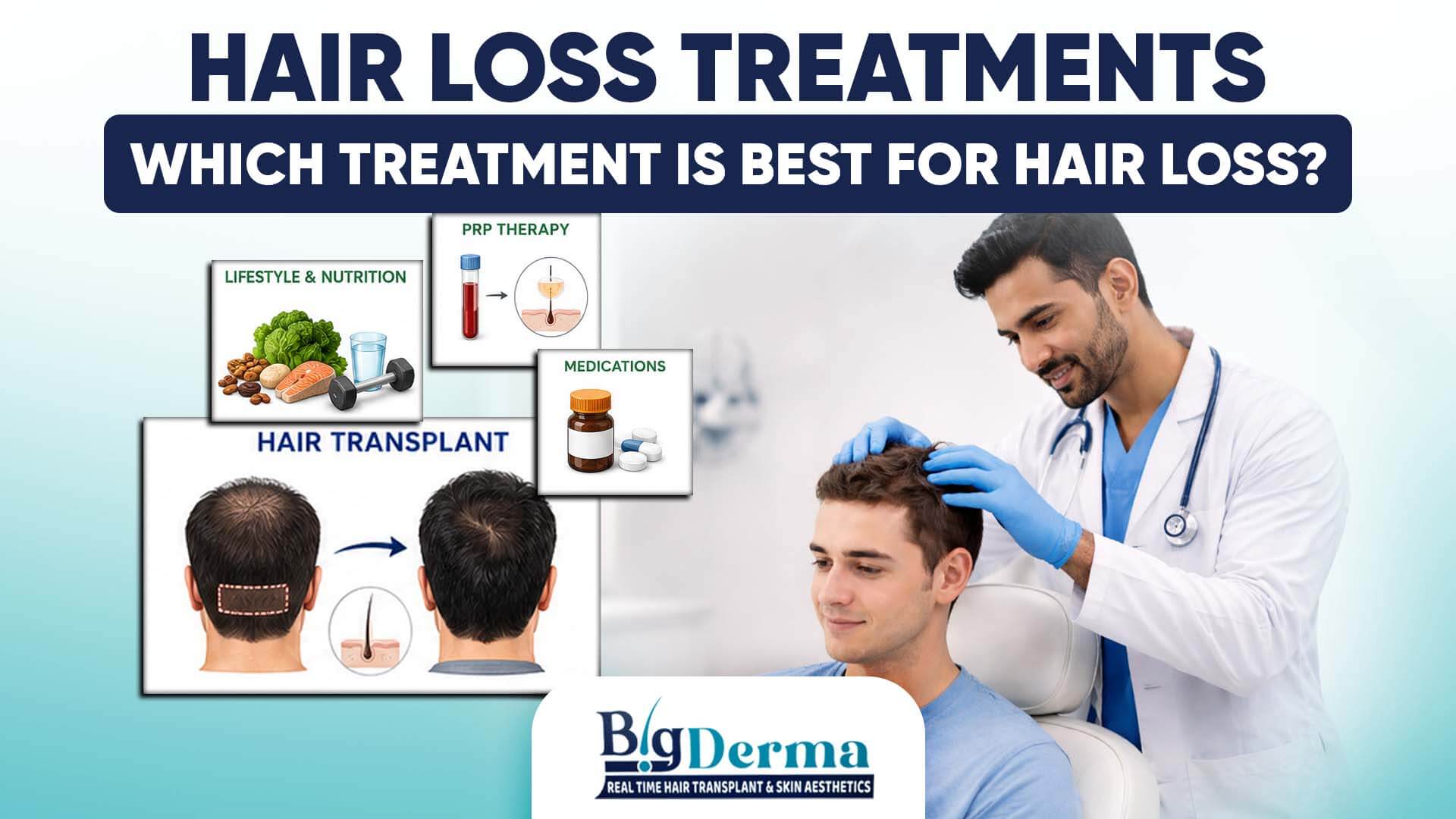
Hair loss can be emotionally draining and affect confidence, self-image, and social life. With modern medical advancements, multiple treatment options are available—but choosing the right one can be confusing.
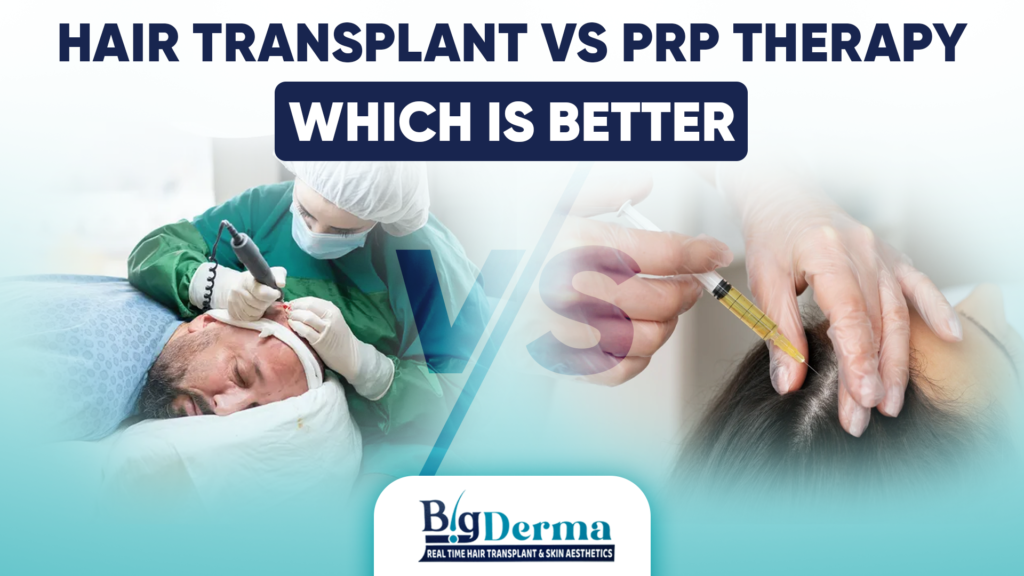
Hair Transplant and PRP (Platelet-Rich Plasma) Therapy are two of the most talked-about solutions for hair loss—but they work very differently.
At Big Derma Clinic, Kolkata, we guide patients with clarity and honesty so they understand what these treatments do, how they work, and which is best for their individual needs.
In this complete guide, we’ll compare Hair Transplant and PRP Therapy in detail—explaining benefits, limitations, process, results timeline, cost, risks, longevity, and who should choose which option.
Table of Contents
- What Is Hair Transplant?
- What Is PRP Therapy?
- How Hair Transplant and PRP Work Differently
- Benefits of Hair Transplant
- Benefits of PRP Therapy
- Limitations of Hair Transplant
- Limitations of PRP Therapy
- Results and Timeline – Hair Transplant vs PRP
- Cost Comparison
- Safety, Side Effects & Risks
- Who Is Ideal for Hair Transplant?
- Who Is Ideal for PRP Therapy?
- Can Both Be Used Together?
- Final Verdict: Which Is Better?
- Why Choose Big Derma Clinic, Kolkata?
- Conclusion
- FAQs
What Is Hair Transplant?
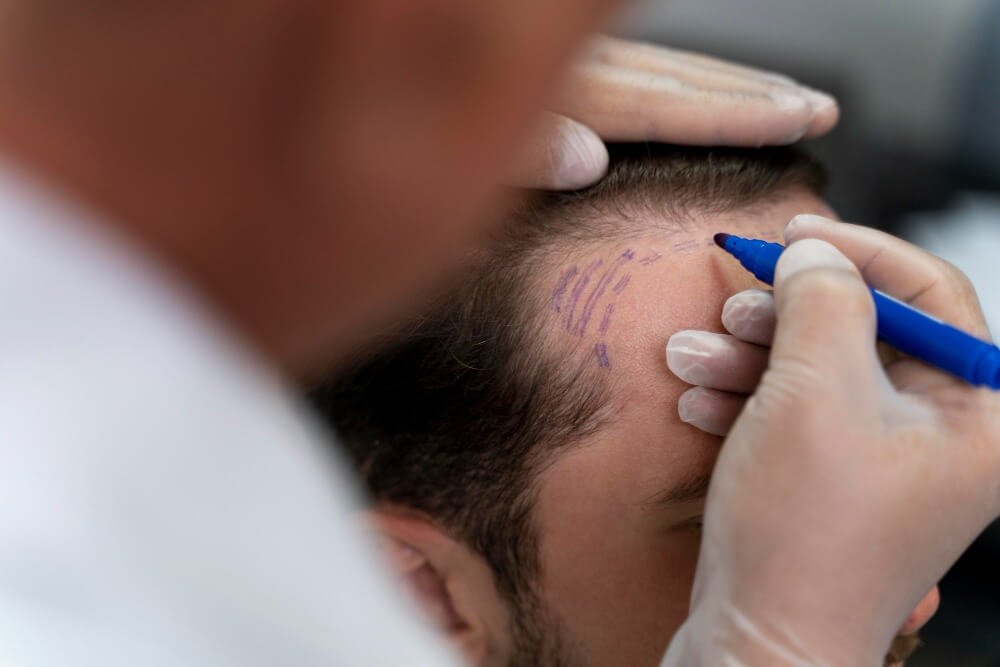
A hair transplant is a surgical cosmetic procedure where hair follicles are moved from a donor area (usually the back or sides of the scalp) to areas affected by hair loss.
How Hair Transplant Works
There are main techniques used:
- FUE (Follicular Unit Extraction) – individual hair grafts are extracted one by one
- FUT (Follicular Unit Transplantation) – strip of scalp with hair grafts is removed and then dissected into follicles
The transplanted hair grows naturally because it comes from your own scalp and retains its genetic resistance to hair loss.
What Is PRP Therapy?
PRP Therapy is a non-surgical regenerative treatment that uses your own blood to stimulate hair follicle activity.
How PRP Therapy Works
- Blood is drawn from your arm
- It is placed in a centrifuge to separate plasma rich in platelets
- The PRP is injected into the scalp
Platelets release growth factors that support hair follicle health, improve blood supply, and reduce inflammation.
How Hair Transplant and PRP Work Differently
| Feature | Hair Transplant | PRP Therapy |
|---|---|---|
| Treatment Type | Surgical | Non-surgical |
| Method | Physical relocation of follicles | Biological stimulation |
| Immediate Coverage | Yes | No |
| New Hair Growth in Bald Areas | Yes | No |
| Best for | Bald patches, receding hairline | Early thinning, hair strengthening |
| Pain Level | Moderate (local anesthesia) | Mild |
| Downtime | Several days | Minimal |
Benefits of Hair Transplant
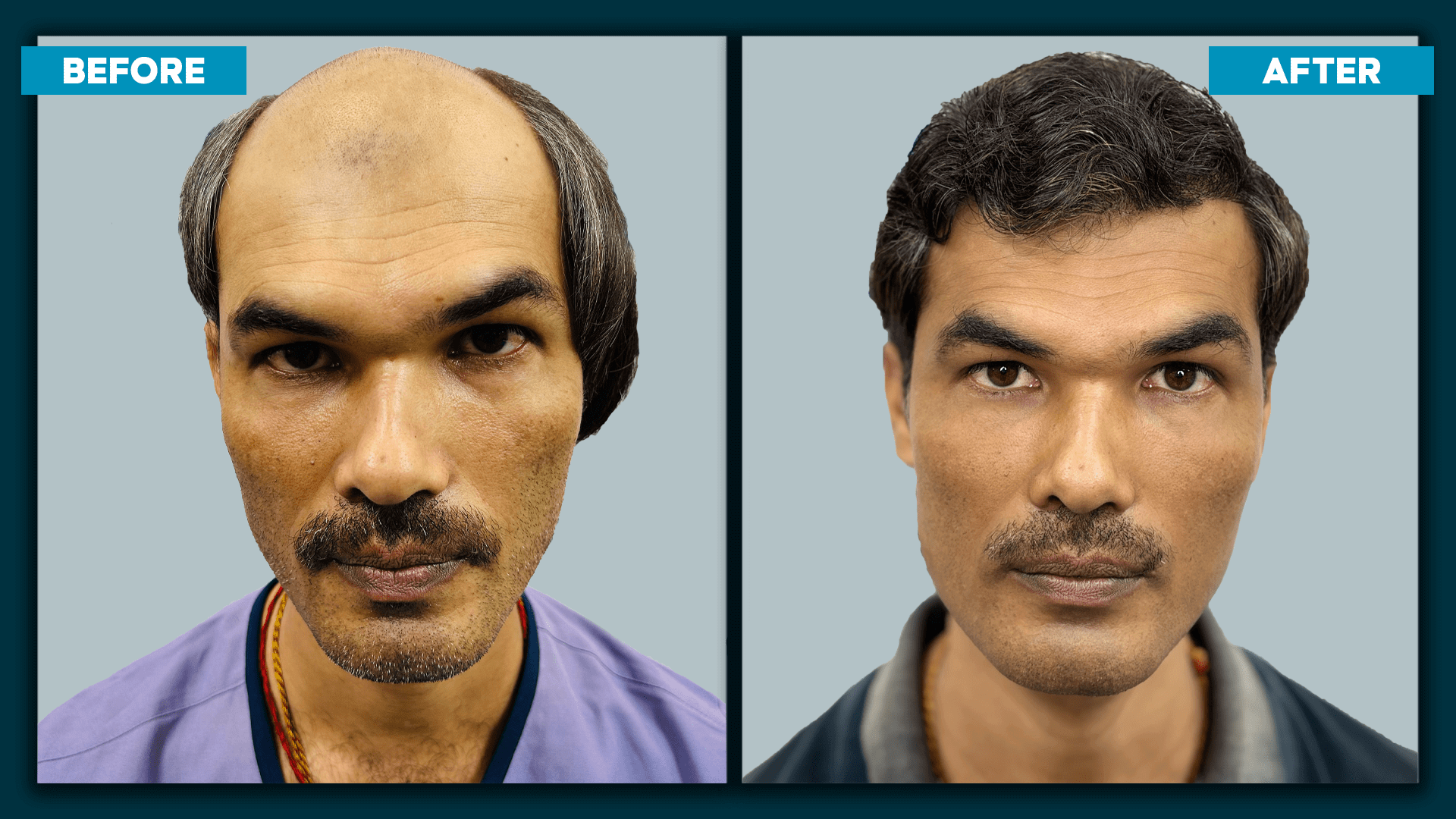
Hair transplant offers permanent and dramatic improvement in hair density.
1. Permanent Solution
Once hair follicles are successfully transplanted, they continue to grow for life because donor hair has genetic resistance to hair loss.
2. Natural-Looking Results
With proper planning, hair can be placed at natural angles and densities, creating a realistic appearance.
3. Effective for Extensive Hair Loss
Hair transplant can cover large bald areas, receding hairlines, and thinning crowns.
4. Boosts Confidence & Quality of Life
Many patients report a significant psychological benefit after restoration.
Benefits of PRP Therapy
PRP therapy is less invasive and focuses on improving existing hair health.
1. Non-Surgical & Minimally Invasive
PRP involves injections only—no cuts, sutures, or anesthesia beyond topical numbing.
2. Improves Hair Thickness
Best for early hair thinning and low hair density.
3. Reduces Hair Fall
By strengthening hair follicles and improving blood supply.
4. Quick Sessions with Minimal Downtime
Most patients return to work immediately.
Limitations of Hair Transplant
1. Invasive Procedure
Hair transplant is a surgical procedure and requires trained specialists.
2. Recovery Time
Patients need a few days for initial healing and cleanliness routines.
3. Cost
Initial cost is higher compared to non-surgical treatments.
4. Not Suitable for Everyone
Patients with unstable hair loss patterns or weak donor zones may not be ideal candidates.
Limitations of PRP Therapy
1. Not a Permanent Solution
PRP does not relocate hair—it stimulates what remains.
2. Limited Effectiveness in Advanced Baldness
PRP works best when there are still active hair follicles.
3. Multiple Sessions Needed
Typically 4–6 sessions spaced weeks apart.
4. Results Can Vary
Not all patients experience the same level of improvement.
Results and Timeline – Hair Transplant vs PRP
Hair Transplant Results Timeline
- 0–2 Weeks: Healing & scab formation
- 1–3 Months: Initial growth begins
- 4–6 Months: Noticeable improvement
- 9–12 Months: Final density and natural growth
Hair transplant results are permanent and grow like natural hair.
PRP Therapy Results Timeline
- 0–4 Weeks: Initial strengthening
- 2–3 Months: Reduced hair fall
- 4–6 Months: Gradual thickening
- After 6 Months: Best response (if regular sessions followed)
PRP results need maintenance every months.
Cost Comparison
Hair Transplant Cost
Hair transplant involves surgical cost components:
- Surgeon expertise
- Number of grafts
- Facility charges
- Aftercare support
In Kolkata, hair transplant may cost more upfront but offers a one-time permanent solution.
PRP Therapy Cost
PRP is cheaper per session but requires multiple sessions and maintenance. Over time, total cost may add up.
Long-Term Financial Perspective
- Hair transplant: higher initial, less later
- PRP: lower initial, recurring over time
Safety, Side Effects & Risks
Both treatments are safe when performed professionally.
Hair Transplant Potential Side Effects
- Swelling
- Mild pain
- Temporary redness
- Scab formation
These effects are normal and part of healing.
PRP Therapy Potential Side Effects
- Mild redness
- Temporary soreness
- Slight swelling
PRP uses your own blood, so allergy risk is minimal.
Who Is Ideal for Hair Transplant?
Hair transplant is best for people who:
- Have obvious bald patches
- Noticeable receding hairline
- Stable hair loss pattern
- Good donor area
Hair transplant makes sense when thinning is beyond early stage and requires real density improvement.
Who Is Ideal for PRP Therapy?
PRP works better for people who:
- Have early hair thinning
- Want to strengthen existing hair
- Wish to control hair fall
- Prefer non-surgical option
PRP helps maintain hair and delay the need for transplant.
Can Both Be Used Together?
Yes, and many patients benefit from combined therapy.
Why Combine Them?
- PRP accelerates recovery after transplant
- PRP supports transplanted graft survival
- Improves blood circulation in scalp
- Enhances hair quality and thickness
At Big Derma Clinic, Kolkata, combination treatments are common.
Realistic Expectations: Hair Transplant vs PRP
Hair Transplant Expectations
- Permanent improvement
- Natural appearance
- Visible change within months
PRP Expectations
- Gradual strengthening
- Hair fall reduction
- Increased thickness (not full coverage)
Understanding expectations makes satisfaction easier.
How to Prepare for Treatment
Before Hair Transplant
- Medical evaluation
- Blood tests
- Stop smoking & alcohol (as advised)
Before PRP
- Healthy diet
- Hydration
- Avoid anti-inflammatory meds (as advised)
Maintenance After Treatment
After Hair Transplant
- Follow aftercare instructions
- Avoid sun exposure early
- Gentle hair care
After PRP
- Regular sessions as advised
- Scalp care routine
- Avoid harsh chemicals
Both require care for best results.
Cost vs Benefit: Which Is Better Value?
Hair Transplant Value
- Permanent result
- No recurring cost (mostly)
- Real new hair growth
PRP Value
- Non-surgical and gentle
- Slows hair fall
- Maintains existing hair
If hair loss is advanced, hair transplant gives better long-term value.
Patient Stories: What People Say
Hair Transplant Patients
Many report renewed confidence, fuller hair, and natural growth.
PRP Patients
Many notice stronger hair, less breakage, and delayed thinning.
Each patient’s journey is unique—results vary.
Final Verdict: Which Option Is Better?
Choose Hair Transplant If:
- Bald patches are visible
- You want permanent density
- Donor hair is adequate
Choose PRP If:
- Hair thinning is mild
- You want to strengthen hair
- You prefer non-surgical
Best Approach
For many people, a combined strategy works best:
- Start with PRP early
- Choose hair transplant when needed
Your choice depends on age, pattern of hair loss, donor hair, expectations, and budget.
Why Choose Big Derma Clinic, Kolkata?
At Big Derma Clinic, we believe in ethical, science-driven care.
What We Offer
- Expert consultation
- Customized treatment plans
- Latest technology
- Safe procedures
- Honest results
We focus on long-term hair health, not quick fixes.
Conclusion
So, Hair Transplant vs PRP Therapy — which is better?
The answer depends on your hair loss stage and goals:
Hair Transplant is a permanent solution for significant hair loss and bald areas.
PRP Therapy is a non-surgical method to strengthen hair and slow down early hair loss.
Both treatments have roles—sometimes used together for best outcomes.
At Big Derma Clinic, Kolkata, we guide you to choose the right path with expert diagnosis and personalized care.
FAQs: Hair Transplant vs PRP Therapy
1. Can PRP replace hair transplant?
No. PRP supports existing follicles, but does not create new ones.
2. Which treatment is permanent?
Hair transplant results are permanent; PRP needs maintenance.
3. Is either treatment painful?
PRP is milder; hair transplant uses local anesthesia.
4. How soon will I see results?
Hair transplant: 4–12 months.
PRP: 3–6 months (gradual).
5. Can women have both treatments?
Yes—both are suitable when properly evaluated.


 Chat with us