Table of Contents
ToggleComplete Planning and Treatment Explanation – Big Derma Clinic, Kolkata
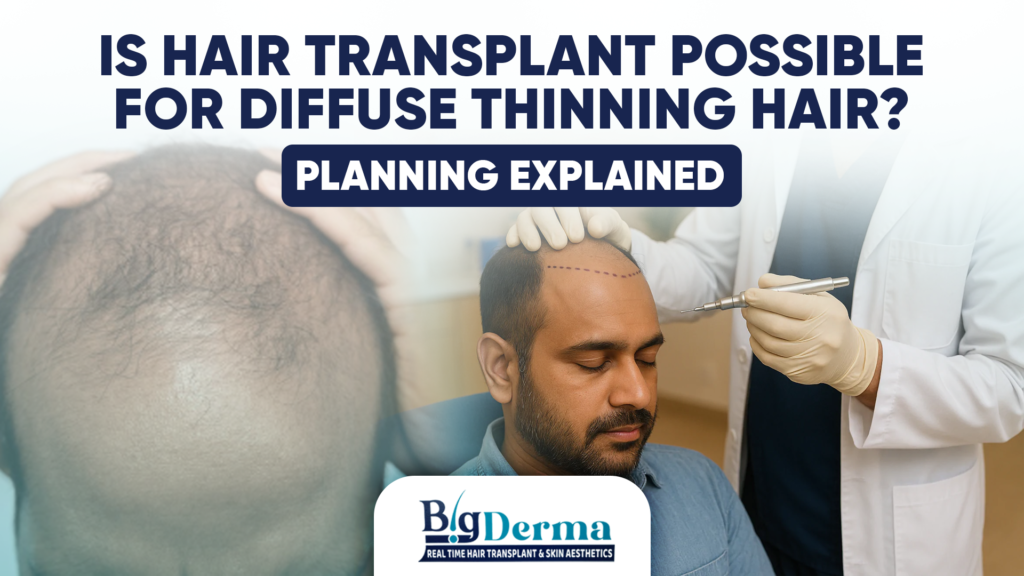
Diffuse thinning is one of the most confusing and emotionally stressful types of hair loss. Unlike typical male pattern baldness where hair recedes in clear areas such as the temples or crown, diffuse thinning spreads evenly across the scalp. Hair gradually becomes thinner, density reduces, and the scalp starts becoming visible under bright light. Many patients wonder whether a hair transplant is even possible in such cases.
The short answer is yes, hair transplant can be possible for diffuse thinning—but only after careful evaluation and strategic planning. At Big Derma Best hair transplant clinic in kolkata, doctors approach diffuse thinning very differently from traditional bald patches because this condition requires more precision, long-term vision, and medical understanding.
Let’s understand everything in detail.
What Exactly Is Diffuse Thinning?
Diffuse thinning refers to gradual hair density reduction across the entire scalp rather than in isolated bald spots. In many cases, existing hair is still present but appears weak, miniaturized, and thin. This type of hair loss is commonly seen in both men and women and can be linked to genetic factors, hormonal imbalance, stress, nutritional deficiencies, thyroid problems, or early-stage androgenetic alopecia.
Because hair is still present, performing a transplant without proper planning can damage existing follicles. That is why consultation and scalp analysis become extremely important.
Can Hair Transplant Be Done for Diffuse Thinning?
Yes, but not in every case.
Diffuse thinning requires a detailed scalp examination to determine whether the condition is stable or still actively progressing. If hair fall is aggressive and ongoing, doctors usually recommend medical management first. Performing a transplant during active hair loss may result in poor long-term results because native hair may continue to thin around transplanted grafts.
Big Derma Best hair transplant in kolkata, first goal is to determine whether the patient is an appropriate candidate. If the thinning pattern is stable and donor hair quality is good, transplantation can significantly improve density and coverage.
The Biggest Challenge in Diffuse Thinning Cases
The main challenge in diffuse thinning is that existing hair is still present. During implantation, surgeons must carefully insert grafts between natural hair without damaging them. This requires:
Advanced surgical precision
Proper angle and depth control
Strategic density placement
Careful graft distribution
If done improperly, it can cause shock loss, where surrounding weak hair temporarily sheds. Experienced surgeons minimize this risk through careful technique and medical support.
Importance of Donor Area Evaluation
Diffuse thinning sometimes also affects the donor area, which is usually the back and sides of the scalp. If donor density is weak, transplant planning becomes more conservative.
At Big Derma Clinic, donor area is thoroughly examined for thickness, density, and long-term sustainability. Doctors never overharvest grafts because maintaining a natural donor appearance is just as important as achieving front coverage.
Planning Strategy for Diffuse Thinning
Hair transplant planning for diffuse thinning is very different from standard bald area coverage. Instead of creating new hairlines only, the goal is to increase density within existing hair.
The approach usually includes strengthening the frontal zone first because that is the most visible part of the scalp. Mid-scalp density may also be improved, depending on donor availability. Crown area is often treated conservatively unless density reduction is severe.
Doctors carefully calculate how many grafts can be safely transplanted without compromising future hair loss management. Since diffuse thinning can progress over time, long-term planning is essential.
Role of Medical Therapy Alongside Transplant
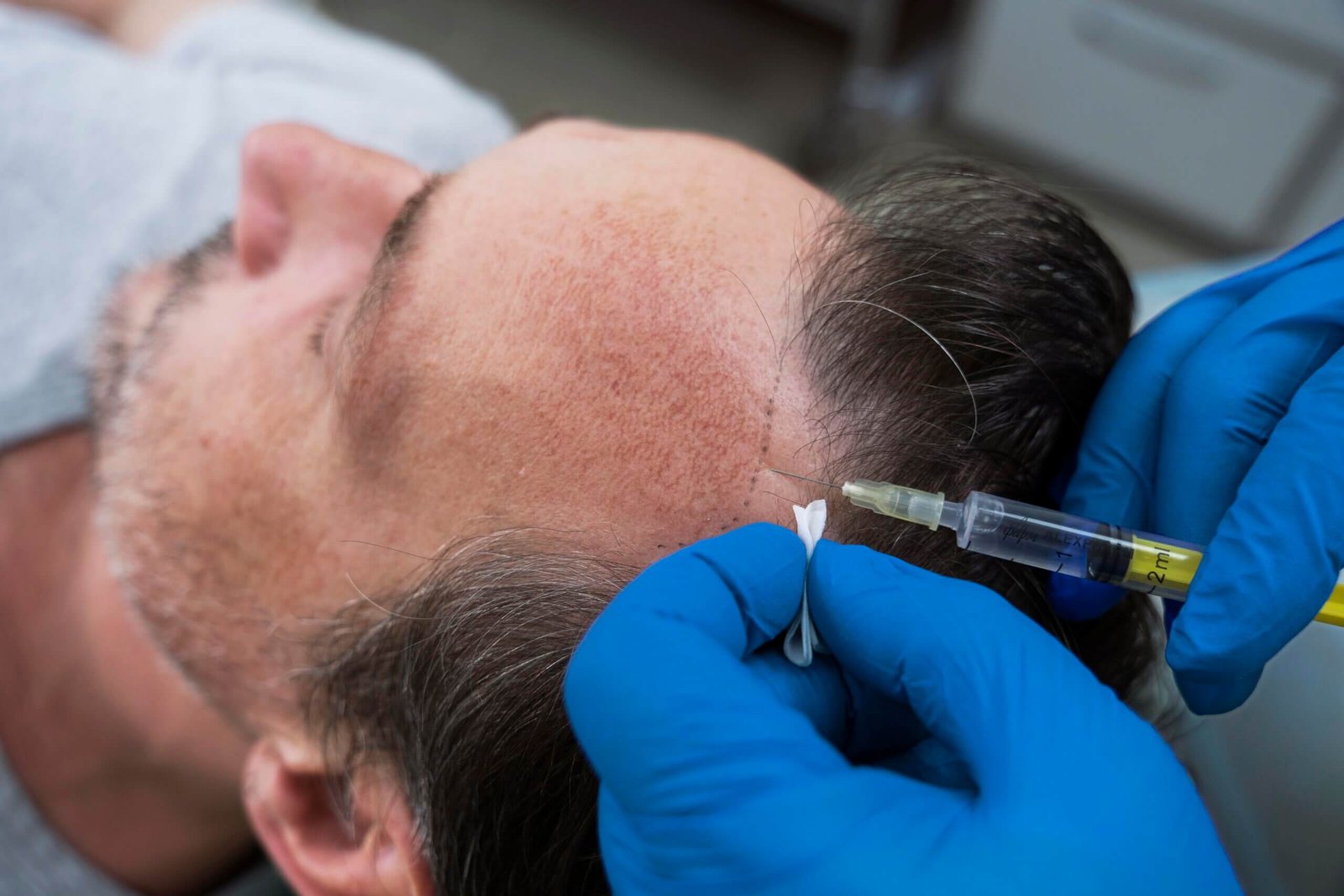
In diffuse thinning cases, transplantation alone is often not enough. Doctors usually recommend combining the procedure with medical treatments that help stabilize and protect existing hair.
Medications and regenerative therapies may be advised to slow further thinning. This dual approach ensures transplanted hair grows strong while natural hair is preserved as much as possible.
At Big Derma Clinic, treatment plans are personalized. Some patients may be advised to delay surgery and focus on strengthening therapy first.
Understanding Shock Loss Risk
Shock loss is one of the biggest concerns in diffuse thinning cases. It refers to temporary shedding of weak existing hair after surgery. This usually happens because fragile miniaturized follicles are sensitive to surgical stress.
However, when surgery is performed with precision and proper post-operative care, shock loss is usually temporary, and most hair regrows within months. Experienced surgeons take special precautions to minimize trauma to surrounding follicles.
Which Technique Works Best for Diffuse Thinning?
Technique selection depends on scalp condition, donor strength, and thinning severity.
FUE is often preferred because it allows precise graft placement between existing hair. DHI may also be suitable in some cases where density enhancement requires maximum control.
However, technique selection is never one-size-fits-all. At Big Derma Clinic, doctors evaluate each scalp individually before recommending a method.
Is Hairline Reconstruction Necessary?
In many diffuse thinning cases, the hairline may still be present but appear weak. Instead of lowering the hairline, surgeons focus on reinforcing and thickening it.
An overly aggressive hairline change is usually avoided because diffuse thinning patients may continue losing native hair over time. A conservative, age-appropriate hairline ensures natural results even years later.
Timeline of Results
Results in diffuse thinning patients may appear slightly different compared to fully bald areas. Since existing hair is present, density gradually improves as transplanted follicles grow.
Initial shedding of transplanted hair may occur within weeks, followed by new growth after a few months. Full density improvement becomes noticeable over several months as new hair thickens.
Patience is essential because density blending takes time.
Who Is an Ideal Candidate?
Diffuse thinning patients are considered good candidates if:
Hair loss is stable
Donor area is strong
Scalp is healthy
Expectations are realistic
Younger patients with active aggressive thinning may be advised to wait or begin medical treatment first before considering transplantation.
Female Diffuse Thinning and Hair Transplant
Diffuse thinning is extremely common among women. However, female cases require even more caution because donor density may not always be strong enough for aggressive graft harvesting.
In suitable female candidates, hair transplant can improve frontal density and hairline framing. But proper evaluation is critical to avoid overharvesting.
Psychological Impact and Confidence
Diffuse thinning can deeply affect confidence because it creates an overall thinning look rather than clear bald patches. Many patients feel their hair looks lifeless and weak.
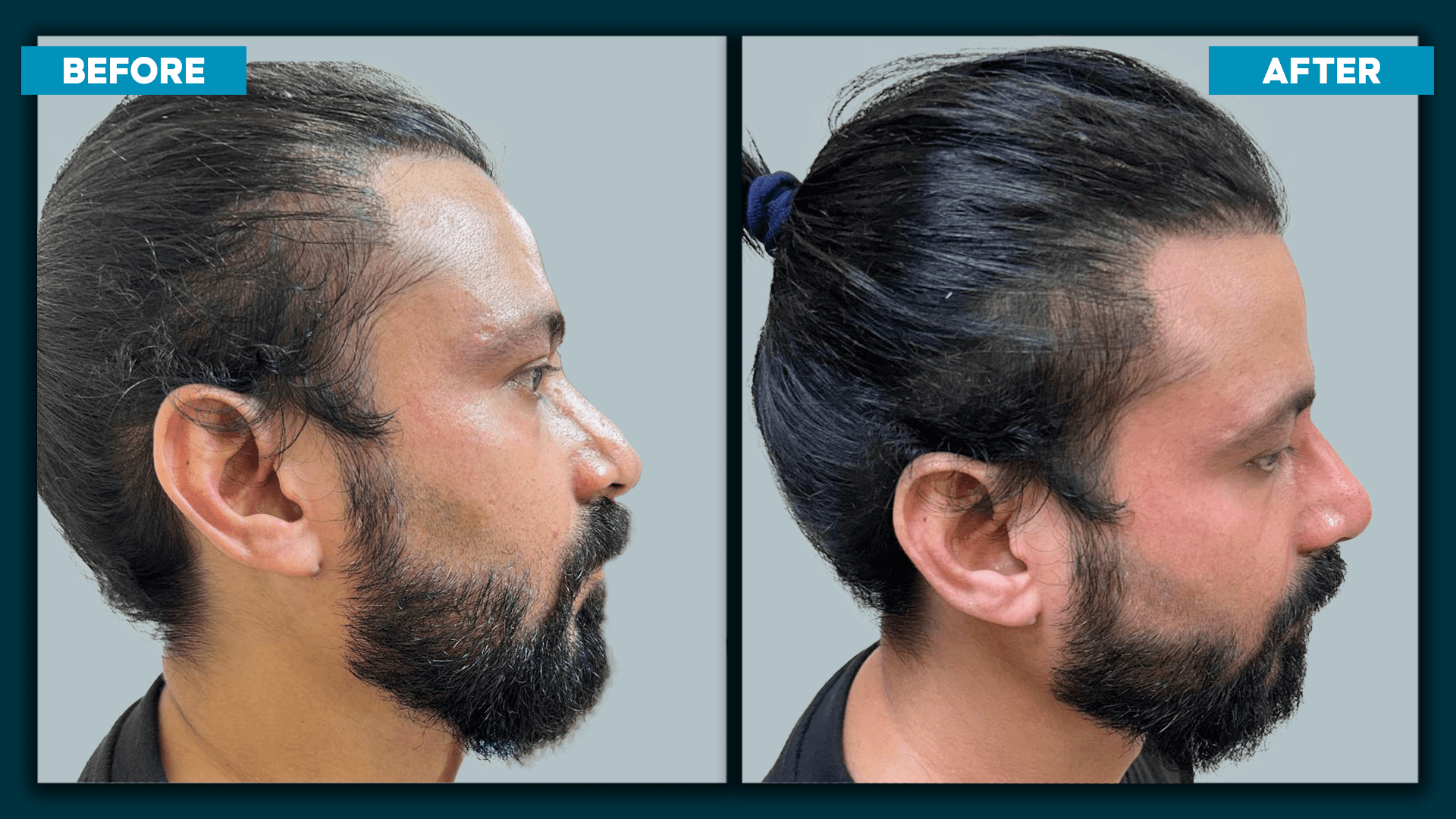
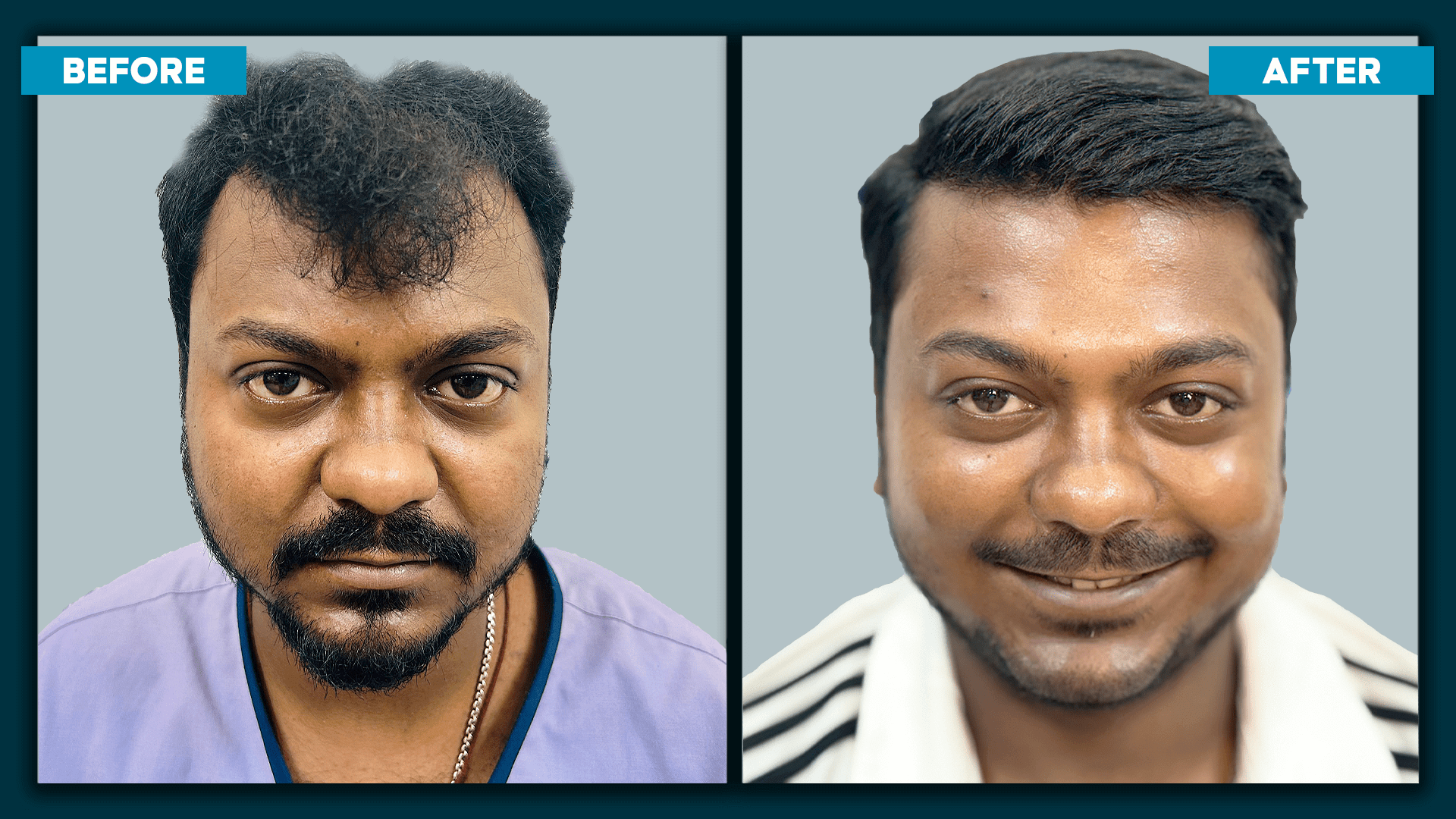
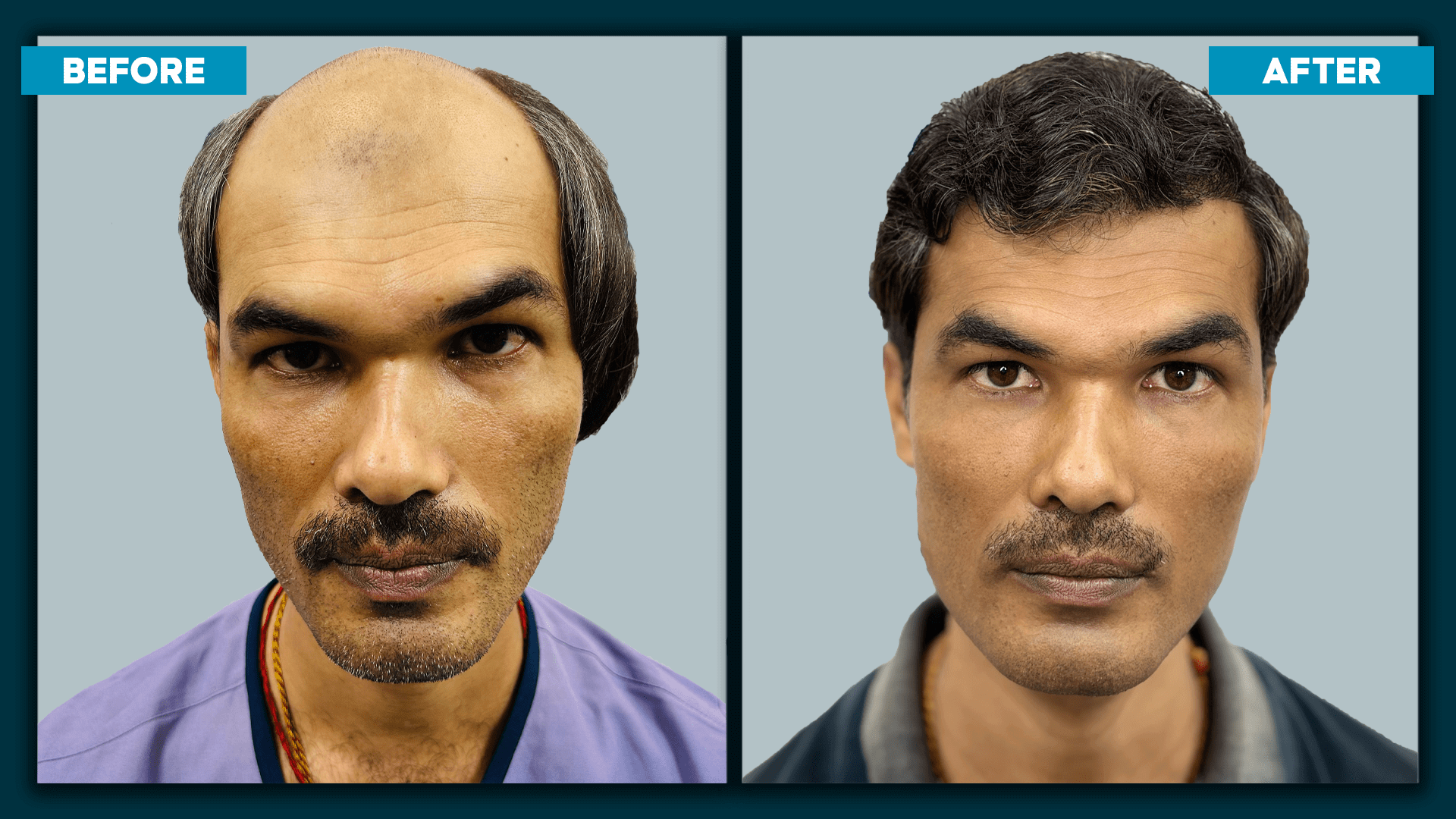
When planned correctly, hair transplant in diffuse thinning cases can restore density, improve hair volume appearance, and significantly boost self-esteem.
Why Consultation Is Crucial in Diffuse Thinning Cases
Diffuse thinning cannot be treated with a standard approach. It requires:
Detailed scalp mapping
Donor sustainability analysis
Long-term hair loss prediction
Combination treatment planning
At Big Derma Clinic, Kolkata, consultation is designed to ensure safety, realism, and natural aesthetics. Doctors prioritize protecting existing hair while enhancing overall density.
Final Thoughts
Hair transplant is indeed possible for diffuse thinning—but only when carefully planned. Unlike clear bald patches, diffuse thinning requires a balanced and conservative strategy. Proper evaluation, medical support, and skilled surgical execution are essential to achieving natural, long-lasting results.
If you are experiencing diffuse thinning and are unsure whether transplantation is right for you, a professional consultation is the first and most important step.